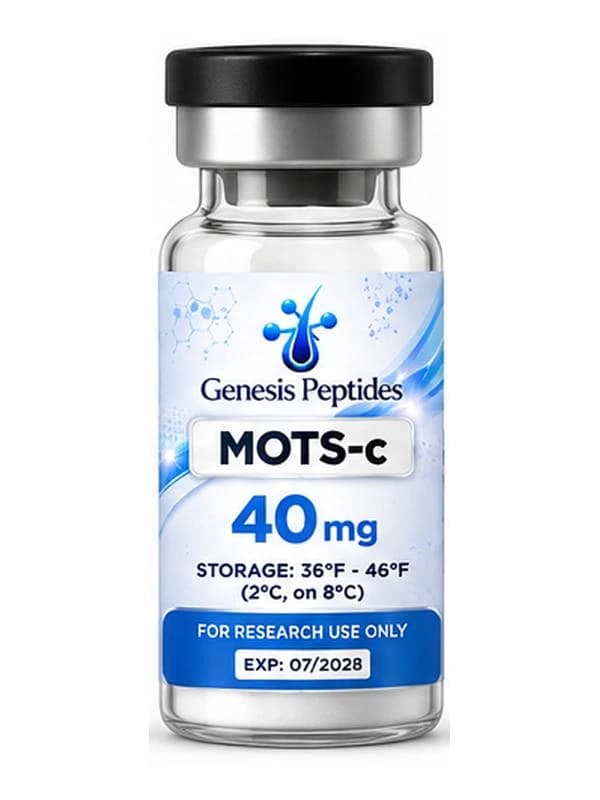
MOTS c Peptide UK 40mg Research Vial for Laboratory Use
Like all our MOTS c peptides, this vial is a laboratory reagent.
- Batch-tested Certificate of analysis for every lot
- Research use only For laboratory research
- UK stock Dispatched from the UK
- Delivery from £6.05 Free over £100.00. Delivery policy
Research PeptidesResearch compound
Genesis Peptide MOTS-c 40mg Research Vial
Genesis Peptides supplies MOTS-c as a 40mg lyophilised (freeze-dried) research vial, dispatched from the UK. MOTS c is a short chain of 16 amino acids that is encoded not in the cell nucleus but in the DNA of mitochondria, the parts of the cell that make most of its energy.
- HPLC and mass spectrometry
- Research use only
£49.99no VAT charged
In stockUK stock, dispatched from the UK
- Strength
- 40mg
- Product
- MOTS-c (human), lyophilised powder
- Identity
- Mass spectrometry, batch-specific
- Appearance
- White to off-white lyophilised powder
- Storage
- −20 °C for long-term storage, sealed, dry and protected from light
[INSERT MY APPROVED RESEARCH-USE WORDING]
Product Details and Specifications for This Research Peptide
| Product | MOTS-c (human), lyophilised powder |
|---|---|
| Amount per vial | MOTS c 40mg [CONFIRM size; if 10mg or 20mg, write “MOTS-c 10mg” or “MOTS-c 20 mg”] |
| Full name | Mitochondrial open reading frame of the 12S rRNA type-c |
| Sequence | H-Met-Arg-Trp-Gln-Glu-Met-Gly-Tyr-Ile-Phe-Tyr-Pro-Arg-Lys-Leu-Arg-OH (MRWQEMGYIFYPRKLR) |
| Length | 16 amino acids, free acid C-terminus |
| Molecular formula | C101H152N28O22S2 |
| Molecular weight | about 2174.6 g/mol (monoisotopic about 2173.11) |
| CAS number | 1627580-64-6 [VERIFY] |
| Salt form | [MOTS c acetate or TFA salt: CONFIRM from COA] |
| Purity (HPLC) | [≥ __% : CONFIRM batch figure] |
| Identity | Mass spectrometry, batch-specific |
| Appearance | White to off-white lyophilised powder |
| Vial | [__ml glass vial, rubber stopper, aluminium crimp cap: CONFIRM] |
| Testing lab | [Lab name, independent or in-house: CONFIRM] |
| Storage | −20 °C for long-term storage, sealed, dry and protected from light |
Each vial contains only the peptide MOTS-c as a dry powder, with no water, solvent, filler or other active ingredient. It is a single compound, not a blend, so any result in your experiment can be attributed to MOTS-c alone. Our MOTS-c 40mg vial suits labs that run several assays from one batch. 40mg MOTS c is also the most searched size, so when you compare listings, check that each one states its batch purity and net peptide content as well as the amount.
What Is MOTS c and Why Is It Called a Mitochondrial Derived Peptide?
What is MOTS c? Its name stands for “mitochondrial open reading frame of the 12S rRNA type-c”. Almost all of a cell’s proteins are coded by DNA in the nucleus, but mitochondria carry a small genome of their own. In 2015, Changhan Lee, Pinchas Cohen and colleagues at the University of Southern California reported that a short stretch inside one mitochondrial gene, MT-RNR1, which codes for the 12S ribosomal RNA, also holds the code for a 16-amino-acid peptide. They named it MOTS-c and published the work in Cell Metabolism (Lee et al. 2015).
So what is MOTS-c in simple terms? It is a mitochondrial-derived peptide (MDP): a peptide whose code sits in mitochondrial DNA. MDPs are a small, recently found family. The first was humanin, reported in 2001 and encoded in the 16S rRNA gene; the small humanin-like peptides (SHLP1–6) followed. MOTS-c was the first MDP found in the 12S rRNA gene. The 2015 paper reported that MOTS-c is found in the blood of rodents and humans, and that cells can release it, which is why it is studied as a possible signal from mitochondria to the rest of the body [VERIFY wording against Lee 2015 abstract].
What is MOTS c peptide as a product? It is a synthetic copy of that natural human sequence, made by solid-phase peptide synthesis. The MOTS-c peptide name is written in many ways: MOTS-c., MOTS - c, and it is sometimes searched as MOT c, MOT-c, MOTc peptide or MOTSc peptide. All refer to the same molecule, and anyone asking what is MOT c peptide, what is MOT-c peptide or what is MOTc peptide is asking about MOTS-c. The MOT-c peptide is not related to C-peptide, the insulin by-product measured in blood tests.
Amino Acid Sequence, Molecular Weight and Chemical Structure
- Sequence: Met-Arg-Trp-Gln-Glu-Met-Gly-Tyr-Ile-Phe-Tyr-Pro-Arg-Lys-Leu-Arg (MRWQEMGYIFYPRKLR). All 16 residues are natural L-amino acids, with a free amine at the start and a free acid at the end.
- Formula and weight: C101H152N28O22S2, average molecular weight about 2174.6 g/mol, monoisotopic mass about 2173.11.
- CAS number: 1627580-64-6 [VERIFY].
- Charge: three arginines and one lysine give MOTS-c a positive charge at neutral pH (about +3 overall, after its one glutamate). The C-terminal “RKLR” stretch is the most positively charged part of the chain.
- Points to watch: the two methionines can oxidise (each adds 16 to the mass) and the tryptophan is sensitive to light and oxidation. This is why the powder should be kept dry, cold and dark, and why a correct mass on the COA matters.
How Is It Studied in Laboratory Research?
What is MOTS-c peptide used for in the lab? It is used as a tool to study how mitochondria signal to the rest of the cell, and how cells adjust their metabolism under stress. Most MOTS c peptide research so far comes from the USC group that found it and from groups building on their work, in cell lines and mice. What is MOTS c peptide used for outside the lab? It has no approved use anywhere. The four areas below cover what researchers ask when they search what does MOTS-c do.
Mitochondria and Cell Energy Research
Mitochondria make ATP, the molecule cells use for energy, and they also send signals that change how the rest of the cell behaves. A MOTS c research peptide lets labs study one of those signals directly:
- Where it comes from: MOTS-c is coded in mitochondrial DNA. Evidence in the 2015 paper suggested it is made outside the mitochondria, in the main body of the cell [VERIFY], which is unusual for a mitochondrial gene product.
- Levels change with activity: Reynolds et al. (2021) found that levels of the body’s own MOTS-c rose in muscle and blood during exercise (see the human studies section). In the same paper, mice of 2, 12 and 22 months given MOTS-c did better on treadmill, grip and balance tests than untreated mice of the same age.
When labs ask what does MOTS-c peptide do in these models, the answers come from specific cells and mice. They do not show any effect on energy, fitness or ageing in people.
Metabolic Signalling Research in Cell and Animal Models
The founding study tested MOTS-c in cultured cells and in mice (Lee et al. 2015):
- Folate cycle: in cells, MOTS-c slowed the folate cycle, a set of reactions that supplies building blocks for DNA. This in turn slowed de novo purine synthesis, so a purine-building intermediate called AICAR built up in the cell.
- Skeletal muscle: in mice, skeletal muscle appeared to be the main tissue MOTS-c acted on, with changes in how muscle took up and used glucose.
- Diet models: in mice fed a high-fat diet, the paper reported effects on body weight and insulin sensitivity compared with untreated mice. These are animal results under one set of conditions.
So what does MOTS c peptide do in a metabolic model? In mice and cells, it shifts how they handle glucose and nucleotide building blocks. What does MOT c peptide do in people is not known from these studies.
AMPK Pathway Research in Cell Models
AMPK (AMP-activated protein kinase) is an enzyme that senses when a cell is short of energy and switches on processes that make more. AICAR is a well-known AMPK activator, so its build-up links MOTS-c to this pathway:
- AMPK activation: Lee et al. (2015) found that MOTS-c raised AMPK activity in cells through AICAR. This is the reason WADA lists MOTS-c with other AMPK activators (see the legal section).
- Move to the nucleus: Kim et al. (2018) found that under metabolic stress, such as glucose shortage or oxidative stress, MOTS-c moved into the cell nucleus in an AMPK-dependent way. There it affected the expression of nuclear genes, including antioxidant-response genes controlled with the transcription factor NRF2 [VERIFY NRF2 wording]. A peptide coded by mitochondria acting on nuclear genes is one of the main reasons the molecule interests researchers.
For labs asking MOTS c peptide what does it do at the molecular level, this AICAR–AMPK–nucleus route is the best-described answer so far. Most of it rests on a small number of papers from one research group.
What Does Current Evidence Say About Human Studies?
There are no completed clinical trials of MOTS-c itself. The human evidence is of two kinds:
- Measurement studies: these measure the body’s own MOTS-c, without giving any. In Reynolds et al. (2021), sedentary young men cycled on an exercise bike; MOTS-c in their thigh muscle rose nearly 12-fold after exercise and was still partly raised four hours later, while blood levels rose by about 50% and then returned to baseline. Other MOTS c studies have compared blood levels between groups of people, which shows association, not cause.
- An analogue drug, CB4211: CohBar, a company co-founded by the researchers who found MOTS-c, developed CB4211, a modified peptide based on MOTS-c. It is not the same molecule. Its Phase 1a/1b trial gave it to 65 healthy volunteers and then to 20 people with obesity and fatty liver disease for four weeks. In 2018 dosing was paused because of persistent injection-site reactions. In the 2021 results, liver fat fell by 5.03% with CB4211 and 4.88% with placebo, almost the same, and injection-site reactions were the most common side effect. No later-phase trial results have been published [VERIFY].
MOTS-c is not approved as a medicine by the MHRA, the EMA, the US FDA or any other regulator. Its safety in people has not been established. Genesis Peptides makes no health claims for this product.
MOTS c vs SS 31 and NAD Plus: What Is the Difference in Research?
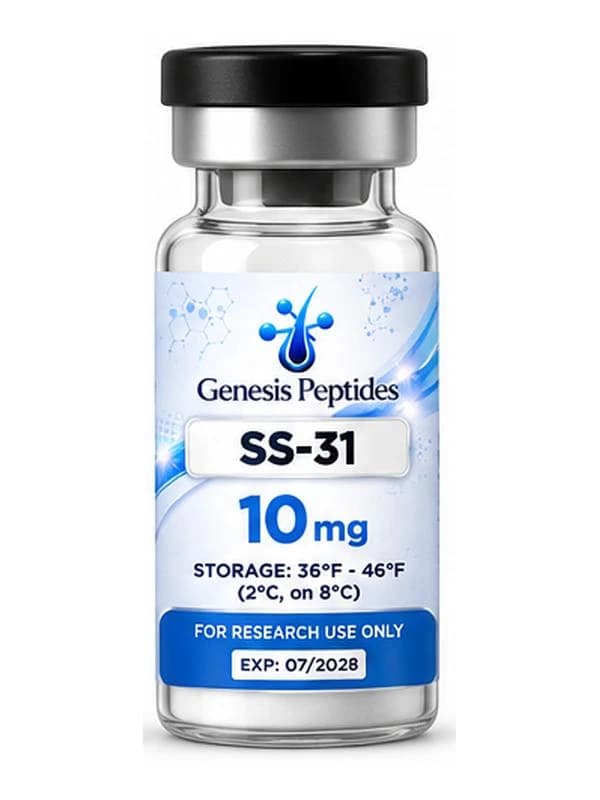
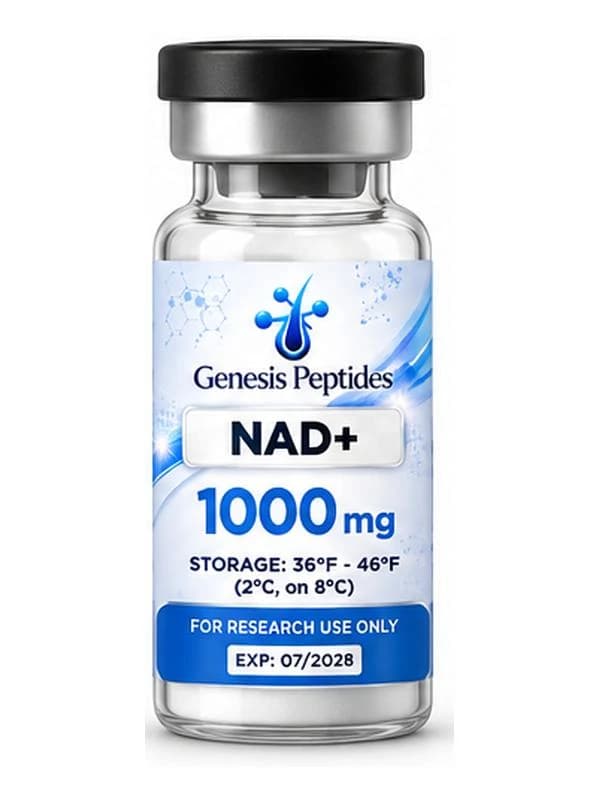
All three are linked to mitochondria, so they are often compared, and searches such as SS31 MOTS c often come from people looking to combine them. They are very different compounds: one is a natural signalling peptide, one is a synthetic membrane-targeting peptide, and one is not a peptide at all.
| Feature | MOTS-c | SS-31 (elamipretide) | NAD+ |
|---|---|---|---|
| What it is | Natural peptide, coded in mitochondrial DNA (12S rRNA gene) | Synthetic peptide, designed in the lab | Coenzyme (a dinucleotide). Not a peptide |
| Size | 16 amino acids | 4 amino acids: D-Arg-Dmt-Lys-Phe-NH2 | No amino acids |
| Molecular weight | about 2174.6 g/mol | about 639.8 g/mol | about 663.4 g/mol |
| Main research question | How mitochondria signal to the cell: folate cycle, AICAR, AMPK, nuclear genes | Protecting the inner mitochondrial membrane by binding cardiolipin | Carrying electrons in energy metabolism; fuel for sirtuin and PARP enzymes |
| Approved medicine | None | Yes, in the US only: Forzinity, for Barth syndrome (2025) | Not as a UK medicine; NAD+ precursors are sold as supplements |
| WADA 2026 list | Named, prohibited at all times (S4.4.1) | Not named | Not named; IV infusions over 100 mL per 12 hours banned as a method (M2.2) |
The main difference is the question each one answers. MOTS-c is used to study signalling from mitochondria to the rest of the cell. SS-31 is used to study what happens when the inner membrane is protected. NAD+ is used to study the cell’s energy and repair chemistry. In a study design, testing each one alone is the only way to know which caused a result, and their COAs are easy to tell apart by mass. See our [LINK: SS-31 vial] and [LINK: NAD+ vial] pages for their full specifications.
Lyophilised Powder or Ready Mixed Solution: Which Format Is This Product?
This product is a lyophilised powder. Freeze-drying removes the water from the peptide so it stays stable much longer than in solution; most MOTS-c peptides sold for research come this way. The vial holds a dry white cake or powder, which is dissolved in your chosen solvent when your experiment needs it.
- Lyophilised vial (this product): longest shelf life, easy to store at −20 °C, and you choose the solvent and concentration.
- Ready-mixed solution: already dissolved, so it starts to degrade sooner. MOTS-c’s two methionines and one tryptophan make it prone to oxidation in solution. We also offer MOTS c in a pre-filled research pen [LINK: MOTS-c pen, if stocked; otherwise delete].
Certificate of Analysis and Purity Testing for Each Batch
Every batch of our MOTS-c comes with a certificate of analysis (COA) from [CONFIRM: lab name] [independent third-party lab: CONFIRM]. The COA shows two separate tests: HPLC, which measures purity, and mass spectrometry, which confirms the molecule. Both are needed. A high purity figure alone does not prove the main peak is MOTS-c, and a correct mass alone does not show how much of the sample is impurity.
How to Find and Download the Certificate for Your Batch
- Find the batch number on your vial label [and on the packing slip: CONFIRM].
- Go to [LINK: COA library page], or use the COA link in the product images on this page.
- Choose the certificate whose batch number matches your vial and download the PDF.
- If you cannot find your batch, contact us at [CONFIRM: email] and we will send it.
How to Read HPLC Purity and Mass Spectrometry Results
- HPLC purity: the trace shows one main peak for MOTS-c and smaller peaks for impurities, such as “deletion” sequences missing one amino acid, or oxidised forms. Purity is the main peak’s area as a percentage of all peaks. This batch: [CONFIRM: __%].
- Mass spectrometry: the measured monoisotopic mass should be about 2173.1 (average about 2174.6). A peptide this size with several positive charges usually shows as multiply charged ions: [M+2H]2+ at about 1087.6, [M+3H]3+ at about 725.4 or [M+4H]4+ at about 544.3. A peak 16 units heavier (about 2189) points to one oxidised methionine.
- Net peptide content (if shown): the share of the powder that is peptide, as opposed to counter-ions (acetate or TFA) and residual water. With four basic residues, counter-ions can be a sizeable share of the weight, so net content is often well below 100% even when purity is high.
- Check the details: the product name, batch number, test date and lab name should all be on the certificate.
How to Store and Handle a Lyophilised Peptide Vial
As a dry, lyophilised powder, MOTS-c is much more stable than in solution. For long-term storage, keep the sealed vial at −20 °C, away from light and moisture. For short periods, 2–8 °C in a fridge is generally suitable for lyophilised peptides [CONFIRM in-house guidance], and short periods at room temperature during delivery are normal. Peptide salts attract water from the air, so before opening a cold vial, let it reach room temperature so moisture does not condense on the powder. Handle with gloves, using sterile technique, in a lab setting.
Storage Before and After Reconstitution
- Before reconstitution: sealed vial at −20 °C long term, or 2–8 °C short term. MOTS c shelf life unopened: [__ months: CONFIRM], and never past the expiry date on the label.
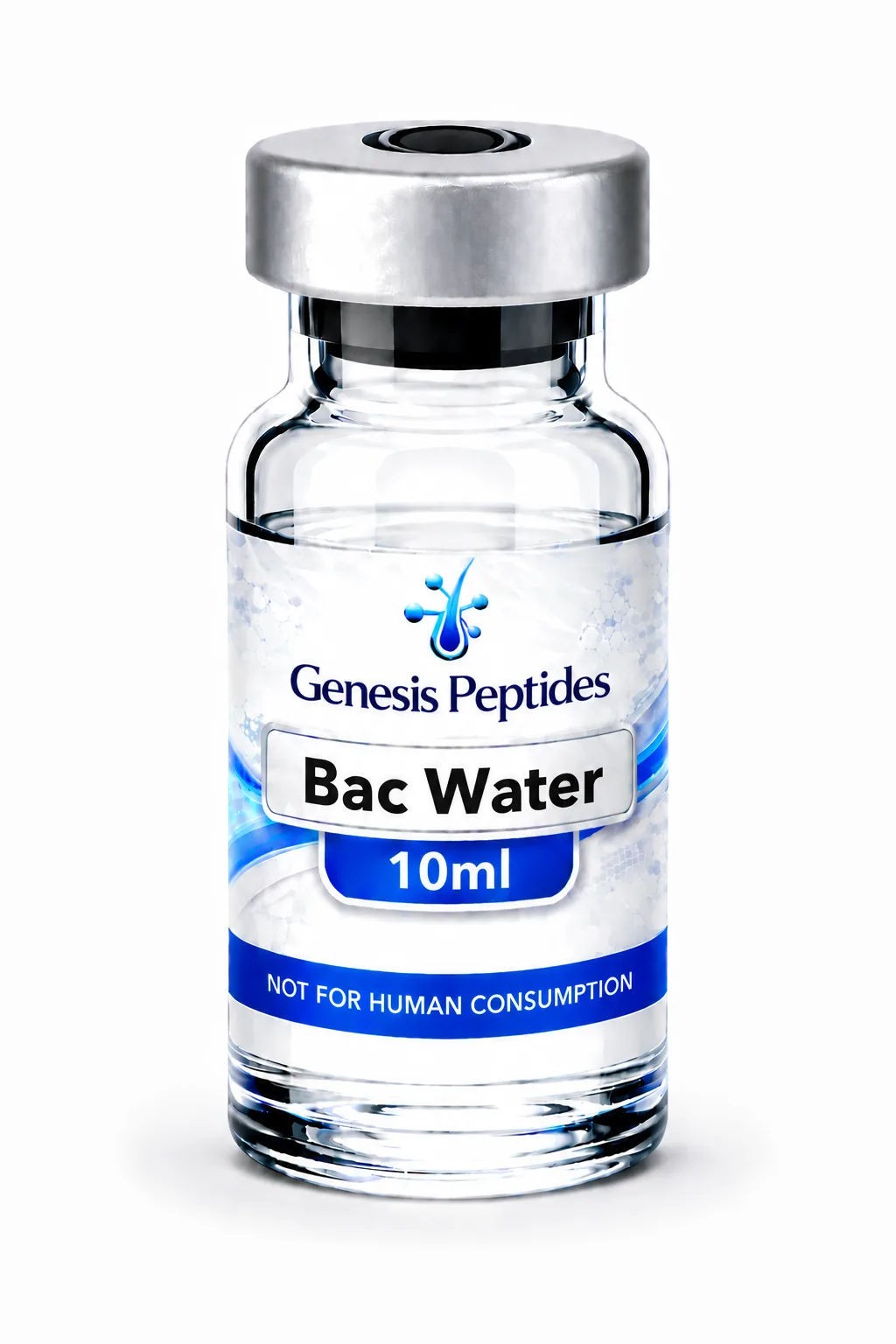
- Reconstitution: in research protocols, the powder is usually dissolved in sterile water or bacteriostatic water [LINK: bac water], added slowly down the side of the vial and swirled gently rather than shaken. The volume depends on the concentration your assay needs; we do not give dosing or reconstitution charts.
- After reconstitution: store the solution at 2–8 °C, protected from light, and use within [__ days/weeks: CONFIRM from your stability data]. Avoid repeated freezing and thawing; if longer storage is needed, split the solution into single-use aliquots and freeze them.
- Discard any solution that turns cloudy, changes colour or contains particles.
Is Research Use of This Peptide Legal in the UK, and Is It Banned in Sport?
[LEGAL REVIEW: this section]
These are the facts we can state; they are not legal advice.
- Not a controlled drug. MOTS-c is not listed under the Misuse of Drugs Act 1971 [VERIFY].
- Not a licensed medicine. MOTS-c has no marketing authorisation from the MHRA or any other regulator, so it cannot legally be sold or supplied in the UK as a medicine for human use, or as a food supplement.
- How we sell it. We supply MOTS c UK stock as a research chemical, labelled and sold for laboratory use and not for consumption [LEGAL REVIEW]. We will not sell to anyone who says they intend to use it on a person or an animal.
Is it banned in sport? Yes. MOTS-c is named on the World Anti-Doping Agency (WADA) 2026 Prohibited List, in section S4.4.1 (metabolic modulators: activators of AMPK), as “mitochondrial open reading frame of the 12S rRNA-c (MOTS-c)”. It is prohibited at all times, in and out of competition. It has been named explicitly since the 2024 list [VERIFY year]. Athletes covered by UK Anti-Doping (UKAD) rules should not handle any MOTS peptide product outside a properly approved research setting, and should check with UKAD if unsure.
What to Check Before Buying Research Peptides in the UK
Before you buy MOTS-c or any other research peptide, check:
- A batch-matched COA with both HPLC purity and mass spectrometry identity, from a named lab. For MOTS-c, the mass should be about 2174.6.
- The exact compound. The listing should give the full 16-amino-acid sequence, the amount per vial, and whether it is a single peptide or a blend. A MOT c peptide for sale without a stated sequence is a reason to ask questions.
- Net peptide content and salt form, so you know how much actual peptide is in the vial. A MOTS c sale price per vial means little without this.
- Clear research-use labelling and no dosing, weight-loss, energy or anti-ageing claims. A supplier that makes them is selling outside the rules.
- A UK address and contact details, and dispatch from the UK. If you buy MOTS c peptide stock from overseas, it may be held at customs.
The lowest price is rarely the best value if there is no batch certificate behind it. Whether you buy from us or anyone else, check the COA before you open the vial. For MOT c peptide UK orders, add this vial to your basket at the top of the page to place a MOTS-c peptide buy order.
UK Delivery, Dispatch and Packaging
- Dispatch: orders placed before [CONFIRM: time] on a working day are dispatched the same day from [CONFIRM: town/county].
- Delivery: [CONFIRM: carrier and service, e.g. Royal Mail Tracked 24], [CONFIRM: price / free over £__].
- Packaging: vials are sealed and packed in [CONFIRM: protective packaging details], in plain outer packaging. Lyophilised peptides are stable at room temperature for the length of normal UK transit; store them as described above on arrival [CONFIRM].
- Payment: [CONFIRM: payment methods].
Our MOTS c UK peptides are held and shipped within the UK, so there are no customs delays when you buy MOTS c peptide UK stock from us. Every MOTS c peptide buy or MOTS c buy order includes the batch number on the packing slip for COA lookup, and each batch is tested before it goes on sale. A MOT c peptide buy of several vials can be supplied from a single batch on request [CONFIRM]; to buy MOTS-c peptide for a larger lab order, contact [CONFIRM: email].
Scientific References and Published Studies
Key published studies on MOTS peptides cited on this page:
- Lee C, Zeng J, Drew BG, et al. The mitochondrial-derived peptide MOTS-c promotes metabolic homeostasis and reduces obesity and insulin resistance. Cell Metab. 2015;21(3):443–454. doi:10.1016/j.cmet.2015.02.009
- Kim KH, Son JM, Benayoun BA, Lee C. The mitochondrial-encoded peptide MOTS-c translocates to the nucleus to regulate nuclear gene expression in response to metabolic stress. Cell Metab. 2018;28(3):516–524. [VERIFY pages and DOI]
- Reynolds JC, Lai RW, Woodhead JST, et al. MOTS-c is an exercise-induced mitochondrial-encoded regulator of age-dependent physical decline and muscle homeostasis. Nat Commun. 2021;12:470. [VERIFY article number and DOI]
- Hashimoto Y, Niikura T, Tajima H, et al. A rescue factor abolishing neuronal cell death by a wide spectrum of familial Alzheimer’s disease genes and Aβ. Proc Natl Acad Sci USA. 2001;98(11):6336–6341. (Discovery of humanin) [VERIFY]
- CohBar, Inc. CB4211 Phase 1a/1b clinical trial topline results. Press release, 10 August 2021.
- World Anti-Doping Agency. Prohibited List 2026, section S4.4.1.
[CHECK: add DOI or PubMed links before publishing]
Related Research Peptides and Buying Guides
MOTS-c is often studied alongside other compounds used in mitochondrial and ageing-biology research. Related products:
- SS-31 vial: a synthetic four-amino-acid peptide that targets the inner mitochondrial membrane, compared above. [LINK: SS-31 vial]
- NAD+ vial: the coenzyme at the centre of mitochondrial energy metabolism, as a lyophilised research compound. [LINK: NAD+ vial]
- MOTS-c pen: the same peptide supplied pre-mixed in a research pen. [LINK: MOTS-c pen, if stocked; otherwise delete]
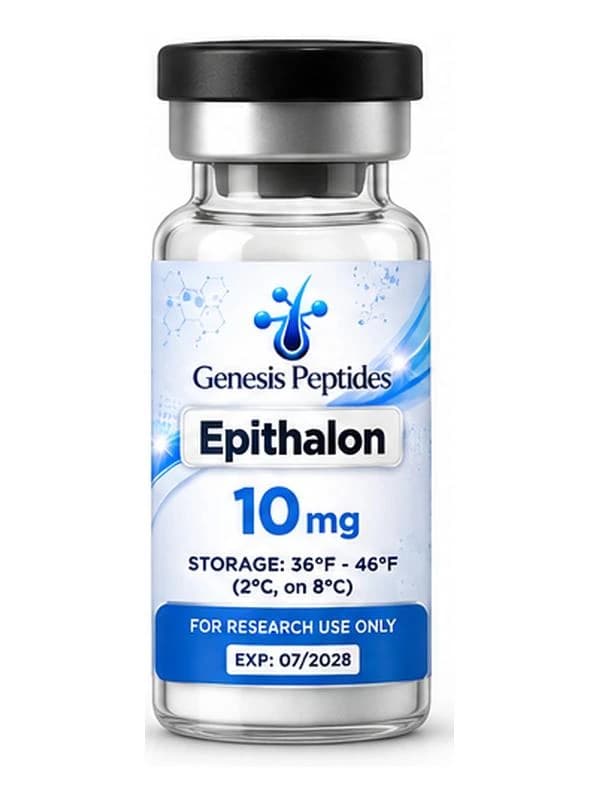
- Epitalon 10mg vial: a short synthetic peptide studied in ageing-biology models. [LINK: Epitalon vial]
- Bacteriostatic water 10ml: for reconstituting lyophilised peptides in research protocols. [LINK: Bac water]
- Guides: [LINK: How to read a peptide COA] · [LINK: How to store research peptides]
Or return to the top of this page to order MOTS-c 40mg.
All products are for laboratory research use only. Not for human or veterinary use.
FAQ
Frequently Asked Questions
Quick answers on batch testing, delivery and ordering. Can’t find what you need? Our team is happy to help.
Contact UsWhat is inside a MOTS c vial?
Only lyophilised peptide powder: 40mg of MOTS c (sequence MRWQEMGYIFYPRKLR) as its [CONFIRM: acetate/TFA] salt, with no water, solvent, filler or other active ingredient. The exact purity and net peptide content of each vial are on the batch COA.
Is this product for human use?
No. This vial is sold for laboratory research use only. It is not a medicine, food supplement or cosmetic, it is not made to medicine standards, and it must not be used in people or animals outside approved research. We do not give dosing or usage advice.
Are there any human studies on it?
Not of MOTS-c given as a treatment. Studies have measured the body’s own MOTS-c, for example its rise in muscle and blood during exercise. A modified version, CB4211, had a small Phase 1a/1b trial in which liver fat fell by about the same amount as with placebo. MOTS-c is not an approved medicine anywhere.
Is it legal to buy in the UK?
Buying our MOTS-c peptide UK stock as a research chemical for laboratory use is the basis on which we supply it [LEGAL REVIEW]. It is not a controlled drug, but it is not a licensed medicine in the UK and must not be sold or used as one, or as a supplement. It is banned at all times in sport under the WADA list.
Is this product third party tested?
Yes. Every batch of our MOTS c peptide UK stock is tested by [CONFIRM: lab name] [CONFIRM independent] for HPLC purity and mass spectrometry identity, and the batch certificate is available to download before or after you buy.
How long can it be stored once reconstituted?
Keep reconstituted MOTS-c at 2–8 °C, away from light, and use it within [__ days/weeks: CONFIRM]. For longer storage, freeze single-use aliquots and avoid repeated freeze-thaw cycles. Unopened lyophilised vials last much longer at −20 °C.
Calculator
Peptide Reconstitution Calculator
Enter the amount in the vial, the volume of diluent added and the amount you need. The calculator works out the concentration and the volume to measure.
- Volume to measure
- 0.013 ml
- 12.5 µl
- Concentration
- 20,000 mcg/ml
- 20 mg/ml
- Portions per vial
- 160
- at 250 mcg each