
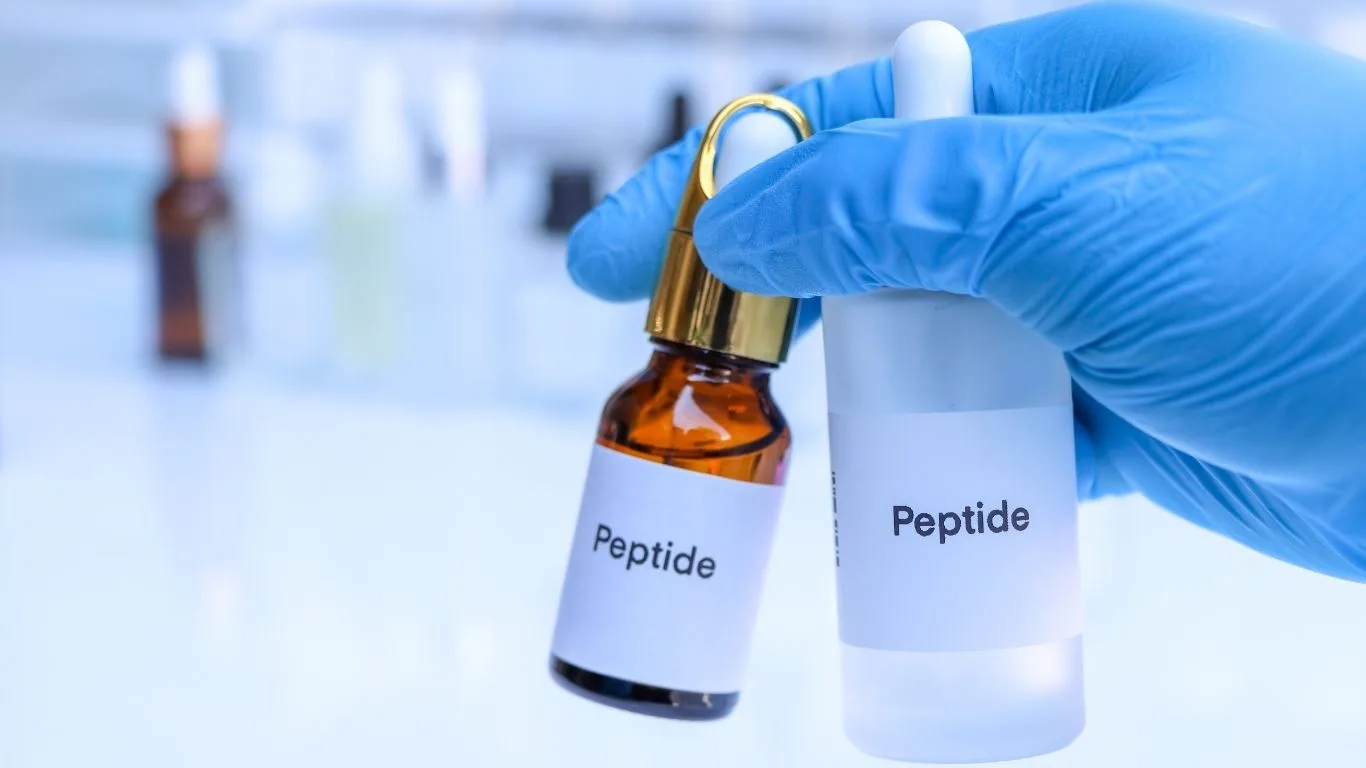
The name sounds like a superhero but in the lab it is two small peptides and no claws. If you have seen the Wolverine peptide stack all over your feed and want to know what it really is then this guide will explain it in plain words.
The Wolverine stack is a pairing of BPC-157 and TB-500. People discuss it for tissue repair and recovery.
What Is the Wolverine Peptide Stack?
A stack means that two or more compounds are used together because people believe they support each other. The Wolverine stack has just two parts. They are BPC-157 and TB-500. The nickname comes from the idea of fast healing.
Peptides are short chains of amino acids. They act like small messages that tell cells what to do. The theory is that one of these messages helps organise repair and the other helps repair cells move to the right place.
What Is BPC-157?
BPC-157 is a lab made peptide with 15 amino acids. It is based on a protein called body protection compound which was found in human stomach fluid. The stomach lining heals fast even though it sits in strong acid. That made researchers curious about what protects it.
In animal studies BPC-157 has been linked to faster healing of tendons and ligaments and muscle and nerves and the gut. Researchers believe it may improve blood vessel signalling to damaged tissue. New blood vessel growth is called angiogenesis. Blood vessels bring oxygen and nutrients and that matters because tendons heal slowly.
Some people describe BPC-157 as a healing traffic controller. Healing has three phases. First comes inflammation which is the alarm system. Then comes repair when new tissue and blood vessels are built. Last comes remodelling when extra scar tissue is cleared and the tissue becomes strong again. The idea is that BPC-157 may help these phases happen at the right time. This is a theory based on animal work.
What Is TB-500?
TB-500 is a short lab made piece of a natural protein called thymosin beta 4. The full protein has 43 amino acids. TB-500 copies only a small stretch of seven amino acids that binds to actin. Actin is the inner skeleton of a cell. It lets cells change shape and move.
Repair needs cells to travel into the injured area. The idea is that anything that helps actin work well may help repair cells arrive faster. That is the roads part of the story.
One point is often mixed up online. TB-500 is much smaller than the full thymosin beta 4 protein. Most of the exciting animal and human research was done on the full protein and not on TB-500. This means the results do not transfer directly. Newer lab work even suggests that part of the effect of TB-500 in cells may come from a breakdown product of it.
How Are They Thought to Work Together?
The popular picture is a building site after a storm. BPC-157 is the foreman who coordinates the work and the blood supply. TB-500 builds the roads so workers can reach the site. Together they are said to cover supply and travel.
It is a neat story but the evidence is thin. A 2026 study in rats looked at a cut Achilles tendon. There were four groups with eight rats each. One group got BPC-157 and one got TB-500 and one got both and one got nothing. TB-500 alone gave the strongest results. The combination did not beat either peptide alone. The authors called the study exploratory and said it needs more work.
So the claim that the two work better together than apart is still an open question and not a proven fact.
Where Do GLOW and KLOW Fit In?
The Wolverine stack is the base of a bigger family. Add GHK-Cu and you get the GLOW stack. Add KPV as well and you get the KLOW stack. You can read our guides on both to see how the family grows. The same warning applies to all of them. They are theory rich and human proof is thin.
Side Effects and Safety Points
Most safety data comes from animal toxicology which generally reports mild effects. There is no full human safety data for either peptide. Here are the main points to know.
- Redness or swelling or bruising or pain where an injection is given has been reported
- Peptides that act on blood vessel pathways may cause dizziness or heart and blood vessel changes
- Long term effects in people are unknown
- Product quality can vary a lot when peptides are sold online
Then there is the cancer question. There is no proof that BPC-157 or TB-500 cause cancer. However both are linked to new blood vessel growth and new blood vessels can also feed tumours. Human data is too small to rule anything out. Anyone with an active tumour or a high cancer risk should be especially careful and speak with a qualified doctor.
Neither peptide is an approved medicine. WADA prohibits both at all times in sport. This blog is for education only and is not medical advice.
Why Quality and Sourcing Matter
Peptides sold online are not checked in the way approved medicines are. A product may be weak or contaminated or may not contain what the label says. Buying a peptide with no clear label is like boarding a bus with no destination sign and nobody should have to guess where it goes.
At Genesis Peptides we supply research peptides in the UK. Our products are for laboratory research use only and not for human consumption. We believe every researcher deserves clear information and honest labelling.
Looking for Research Peptides in the UK?
Genesis Peptides is here to help UK researchers find the right peptides with clear and honest information. Our products are for research use only. Have a question about BPC-157 or TB-500 or any other peptide on our website? Call us or message us on WhatsApp at +44 7343 047659 and our team will be happy to help.
Conclusion
So what is the Wolverine peptide stack? It is a pairing of BPC-157 and TB-500 built around a foreman and roads idea for tissue repair. Both peptides have interesting animal research but human proof is missing and the pair has not been shown to beat either one alone.
Read the science with care and choose clear labels over big promises. Genesis Peptides is here to support your research with clear information and honest labelling.
Frequently asked questions
What is the Wolverine peptide stack?
It is a pairing of two research peptides called BPC-157 and TB-500. People discuss it for tissue repair and recovery. It is supported mainly by animal studies and has no controlled human trials.
What does BPC-157 do?
BPC-157 is a 15 amino acid peptide based on a protein from stomach fluid. In animals it is linked to faster healing of tendons and gut tissue and to better blood vessel signalling. Human proof is missing.
What does TB-500 do?
TB-500 is a small fragment of thymosin beta 4. It binds to actin which helps cells move. The idea is that this helps repair cells reach injured tissue. Research on the fragment itself is limited.
Is TB-500 the same as thymosin beta 4?
No. Thymosin beta 4 is a 43 amino acid protein. TB-500 is a seven amino acid fragment of it. Results from the full protein do not directly apply to the fragment.
Is the Wolverine stack better than either peptide alone?
This is not proven. In a 2026 rat tendon study the combination did not beat TB-500 alone. The authors said more research is needed.
Is the Wolverine stack safe?
Safety has not been established in people. Animal data generally shows mild effects but there are no full human safety studies. There is also a theoretical caution about blood vessel growth and tumours. Anyone with health questions should speak with a qualified doctor.