
SS-31 sounds like a secret agent but it is really a tiny four amino acid peptide that works in the power stations of your cells. It is also known as elamipretide.
SS-31 is one of the few peptides with an FDA approval for a prescription product. That approval is very narrow. Many of the bigger claims you see online come from animal studies. We will keep every claim in this guide tied to what research actually shows.
What Is SS-31 Peptide?
SS-31 is a synthetic tetrapeptide. That means it is built from just four amino acids. It is also called elamipretide. Earlier names for it include MTP 131 and Bendavia.
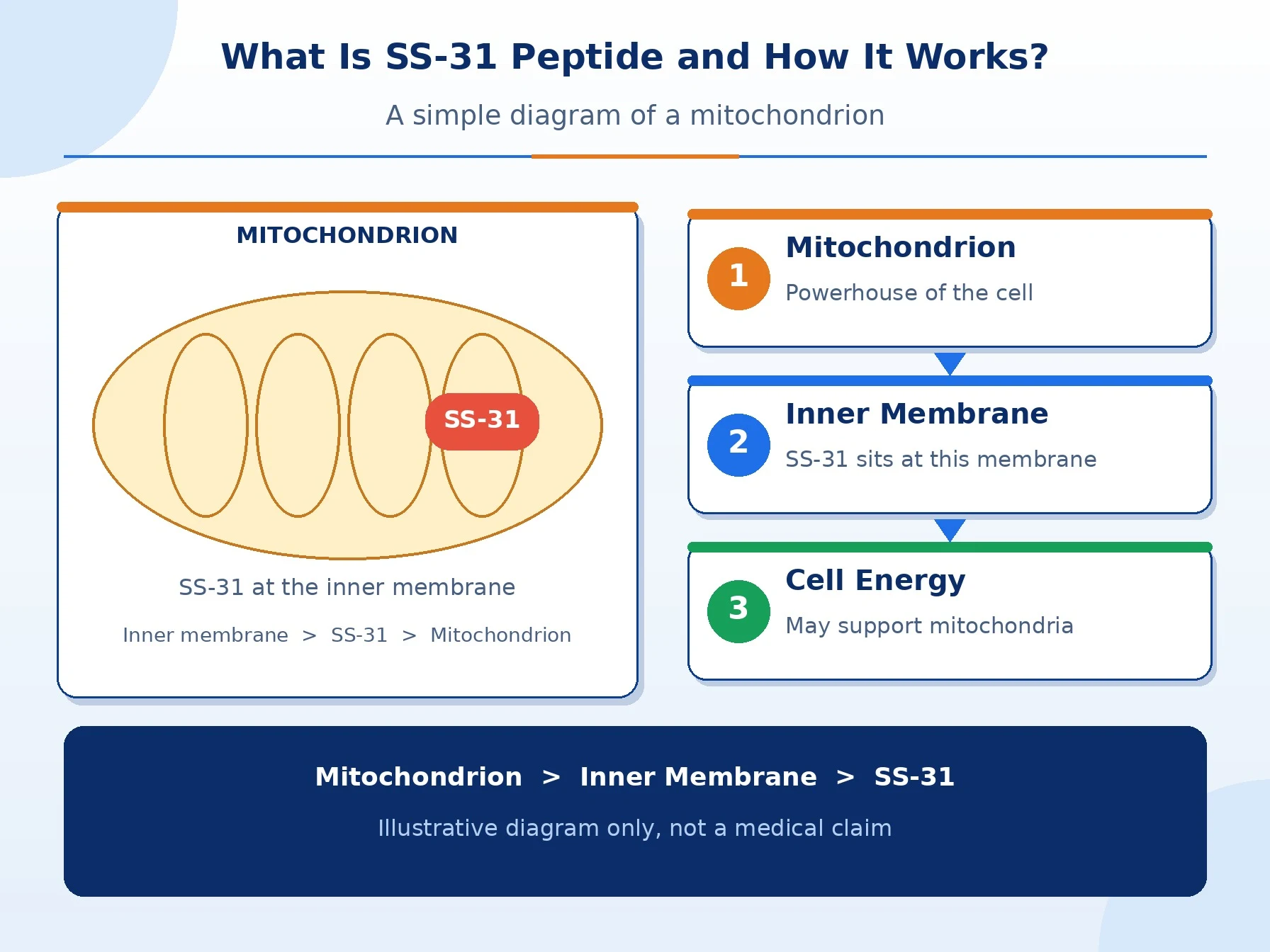
SS-31 belongs to a group called mitochondria targeted peptides. These are made in the lab and designed to reach the mitochondria. Its small size and positive charge help it travel across membranes and gather at the inner membrane of the mitochondria.
What Are Mitochondria and Why Do They Matter?
Mitochondria are the power stations of your cells. They make a molecule called ATP which is the energy currency of the cell. The work happens along a chain of proteins in the inner mitochondrial membrane. This chain is called the electron transport chain.
The chain is not perfect. Sometimes electrons leak out and form reactive oxygen species. These can damage the proteins and fats around them. Researchers link weak mitochondria with ageing and with many long lasting diseases. This is a link and not proof that fixing mitochondria will cure these conditions.
How Does SS-31 Work?
Most of what we know about how SS-31 works comes from lab and animal studies. Here is the main idea in simple steps.
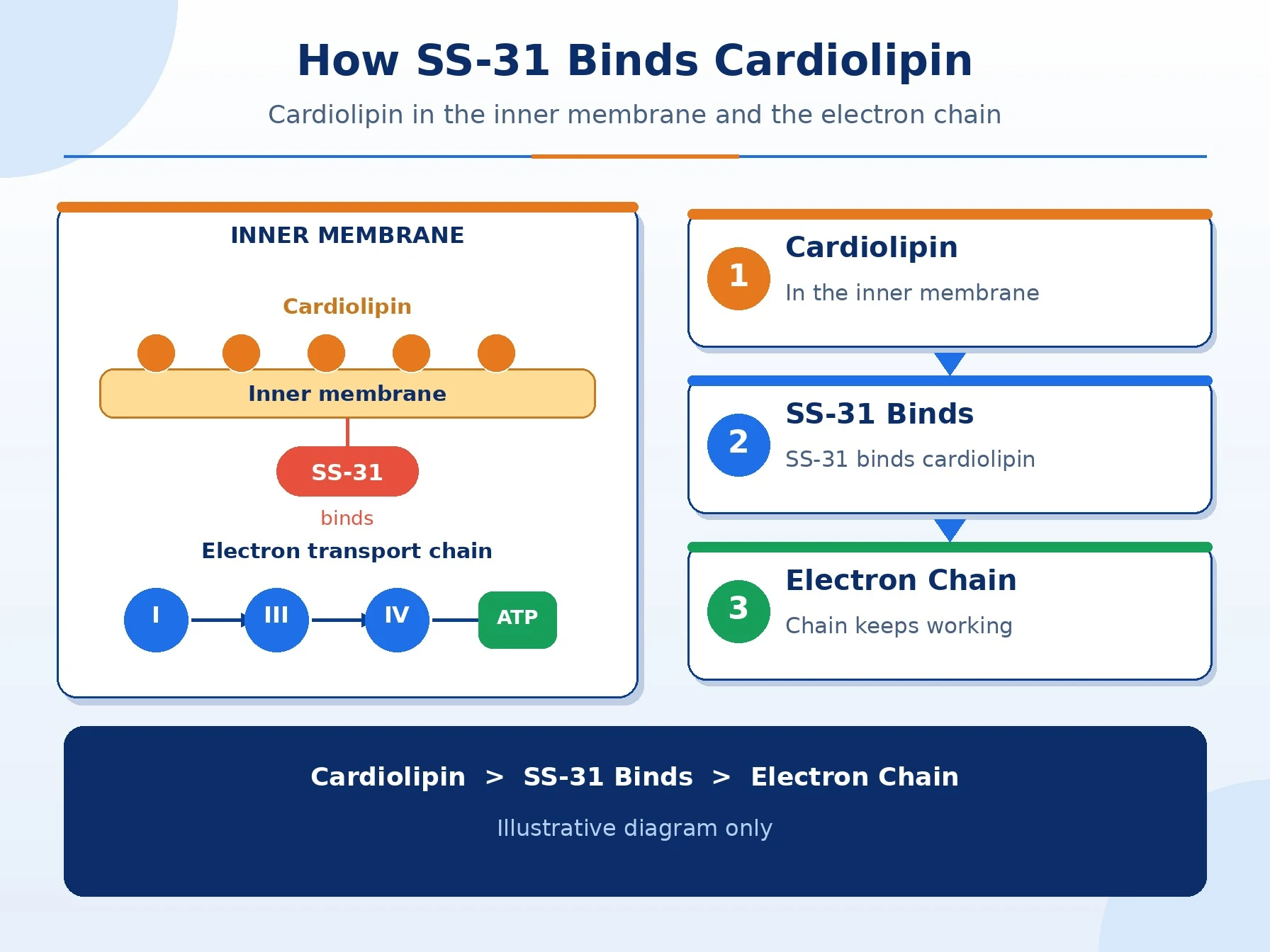
- The inner mitochondrial membrane contains a fat called cardiolipin. It helps hold the energy making proteins in place.
- Reactive oxygen species can damage cardiolipin. This makes the chain less stable and can create even more reactive oxygen species. Researchers describe this as a vicious cycle.
- SS-31 is thought to bind to cardiolipin and protect it from damage.
- A more stable membrane may mean better ATP production and less oxidative stress.
SS-31 does not act like most peptides. It does not switch on a receptor or a growth pathway. It acts more like a support beam inside the mitochondria. This is one reason researchers find it interesting.
Is SS-31 FDA Approved?
Yes for one specific use. In September 2025 the FDA gave accelerated approval to a prescription injection called Forzinity which contains elamipretide. It is approved for Barth syndrome in patients who weigh at least 30 kilograms.
Barth syndrome is an ultra rare genetic condition. It changes the structure and amount of cardiolipin. It causes weak muscles and heart problems.
Accelerated approval has a special meaning. The FDA based the decision on improved strength in a knee muscle. The FDA considers this reasonably likely to predict real benefit. The company must now run another trial to confirm that the strength gain helps patients in daily life.
The research history is also more complicated than headlines suggest. A small early trial in 12 people missed its main goals. Improvements in walking and symptoms were then reported in a longer open label follow up. Open label means that everyone knew they received the drug.
What Do Other Human Trials Show?
SS-31 has been tested in other conditions. The results are mixed.
- Primary mitochondrial myopathy. A trial in 218 people for 24 weeks did not meet its two main goals which were walking distance and fatigue.
- Dry macular degeneration. A trial in 176 people did not meet its main goals. Injection site reactions were more common with the drug.
- Heart failure. A trial in 71 people for 28 days did not improve the main heart measures.
These trials suggest that SS-31 was generally well tolerated. They also show that a good mechanism does not always lead to a clear benefit in people.
Potential Benefits Researchers Explore
Online you will see long lists of possible uses. Here is where the evidence really stands.
Brain Health
Mouse studies report better learning and memory markers in models of Alzheimer disease and in older mice. Other mouse studies looked at recovery after brain injury. There are no human trials for these uses.
Kidney and Metabolic Health
Several mouse studies report better kidney function in different models. Mitochondrial stress is also linked with insulin resistance. Studies in people for these uses are missing.
Fatigue and Long COVID
Some people report better energy after using SS-31. These are stories and not trials. No direct study has tested SS-31 for chronic fatigue or long COVID.
Anti Ageing
Studies in older mice report better exercise capacity and heart and muscle function. There is no human anti ageing trial and no strong lifespan data. Researchers sometimes say that SS-31 might extend healthspan. That is an idea and not a result.
SS-31 Evidence at a Glance
| Area | What research found | Strength of evidence |
|---|---|---|
| Barth syndrome | Accelerated FDA approval based on muscle strength | Approved with a confirmatory trial required |
| Primary mitochondrial myopathy | Main goals missed in a trial of 218 people | Negative |
| Dry macular degeneration | Main goals missed in a trial of 176 people | Negative |
| Heart failure | No clear heart benefit in a trial of 71 people | Negative |
| Brain and kidney health | Benefits seen in mouse models | Animal only |
SS-31 Side Effects and Safety
SS-31 has more human safety data than most research peptides because it went through trials. That data comes from patients with serious conditions and not from healthy people using it for ageing.
- Injection site reactions are the most common effect. They include redness and swelling and itching and bruising and pain.
- Headache and dizziness and nausea have also been reported in trials.
- Serious allergic reactions are possible. The prescription label lists serious hypersensitivity as a reason not to use it.
- People with severe kidney problems may need a lower amount under the care of a doctor.
- Long term safety in healthy people is not known.
You may read that SS-31 has no real side effects. That claim goes further than the evidence. The FDA notes that serious reactions have been reported with the approved product.
This blog is for education only and is not medical advice. Always speak with a qualified doctor about your own health.
Research SS-31 vs Forzinity
This point matters. Forzinity is a prescription medicine made and checked under strict rules. It is approved for one condition. SS-31 sold as a research peptide is a different product and it is not a substitute for the medicine. Amounts and uses promoted online for ageing or energy are not backed by clinical trials.
Why Quality and Sourcing Matter
Because the evidence is still growing the quality of the material matters even more. A vial with no clear label is like a map with no streets and nobody should have to guess the way. Peptides from unclear sources can be mislabelled or contaminated and that makes any result hard to trust.
At Genesis Peptides we supply research peptides in the UK. Our products are for laboratory research use only and not for human consumption. We believe every researcher deserves clear information and honest labelling.
*\[Image Placeholder showing a clean research vial with a clear label. Alt text Genesis Peptides research peptide vial\]*
Looking for Research Peptides in the UK?
Genesis Peptides is here to help UK researchers find the right peptides with clear and honest information. Our products are for research use only. Have a question about SS-31 or any other peptide on our website? Call us or message us on WhatsApp at +44 7343 047659 and our team will be happy to help.
Conclusion
So what is SS-31 peptide and how does it work? It is a tiny four amino acid peptide that is thought to protect cardiolipin and support the energy making chain in the mitochondria. A prescription form has accelerated FDA approval for Barth syndrome.
The honest summary is that SS-31 is a fascinating research topic and not a proven anti ageing tool. Keep your expectations realistic and always choose a source you can trust. Genesis Peptides is here to support your research with clear information and honest labelling.
Frequently asked questions
What is SS-31 peptide?
SS-31 is a synthetic peptide made of four amino acids. It is also called elamipretide. It is designed to reach the inner membrane of the mitochondria and bind a fat called cardiolipin. A prescription form is FDA approved for Barth syndrome. Other uses are still being studied.
How does SS-31 work?
SS-31 is thought to bind cardiolipin in the inner mitochondrial membrane and protect it from damage by reactive oxygen species. This may keep the energy making chain more stable. Most of this understanding comes from lab and animal studies.
Is SS-31 FDA approved?
A prescription product with elamipretide called Forzinity received accelerated FDA approval in September 2025 for Barth syndrome in patients over 30 kilograms. It is not approved for ageing or energy or any other use. A confirmatory trial is still required.
What are the potential benefits of SS-31?
The strongest evidence is in Barth syndrome where it improved muscle strength. Mouse studies suggest possible benefits for the brain and kidneys and for ageing. These have not been shown in people. Several human trials in other conditions missed their main goals.
Does SS-31 work for anti ageing?
It is not proven. Studies in older mice report better exercise capacity and heart and muscle function. There is no human anti ageing trial and no strong lifespan data. Ideas about healthspan are still just ideas.
What are the side effects of SS-31?
The most common effects are injection site reactions such as redness and swelling and itching. Headache and dizziness and nausea have also been reported. Serious allergic reactions are possible. Long term safety in healthy people is not known. Speak with a doctor if you feel unwell.
Is research SS-31 the same as Forzinity?
No. Forzinity is a prescription medicine approved for Barth syndrome and made under strict rules. SS-31 sold as a research peptide is for laboratory use and is not a substitute for it. Anyone with health questions should speak with a qualified doctor.