Buy BPC-157 + TB-500 Wolverine 20mg Nasal Spray in the UK: Research Use Only, COA Included, Fast Dispatch
For laboratory research use only. Not for human or veterinary use. Not a medicine and not licensed by the MHRA.
- Batch-tested Certificate of analysis for every lot
- Research use only For laboratory research
- UK stock Dispatched from the UK
- Delivery from £6.05 Free over £100.00. Delivery policy
Nasal PeptidesResearch compound
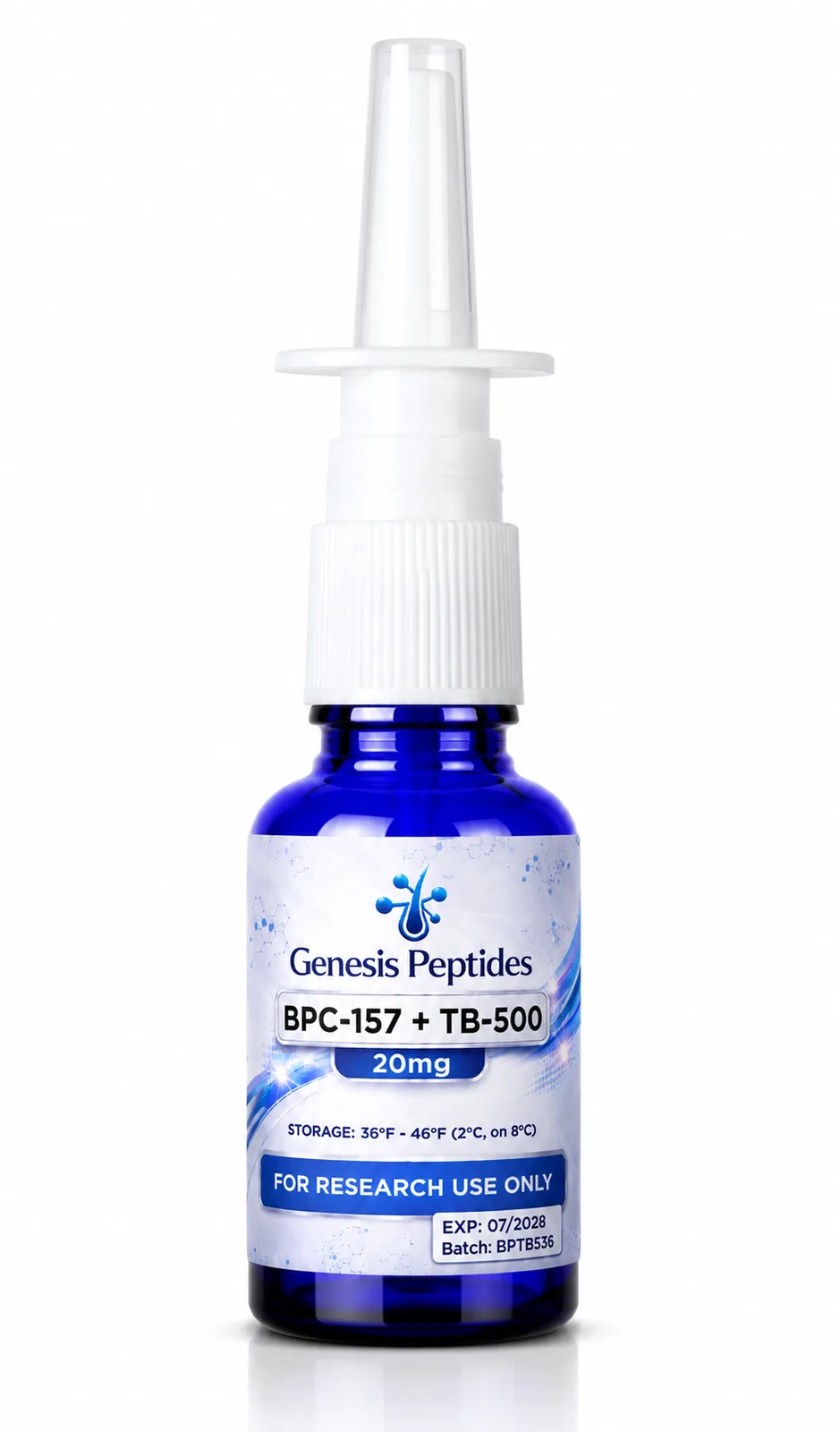
BPC-157 + TB500 Wolverine 20mg Nasal Spray
Genesis Peptides supplies a BPC 157 TB 500 research blend, often called the Wolverine stack, as a 20mg ready-made nasal spray.
- HPLC and mass spectrometry
- Research use only
£69.99no VAT charged
In stockUK stock, dispatched from the UK
- Strength
- 20mg
- Peptides
- BPC-157 and TB-500 (BPC 157 and TB 500 in one bottle)
[INSERT MY APPROVED RESEARCH-USE WORDING]
BPC-157 + TB-500 Wolverine Nasal Spray 20mg: Complete Product Overview
This BPC 157 TB 500 blend is a pre-dissolved research format. There is no powder to reconstitute and no second vial to combine, and the metered pump delivers the same volume each time it is pressed. It is intended for researchers whose study design calls for a combined solution of both peptides rather than two separate lyophilised vials. Each bottle is sealed, labelled with a batch number and expiry date, and matched to a batch COA.
What You Get in Each 20mg Wolverine Nasal Spray Bottle
- One [CONFIRM: fill volume, e.g. 10ml] bottle with a metered spray pump and protective cap
- 20mg of total peptide: [CONFIRM: 10mg] BPC-157 and [CONFIRM: 10mg] TB-500 [CONFIRM: full-length thymosin β4 or Ac-LKKTETQ fragment, and free base or acetate salt, as stated on the COA]
- Batch (lot) number, manufacture date and expiry date printed on the label
- A Certificate of Analysis for that batch, [ADD: “included in the box” or “downloadable from this page”]
- Safety Data Sheet (SDS) available [ADD: link or “on request”]
- “For laboratory research use only” labelling on the bottle and outer packaging
What Is in the Wolverine Blend: Composition, Ratio and Format
The Wolverine peptide blend combines two synthetic peptides in one solution:
- BPC-157, a 15-amino-acid peptide (pentadecapeptide)
- TB-500, a synthetic peptide related to the naturally occurring protein thymosin beta-4 (Tβ4)
The two are combined at an equal mass ratio of [CONFIRM: 1:1 by mass, 10mg:10mg]. Equal mass is not the same as equal numbers of molecules, which is explained in the equimolar section below. The solvent is [CONFIRM: e.g. bacteriostatic water / sterile saline] with [CONFIRM: preservative, if any].
Strength, Concentration and Key Specifications at a Glance
| Peptides | BPC-157 and TB-500 (BPC 157 and TB 500 in one bottle) |
|---|---|
| Total peptide per bottle | 20mg |
| Split by mass | [CONFIRM: 10mg BPC-157 / 10mg TB-500] |
| Fill volume | [CONFIRM: ml] |
| Concentration | [CONFIRM: mg/ml, i.e. 20mg ÷ fill volume; e.g. 10ml gives 2mg/ml total] |
| Volume per actuation | [CONFIRM: from pump spec, e.g. 0.1ml] |
| Other ingredients | [CONFIRM: solvent and any preservative] |
| Purity (HPLC) | [ADD: from current COA, reported per peptide, e.g. ≥98%] |
| Storage | Refrigerate at 2–8°C, protect from light [CONFIRM against label] |
Who Is This Wolverine Blend Made for? A Guide for Laboratory Researchers
This Wolverine stack peptide spray is sold to adults buying for in-vitro or laboratory research, such as academic groups, contract research labs and independent researchers studying peptide stability, intranasal formulation or the cell biology of tissue repair. It is not sold for personal use or for use in animals outside an approved research setting. If you are looking for something to use on yourself, this is not the right product, and we would point you to a GP or pharmacist instead.
What Is BPC-157 + TB-500 and Why Are They Studied Together in Peptide Research?
BPC 157 and TB500 are two unrelated synthetic peptides that are both studied in laboratory and animal models of tissue repair. They have different origins, different sizes and, according to the research so far, act through different pathways. That difference is the main reason researchers are interested in studying them side by side.
BPC-157 Explained in Plain English: A Synthetic Peptide Used in Laboratory Studies
What is BPC 157? BPC stands for “Body Protection Compound”. BPC-157 is a chain of 15 amino acids (sequence GEPPPGKPADDAGLV) based on part of a larger protein that researchers at the University of Zagreb, Croatia, reported finding in human gastric juice in the early 1990s. The BPC 157 peptide used in research is made synthetically. Most published work comes from that same Zagreb group, led by Professor Predrag Sikirić, and nearly all of it is in rats, mice and cell cultures. It is not an approved medicine anywhere in the world [CHECK before publishing].
TB-500 Explained in Plain English: A Synthetic Peptide Used in Laboratory Studies
What is TB500? TB-500 is a synthetic peptide linked to thymosin beta-4 (Tβ4), a 43-amino-acid protein found naturally in most human and animal cells. Tβ4’s best-known job is binding actin, the protein that forms the cell’s internal scaffold, which affects how cells move and change shape. The name “TB-500” is used in two ways: some suppliers use it for full-length synthetic Tβ4, others for a short fragment of it (Ac-LKKTETQ, amino acids 17–23), which is the region linked to actin binding. A TB500 peptide COA should tell you which one you have. Tβ4 itself has been tested in small human clinical trials (for example as an eye drop) [CHECK]; TB 500 as sold for research has not.
Why Do Researchers Study BPC-157 and TB-500 Together Rather Than Separately?
The interest in BPC157 and TB500 together is based on the idea that the two may act in different, possibly complementary ways: BPC-157 has mainly been studied for its effects on blood vessel growth and nitric oxide signalling, and Tβ4 for its effects on actin and cell migration. Researchers may want to test whether combining two different pathways changes the result compared with either peptide alone. That is a hypothesis, not an established finding.
How Are the Two Compounds Studied? Research Overview of Their Proposed Mechanisms
People often ask what does BPC 157 do. In laboratory and animal studies, researchers have proposed several mechanisms. None has been confirmed in humans.
- BPC-157: in rat tendon cell studies it increased cell outgrowth and migration and activated the FAK–paxillin pathway (Chang et al., 2011); other studies report effects on VEGF receptor 2 signalling and new blood vessel formation (angiogenesis), and on the nitric oxide system.
- TB-500 / Tβ4: Tβ4 binds monomeric G-actin, which regulates the cell’s supply of actin for building its scaffold. In cell and animal studies, Tβ4 has been linked to cell migration, angiogenesis and wound closure (Malinda et al., 1999; Goldstein et al., 2005). Data on the short fragment alone are more limited.
Common research methods include cell migration (scratch) assays, tube-formation assays for blood vessel growth, rodent wound and tendon models, and analytical chemistry work on stability and detection.
Is There Evidence for Studying BPC-157 and TB-500 Together? What Research Shows and What Is Still Unknown
What the research shows: each peptide has a body of preclinical (cell and animal) work behind it, and BPC-157 has been reported as stable in gastric juice and in solution in animal studies. What is still unknown: we are not aware of any published, peer-reviewed controlled study of BPC 157 and TB500 given together [CHECK: re-run a PubMed search before publishing]. There are no large human clinical trials of BPC-157, only a few small reports, and no human trials of TB-500 as sold. Whether the two interact, add to each other or interfere with each other has not been tested. Any research using this blend is exploring an open question.
Is the Wolverine Blend a 1:1 Mix? Equal Mass vs Equimolar Explained
The BPC 157 TB500 blend is 1:1 by mass [CONFIRM]: the same number of milligrams of each peptide. It is not 1:1 by number of molecules, because the two peptides have very different molecular weights.
What Does Equimolar Mean for a Peptide Blend?
“Equimolar” means equal numbers of molecules of each compound. Chemists count molecules in moles; one mole of any substance contains the same number of molecules (about 6.022 × 10²³). To find how many moles you have, divide the mass by the molecular weight. An equimolar blend would contain the same number of micromoles (µmol) of BPC-157 as of TB-500.
Why Equal Mass Does Not Mean Equal Molar Amounts
BPC-157 weighs about 1,419.5 g/mol [VERIFY]. TB-500 weighs about 4,963 g/mol if it is full-length Tβ4, or about 889 g/mol if it is the Ac-LKKTETQ fragment [VERIFY]. So 10mg of each gives very different molecule counts:
| 10mg of… | Approx. molecular weight | Approx. amount | Molar ratio BPC-157 : TB-500 |
|---|---|---|---|
| BPC-157 | 1,419.5 g/mol | 7.0 µmol | – |
| TB-500 as full-length Tβ4 | 4,963 g/mol | 2.0 µmol | about 3.5 : 1 |
| TB-500 as Ac-LKKTETQ fragment | 889 g/mol | 11.2 µmol | about 1 : 1.6 |
[VERIFY: all figures in this table are calculated from free-base molecular weights and assume 100% peptide content. Real values are lower because peptides are usually supplied as salts (e.g. acetate) with some water; the COA’s net peptide content figure gives the true amount.]
In other words, a 1:1-by-mass TB500 BPC157 blend is only roughly equimolar by coincidence, and only if you know which form of TB-500 it contains. Our blend uses [CONFIRM: TB-500 form], giving an approximate molar ratio of [CONFIRM from table].
How to Check the Exact Ratio on the COA
- Check the COA lists both peptides, with a separate HPLC result for each.
- Look at the mass spectrometry result for TB-500: an observed mass near 4,963 Da means full-length Tβ4, near 889 Da means the fragment [VERIFY].
- Look for the stated amount (mg) of each peptide and, if given, the net peptide content.
- Divide each amount by its molecular weight to get µmol, then compare the two.
If a supplier calls a BPC-157 and TB-500 blend “equimolar” but cannot show these numbers, treat the claim with caution.
Wolverine vs GLOW vs KLOW: What Is the Difference Between These Peptide Blends?
“Wolverine”, “GLOW” and “KLOW” are informal names the research peptide market uses for multi-peptide blends. They are not scientific or regulated terms, so the exact contents and amounts vary between suppliers. Always check the label and COA.
Wolverine Blend: BPC-157 and TB-500
The Wolverine stack is the simplest of the three: two peptides, BPC-157 and TB-500. Our version is [CONFIRM: 10mg + 10mg] in a nasal spray. Researchers searching for Wolverine stack peptides usually mean this pairing.
GLOW Blend: How It Differs from the Wolverine Blend
A GLOW blend usually contains BPC-157 and TB-500 plus GHK-Cu, a copper complex of the tripeptide glycyl-L-histidyl-L-lysine, first described in human plasma by Loren Pickart in 1973. GHK-Cu is mostly studied in skin and collagen research. Typical GLOW amounts are [ADD: your GLOW composition, e.g. GHK-Cu 50mg / BPC-157 10mg / TB-500 10mg].
KLOW Blend: How It Differs from the Wolverine Blend
A KLOW blend usually contains the three GLOW peptides plus KPV, a tripeptide (lysine-proline-valine) that matches the last three amino acids of alpha-melanocyte-stimulating hormone (α-MSH) and is studied mainly in inflammation research. Typical KLOW amounts are [ADD: your KLOW composition].
Which Blend Do Researchers Choose and Why?
The choice depends on the research question. Fewer components make results easier to interpret, which is why some researchers prefer Wolverine peptides (a two-part Wolverine peptide stack), or single peptides, for studies on BPC-157 and TB-500 alone. GLOW and KLOW add compounds studied in other areas, so they suit study designs that specifically need those compounds. Every extra component also adds a variable to control for. [LINK: GLOW and KLOW product pages, if sold]
Why Is the Nasal Spray Format Used for Peptide Blends in Research?
A nasal spray is a ready-made solution: the peptides are already dissolved and the pump delivers a fixed volume. For a two-peptide product like BPC 157 TB 500, it also removes the need to weigh, reconstitute and combine two separate vials.
How a Nasal Spray Format Differs from a Lyophilised Powder Vial
A lyophilised (freeze-dried) vial holds the peptide as a dry powder, which is generally more stable and lasts longer. The researcher adds a solvent (reconstitution) before use. A nasal spray is supplied already in solution, so it is ready to use, but peptides in solution usually have a shorter shelf life once opened.
Advantages Researchers Look for in an Intranasal Research Format
- No reconstitution step, so fewer handling and calculation errors
- A fixed, metered volume per actuation for consistent study conditions
- Both peptides already combined at a stated ratio
- A format suited to research on intranasal delivery and formulation
Limitations of the Nasal Spray Format Every Buyer Should Know About
- Very little published data exists on intranasal delivery of BPC-157 or TB-500, so how much of each peptide is absorbed this way is unknown [CHECK].
- Peptides in solution degrade faster than dry powder, so the in-use shelf life is limited.
- The ratio and concentration are fixed; you cannot adjust them.
- Larger peptides, such as full-length Tβ4, generally cross mucous membranes less readily than small ones.
- Spray volume can vary slightly with pump priming and how the bottle is held.
Wolverine Nasal Spray vs Pre-Blended Vial vs Combination Pen vs Two Separate Vials
| Nasal spray | Pre-blended vial | Combination pen | Two separate vials | |
|---|---|---|---|---|
| Form | Solution | Dry powder | Solution in cartridge | Dry powder ×2 |
| Reconstitution | None | Yes | None [CONFIRM] | Yes, twice |
| Ratio | Fixed | Fixed | Fixed | Researcher sets it |
| Storage | 2–8°C [CONFIRM] | Cool, dry; freezer long-term | 2–8°C [CONFIRM] | Cool, dry; freezer long-term |
| Shelf life in use | [CONFIRM] | Shorter once reconstituted | [CONFIRM] | Shorter once reconstituted |
Nasal Spray vs Lyophilised Vial: Key Differences in Handling and Storage
The spray is ready to use and needs refrigeration from the start. A lyophilised vial needs reconstituting with a suitable solvent, such as bacteriostatic water, but the unopened powder keeps longer and is less sensitive to temperature. Pens, such as a Wolverine stack pen or other BPC 157 pens, are also pre-filled solutions and share the spray’s need for cold storage.
Pre-Blended Vial vs Two Separate Vials: What Researchers Should Know
A pre-blended vial saves time and fixes the ratio. Two separate vials of TB500 and BPC 157 let you choose any ratio, including a true equimolar one, run single-peptide control groups, and check each peptide’s COA on its own. For studies that compare the blend with each peptide alone, separate vials are usually the better choice.
Pre-Mixed Spray vs a Powder You Reconstitute Yourself: Stability and Convenience
A pre-mixed spray is the most convenient option. Powder you reconstitute yourself is the most stable before use, and you control the solvent and concentration. The trade-off is convenience and consistency against shelf life and flexibility.
Which Format Is Easier to Store, Transport and Keep Stable?
Unopened lyophilised vials are the easiest to store and transport, because dry peptides tolerate short periods at room temperature well. Sprays and pens contain solutions and should be kept cold and used within their in-use period. Our spray ships in [ADD: packaging, e.g. insulated pouch with ice pack in warm months].
BPC-157 + TB-500 Data Sheet: Composition, Purity and Technical Details
Peptide Sequences, Molecular Formulas and Molecular Weights of Each Compound
| BPC-157 (BPC157) | TB-500 | |
|---|---|---|
| Sequence | Gly-Glu-Pro-Pro-Pro-Gly-Lys-Pro-Ala-Asp-Asp-Ala-Gly-Leu-Val (GEPPPGKPADDAGLV) | Full Tβ4: Ac-SDKPDMAEIEKFDKSKLKKTETQEKNPLPSKETIEQEKQAGES or fragment: Ac-LKKTETQ [CONFIRM which] |
| Length | 15 amino acids | 43 amino acids (full) or 7 (fragment) |
| Molecular formula | C62H98N16O22 [VERIFY] | C212H350N56O78S (full) or C38H68N10O14 (fragment) [VERIFY] |
| Molecular weight | about 1,419.5 g/mol [VERIFY] | about 4,963 g/mol (full) or 889 g/mol (fragment) [VERIFY] |
| CAS number | 137525-51-0 [VERIFY] | 77591-33-4 for Tβ4 [VERIFY; fragment CAS from your supplier] |
| Amount per bottle | [CONFIRM: 10mg] | [CONFIRM: 10mg] |
| Salt form | [CONFIRM: e.g. acetate] | [CONFIRM] |
Appearance, Solubility and Format of the Product
As raw materials, both peptides are white to off-white powders that dissolve readily in water. In this product, BPC 157 & TB 500 are supplied as a clear, colourless solution [CONFIRM appearance on COA] in [CONFIRM: fill volume and solvent], in a [CONFIRM: amber / clear] bottle with a metered spray pump.
Batch Number, Manufacture Date and Expiry Information
Every bottle is printed with a batch (lot) number, a manufacture date and an expiry date. The batch number links the bottle to its COA. Current batch: [ADD: batch number, manufacture date, expiry date, or “see label”].
Download the Data Sheet Before You Order
You can download the product data sheet and the current batch COA [ADD: link / button] before buying. We recommend checking that the batch number on the COA matches the batch in stock.
Purity, HPLC Testing and Certificates of Analysis (COA) Explained
Each batch of our BPC 157 TB 500 spray is tested by [ADD: name of independent testing laboratory and its accreditation, e.g. ISO/IEC 17025], which issues a signed COA for that batch.
How Purity Is Reported for a BPC-157 + TB-500 Blend
For a blend, purity should be reported for each peptide separately. HPLC separates the two peptides and any impurities into separate peaks; each peptide’s purity is its main peak area as a percentage of the related peaks. A single “blend purity” figure with no breakdown tells you much less. Our current batch: BPC-157 [ADD: %], TB-500 [ADD: %].
What HPLC and Mass Spectrometry Results Tell You About a Peptide Blend
- HPLC (high-performance liquid chromatography) shows how pure each peptide is and whether there are impurities such as shortened or damaged peptide chains.
- Mass spectrometry (MS) confirms identity by measuring each molecule’s mass. For a TB500 BPC 157 blend, the COA should show a mass close to the expected value for each peptide, and for TB-500 it tells you whether it is the full protein or the fragment.
HPLC alone cannot confirm identity, and MS alone cannot measure purity, so a good COA includes both.
How to Read the COA for the Wolverine Blend Line by Line
- Product name and strength: should say BPC-157 + TB-500, 20mg, and the amount of each.
- Batch number and dates: should match the bottle.
- Appearance: e.g. clear, colourless solution.
- HPLC purity: one result per peptide, with the chromatogram attached.
- MS identity: expected vs observed mass for each peptide.
- Peptide content or concentration: mg per bottle or mg/ml, if tested.
- Lab details: testing lab name, accreditation, test date and signature.
How to Check the Batch Number and Product Label Against the COA
Find the batch number on the bottle label and compare it, character by character, with the batch number on the COA. The product name, strength and dates should also agree. If anything does not match, do not use the product and contact us at [ADD: support email].
What ISO-Certified Manufacturing Means for Batch Consistency
ISO 9001 is an international standard for quality management. A certified manufacturer must document its processes, train staff, control materials and investigate faults, and is audited regularly. It does not test the product itself, but it makes batch-to-batch consistency far more likely. Our manufacturer is certified to [CONFIRM: standard and certificate number].
How to Spot a Fake or Unverified COA When Buying Peptides Online
- No batch number, or one that does not match the label
- No testing lab named, or a lab you cannot find or contact
- A single purity figure for a two-peptide blend, with no breakdown
- No chromatogram or mass spectrum attached
- The same COA used for every batch, or dates years old
- Purity of exactly 100%, which real HPLC results almost never show
How to Store and Handle the Wolverine Nasal Spray Correctly
How to Store a BPC-157 + TB-500 Nasal Spray Before and After Opening
Before and after opening, keep the bottle upright in a refrigerator at 2–8°C, in its outer box, with the cap on. [CONFIRM against label]
Ideal Storage Temperature and Protection from Light
Store at 2–8°C. Do not freeze the solution, because freezing and thawing can damage peptides and the pump. Keep it in the box to protect it from light.
How to Keep the Spray Nozzle Clean and Tightly Sealed
Wipe the nozzle with a clean, dry tissue after use and replace the cap straight away. Do not rinse the nozzle with water, which can get drawn back into the bottle.
Why Moisture and Heat Can Reduce Peptide Stability
Peptides in water slowly break down through chemical reactions such as hydrolysis and oxidation, and heat speeds these up. Contamination can also introduce microbes. Keeping the bottle cold, sealed and clean slows these processes.
How Long Does the Wolverine Nasal Spray Last After Opening?
Once opened, use within [CONFIRM: in-use period, e.g. 28 days] if kept refrigerated, or by the expiry date, whichever comes first. Note the opening date on the label.
Does a BPC-157 + TB-500 Nasal Spray Need to Be Kept in the Fridge?
Yes. In solution, keep it at 2–8°C before and after opening. Short periods at room temperature during delivery should not affect quality, but put it in the fridge as soon as it arrives. [CONFIRM]
Signs of Spoilage, Contamination or Damage to Check for Before Every Use
- Cloudiness, particles or a change in colour
- An unusual smell
- A cracked bottle, loose pump or broken seal on arrival
- A past expiry date or in-use period
If you see any of these, do not use the product.
How to Dispose of an Empty or Expired Bottle Safely
Dispose of unused research material in line with your laboratory’s chemical waste procedures and local rules. Do not pour it down the drain. Clean, empty bottles can be recycled where local facilities accept them; the pump usually cannot be.
Safety, Responsible Use and Research-Use-Only Notice
What Does For Laboratory Research Use Only, Not for Human Consumption Mean?
It means the product is supplied only for in-vitro and laboratory research. It has not been tested or approved as safe for people or animals, it is not made to medicine standards (GMP for medicines), and it must not be eaten, inhaled, injected or used on the body.
Why We Do Not Provide Dosage, Side-Effect or Medical Advice for BPC-157 and TB-500
Neither peptide is an approved medicine, so there are no established safe doses or side-effect profiles for people. Giving dosing or usage advice would present a research chemical as a medicine, which is unsafe and not lawful. We will not answer questions about dosage, side effects or personal use.
Who Should You Speak to for Health or Medical Questions?
Speak to your GP, a pharmacist or another registered healthcare professional. For urgent advice in the UK, call NHS 111. If you are an athlete, contact UK Anti-Doping (UKAD) before using any supplement or substance.
What UK Buyers Should Know Before Buying Research Peptides Online
- BPC-157 and TB-500 have no UK marketing authorisation from the MHRA and are not licensed medicines. A product sold with medical claims or for human use may be treated as an unlicensed medicine. [LEGAL REVIEW]
- Both are on the World Anti-Doping Agency (WADA) Prohibited List: BPC-157 under S0 (non-approved substances) and TB500 under S2 (as a thymosin beta-4 derivative). Athletes covered by UKAD rules can face sanctions. [VERIFY against the current WADA list]
- In the US, the FDA has placed BPC-157 in a category of substances it says raise significant safety risks for compounding. [VERIFY]
- Buying BPC 157 in the UK for genuine laboratory research, without medical claims, is how we sell this product.
This is general information, not legal advice. If you are unsure whether your intended research use is lawful, take independent advice before ordering. [LEGAL REVIEW: confirm this section with a UK regulatory adviser before publishing]
Our Disclaimer and Responsible Sale Policy
All Genesis Peptides products are sold for laboratory research use only. We do not sell to anyone under 18, and we may cancel orders where there is reason to believe a product is intended for personal use. Nothing on this page is medical advice or a claim of any effect in humans. [ADD: link to full terms and responsible sale policy]
Buying a BPC-157 + TB-500 Blend in the UK: What to Check Before You Order
Whether you buy BPC 157 on its own or as a blend, the same checks apply. These are the questions that matter most to researchers looking for BPC-157 UK suppliers.
7 Signs of a Reliable Research Peptide Supplier
- A batch-specific COA from a named, independent lab
- Separate purity and identity results for each peptide in a blend
- A clearly stated amount and form of each peptide (including which TB-500)
- Batch number, manufacture date and expiry on every label
- Clear research-use-only positioning, with no health claims or dosing advice
- A UK address, contact details and real customer support
- Clear returns, delivery and storage information
Red Flags to Avoid When Buying a Peptide Blend Online
- Claims that the product treats, heals or cures anything
- Dosing charts, “cycles” or before-and-after photos
- No COA, a generic COA or one you can only see after paying
- “Equimolar” claims with no molecular weights or amounts
- Prices far below the rest of the market
- No UK business details or only social media contact
Why Purity, COA, Clear Labelling and Stated Ratios Matter More Than Price
If you do not know exactly what is in the bottle and in what amounts, your results cannot be interpreted or repeated. A cheaper BPC 157 peptide UK product with low purity, the wrong form of TB-500 or an unstated ratio can cost more in failed work than it saves.
Questions to Ask a Supplier Before You Place Your First Order
- Can I see the COA for the batch I will receive?
- Is TB-500 in this blend full-length thymosin beta-4 or the fragment?
- What is the amount of each peptide, and is it free base or salt?
- Which lab tests your products, and is it accredited?
- How is the product shipped and how long does it last once opened?
BPC-157 + TB-500 Price in the UK: What Affects the Cost?
Our 20mg BPC 157 TB 500 nasal spray costs [ADD: price]. Here is what drives the price of BPC157 UK products and blends generally.
Why Purity, Testing, Format and Pack Size Change the Price of a Peptide Blend
- Purity: extra purification steps cost more.
- Testing: independent HPLC and MS for every batch, and for each peptide, adds cost.
- Peptide length: full-length Tβ4 (43 amino acids) is far more expensive to make than a 7-amino-acid fragment.
- Format: a spray or pen includes the solution, pump or device and cold-chain packaging.
- Pack size: larger amounts usually cost less per mg.
How to Compare Blend Prices Between UK Suppliers Fairly
Compare the price per mg of each peptide, not per bottle. Check that both products use the same form of TB-500, the same purity and the same testing, and include delivery costs. A lower price for the fragment version is not comparable with a full-length Tβ4 blend.
Discounts on Bulk and Repeat Orders
[ADD: bulk pricing, research institution accounts or repeat-order discounts, or “contact us for a quote”]
Why Buy the Wolverine Nasal Spray from Genesis Peptides as Your UK Research Supplier?
We supply the Wolverine stack and our wider BPC-157 peptide UK range with batch COAs, clear labels and UK dispatch.
Same-Day UK Dispatch on Eligible Orders and Fast Delivery Times
Orders placed before [ADD: cut-off time] on [ADD: working days] are dispatched the same day from [ADD: location]. Typical delivery is [ADD: e.g. 1–2 working days with Royal Mail Tracked 24].
Protective, Insulated and Discreet Packaging That Keeps Every Bottle Safe in Transit
Each bottle is sealed and packed in [ADD: packaging details, e.g. padded box, insulated pouch, ice pack in warm months] in plain outer packaging with no product names on the outside.
Returns and Money-Back Guarantee in Line with UK Consumer Law
If your order arrives damaged, faulty or not as described, you are entitled to a remedy under the Consumer Rights Act 2015. [ADD: your returns window, refund policy and any money-back guarantee terms]
How to Track Your Order Online from Dispatch to Delivery
Once your order is dispatched, we email you a tracking number. You can follow it on [ADD: carrier] or in your Genesis Peptides account [CONFIRM].
Secure Checkout and Customer Support: How to Contact Genesis Peptides
Checkout is secured with [ADD: SSL / payment provider]. For questions about your order, a COA or storage, contact us by [ADD: email, phone, live chat, opening hours]. We cannot answer questions about personal use or dosing.
Summary: What to Check Before You Buy BPC-157 + TB-500 in the UK
A BPC 157 TB 500 blend is only useful for research if you know exactly what is in it. Check the amount and form of each peptide, the purity of each, the batch COA and how the product has been stored and shipped.
Quick Buyer Checklist for Purity, Ratio, COA, Storage and Delivery
- Purity: HPLC result for each peptide, ideally ≥98% [CONFIRM your spec]
- Identity: mass spectrometry for each peptide, showing which form of TB-500
- Ratio: amount of each peptide stated, by mass and ideally by mole
- COA: batch number matches the label, independent lab named
- Storage: 2–8°C, protected from light, used within the in-use period
- Delivery: insulated packaging, tracked UK dispatch
- Compliance: sold for research use only, with no health claims
Complete Your Research Order with Related Peptides and Supplies
Frequently Bought Together: Related Peptide Blends and Nasal Sprays from Genesis Peptides
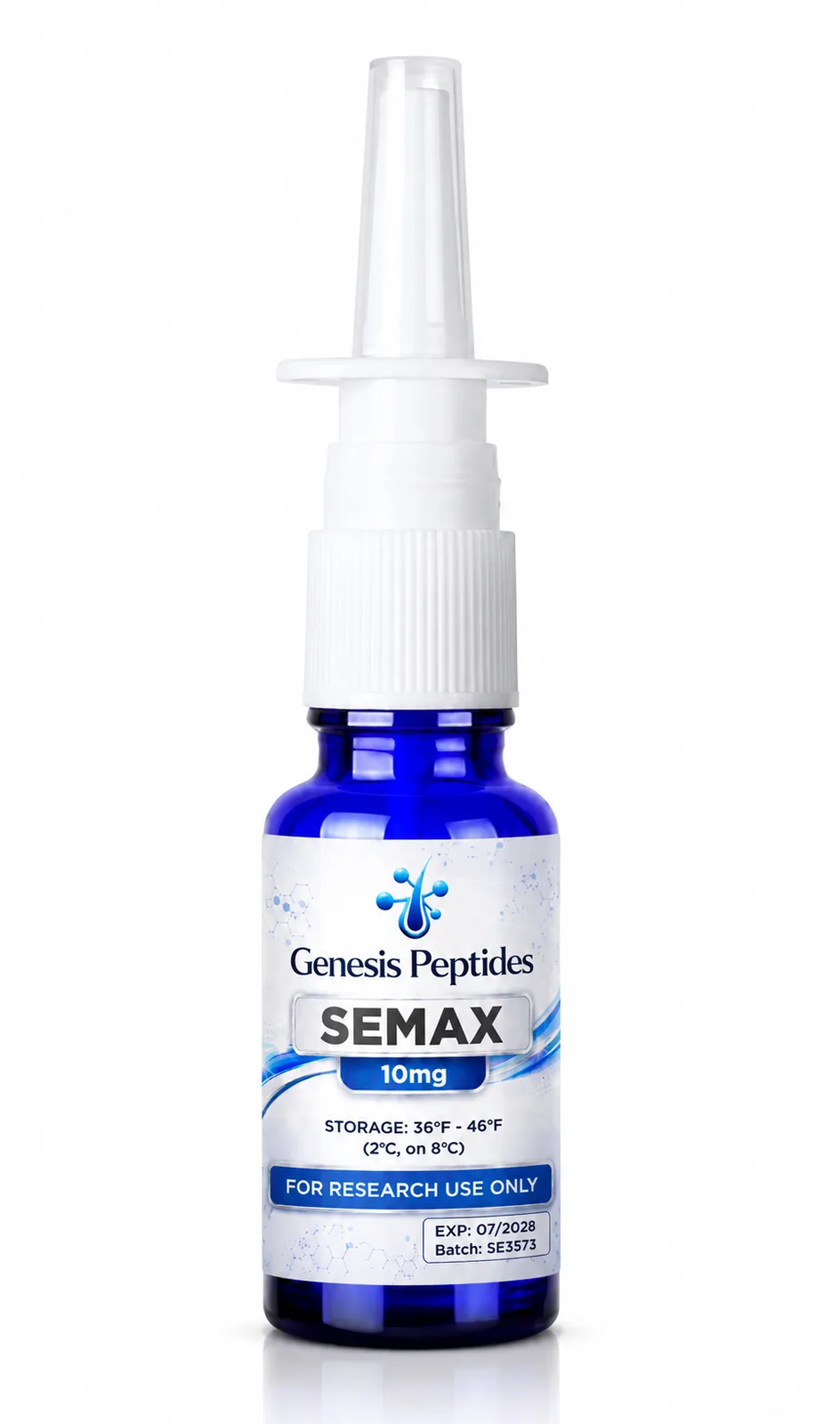
- [LINK] Semax Nasal Spray 10mg
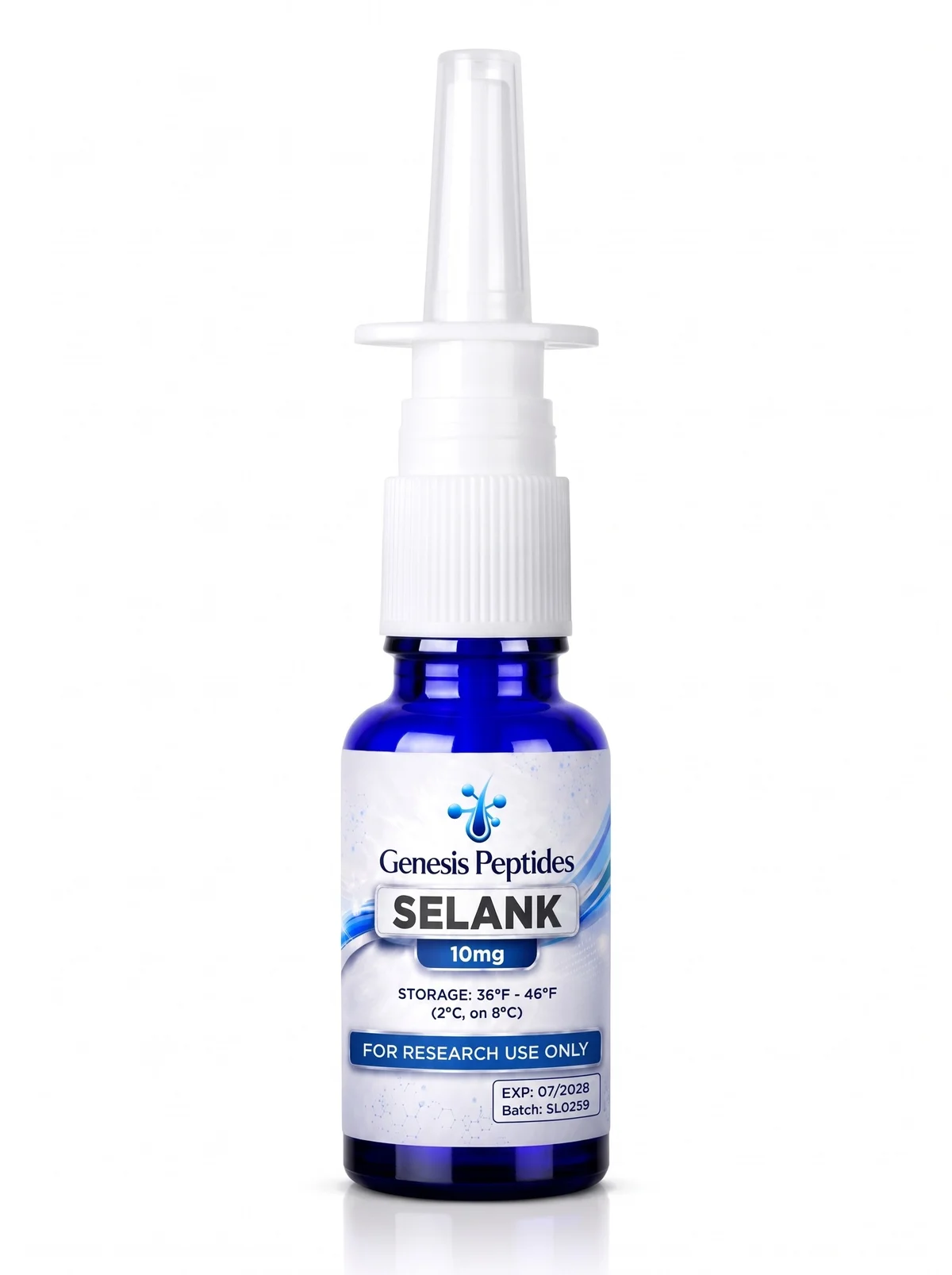
- [LINK] Selank Nasal Spray 10mg
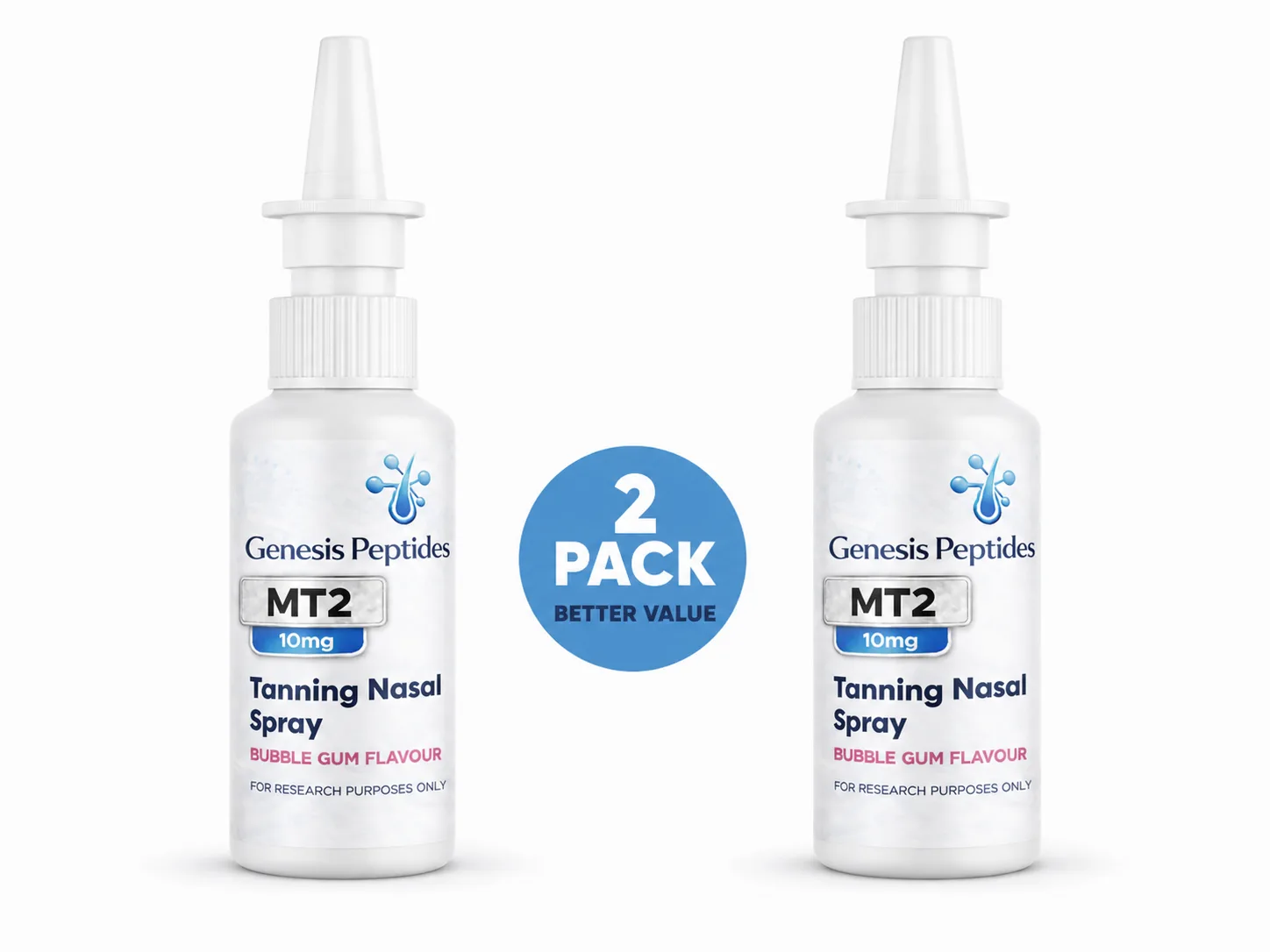
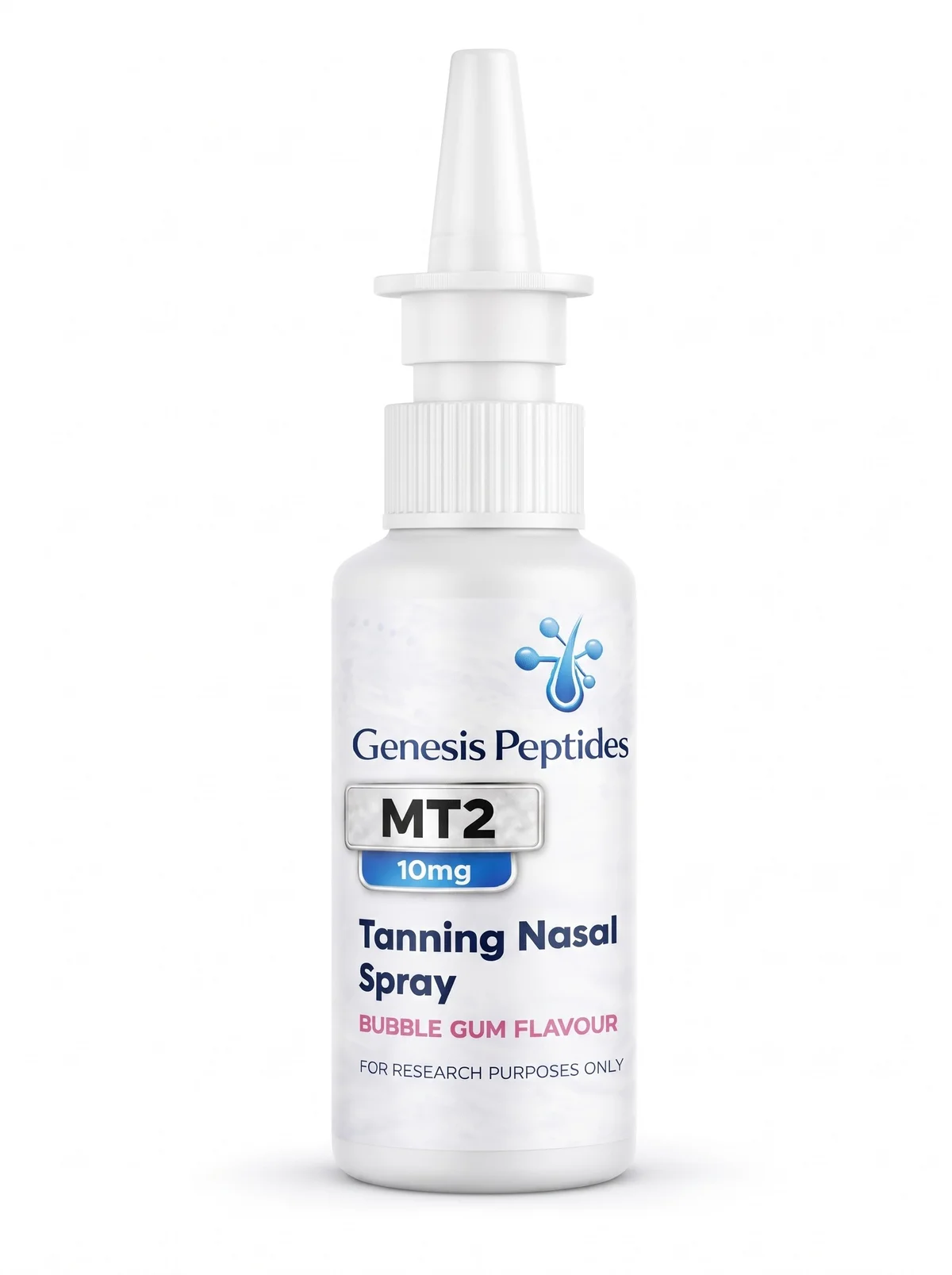
- [LINK] MT2 Nasal Spray 10mg
- [LINK] GLOW / KLOW blends [CONFIRM if sold]
- [LINK] Bacteriostatic water 10ml
BPC-157 Research Vial, TB-500 Research Vial and Wolverine Research Pen
If your study needs single-peptide controls, a different ratio or longer storage, use the separate vials. For a pre-filled device, see the pen.
- [LINK] BPC 157 research vial (lyophilised) [CONFIRM strength]
- [LINK] TB500 research vial (lyophilised) [CONFIRM strength]
- [LINK] Wolverine Research Pen [CONFIRM strength]
Peptide Terms Explained: A Simple Glossary for New Researchers
- Peptide: a short chain of amino acids, smaller than a protein.
- Lyophilised: freeze-dried into a powder for better stability.
- Reconstitution: dissolving a lyophilised powder in a solvent.
- Equimolar: equal numbers of molecules of each compound.
- Molecular weight: the mass of one mole of a molecule, in g/mol.
- HPLC: a lab test that separates and measures the purity of compounds.
- Mass spectrometry: a lab test that confirms identity by measuring molecular mass.
- COA: Certificate of Analysis, the test report for a specific batch.
- Thymosin beta-4 (Tβ4): a natural 43-amino-acid protein that TB-500 is based on.
- Wolverine stack: informal market name for a BPC-157 + TB-500 blend.
- Research use only (RUO): sold for laboratory research, not for use in people or animals.
Sources, References and Further Reading on BPC-157 and TB-500 Research
- Sikiric P, Seiwerth S, Rucman R, et al. Stable gastric pentadecapeptide BPC 157: novel therapy in gastrointestinal tract. Curr Pharm Des. 2011;17(16):1612–1632.
- Chang CH, Tsai WC, Lin MS, Hsu YH, Pang JH. The promoting effect of pentadecapeptide BPC 157 on tendon healing involves tendon outgrowth, cell survival, and cell migration. J Appl Physiol. 2011;110(3):774–780.
- Seiwerth S, Rucman R, Turkovic B, et al. BPC 157 and standard angiogenic growth factors. Gastrointestinal tract healing, lessons from tendon, ligament, muscle and bone healing. Curr Pharm Des. 2018;24(18):1972–1989.
- Goldstein AL, Hannappel E, Kleinman HK. Thymosin β4: actin-sequestering protein moonlights to repair injured tissues. Trends Mol Med. 2005;11(9):421–429.
- Malinda KM, Sidhu GS, Mani H, et al. Thymosin β4 accelerates wound healing. J Invest Dermatol. 1999;113(3):364–368.
- Ho ENM, Kwok WH, Lau MY, et al. Doping control analysis of TB-500, a synthetic version of an active region of thymosin β4, in equine urine and plasma by liquid chromatography–mass spectrometry. J Chromatogr A. 2012;1265:57–69.
- Pickart L, Margolina A. Regenerative and protective actions of the GHK-Cu peptide in the light of the new gene data. Int J Mol Sci. 2018;19(7):1987.
- World Anti-Doping Agency. The Prohibited List (current year), sections S0 and S2. [ADD: current link]
- MHRA. A guide to what is a medicinal product (Guidance Note 8), GOV.UK. [ADD: current link]
- PubChem compound records: BPC-157 (CAS 137525-51-0) and Thymosin beta-4 (CAS 77591-33-4). National Library of Medicine.
[CHECK: verify each reference and add DOI or PubMed links before publishing]
FAQ
Frequently Asked Questions
Quick answers on batch testing, delivery and ordering. Can’t find what you need? Our team is happy to help.
Contact UsWhat Is the BPC-157 and TB-500 Blend?
It is a research product that combines two synthetic peptides, BPC 157 and TB 500, in one solution. It is often called the Wolverine stack. Ours is a 20mg nasal spray sold for laboratory research only.
Is the Wolverine Nasal Spray Sold for Research Use Only?
Yes. It is not a medicine, is not licensed by the MHRA and is not for human or veterinary use.
Is the BPC-157 + TB-500 Blend a 1:1 Mix, and Is It Equimolar?
It is 1:1 by mass [CONFIRM]. It is not equimolar, because the two peptides have different molecular weights. The molar ratio depends on which form of TB-500 is used; see the equimolar section above.
What Is the Difference Between the Wolverine Nasal Spray and the Wolverine Research Pen?
Both contain the same two peptides in solution. The spray uses a metered nasal pump; the pen [ADD: pen format, strength and how it differs, e.g. cartridge volume]. Both need refrigeration. [LINK: Wolverine Research Pen]
What Is the Concentration per Spray in a 20mg Wolverine Nasal Spray Bottle?
The bottle holds 20mg in [CONFIRM: ml], and each actuation delivers [CONFIRM: ml], so each actuation contains [CONFIRM: mg] of total peptide ([CONFIRM] of each). This is a technical specification for research planning, not a dose.
How Is Purity Reported for a BPC-157 + TB-500 Blend?
By HPLC, with a separate purity figure for each peptide, plus mass spectrometry to confirm identity. Both are on the batch COA.
Does the Wolverine Nasal Spray Need to Be Kept in the Fridge?
Yes. Store it at 2–8°C before and after opening, upright and away from light. Do not freeze it.
How Long Does an Unopened Bottle Last?
Unopened and refrigerated, it lasts until the expiry date on the label, typically [CONFIRM: e.g. 12 months from manufacture].
Where Can I Buy a BPC-157 and TB-500 Blend in the UK?
You can order our BPC157 and TB500 nasal spray from this page, with UK dispatch from [ADD: location]. Wherever you buy BPC 157 in the UK, check for a batch COA with separate results for each peptide.
Can I Download the COA for My Batch Before I Order?
Yes. The current batch COA is available [ADD: link]. Check the batch number against the label when your order arrives.
How Fast Is UK Delivery for Wolverine Nasal Spray Orders?
Eligible orders placed before [ADD: cut-off] are dispatched the same day, with typical delivery in [ADD: working days].
What Should I Do If My Order Arrives Damaged?
Do not use it. Take photos of the bottle and packaging and contact us within [ADD: days] at [ADD: email]. We will replace or refund it in line with our returns policy.
Calculator
Peptide Reconstitution Calculator
Enter the amount in the vial, the volume of diluent added and the amount you need. The calculator works out the concentration and the volume to measure.
- Volume to measure
- 0.025 ml
- 25 µl
- Concentration
- 10,000 mcg/ml
- 10 mg/ml
- Portions per vial
- 80
- at 250 mcg each