
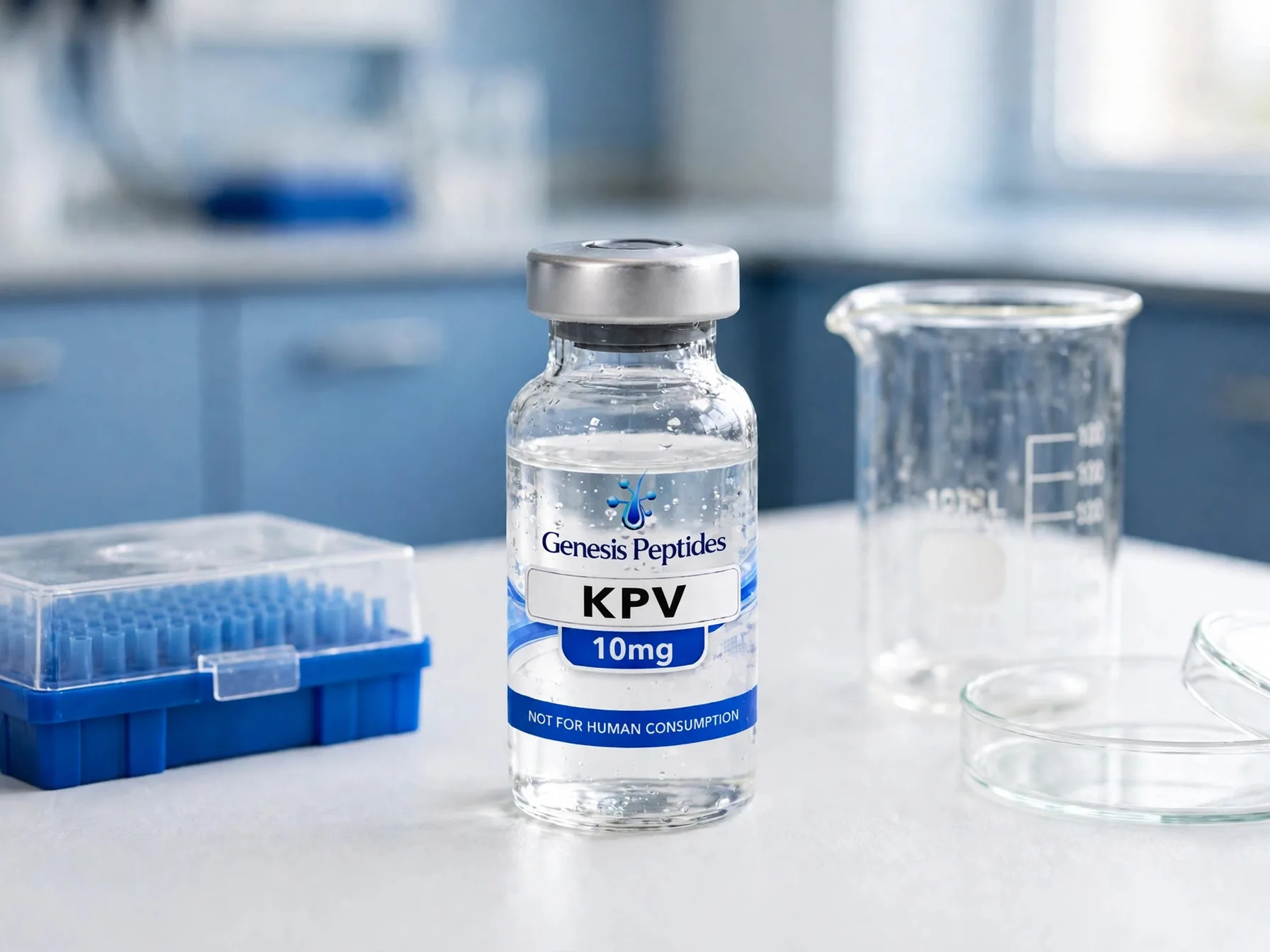
KPV is only three amino acids long so it is proof that short names can still have big opinions. It is a tiny peptide that researchers study for its effects on inflammation and the gut and the skin.
KPV is sold today as a research peptide. It is not approved as a medicine anywhere. The lab and animal results are interesting. No human trials have been published. We will keep every claim in this guide tied to what research actually shows.
What Is KPV Peptide?
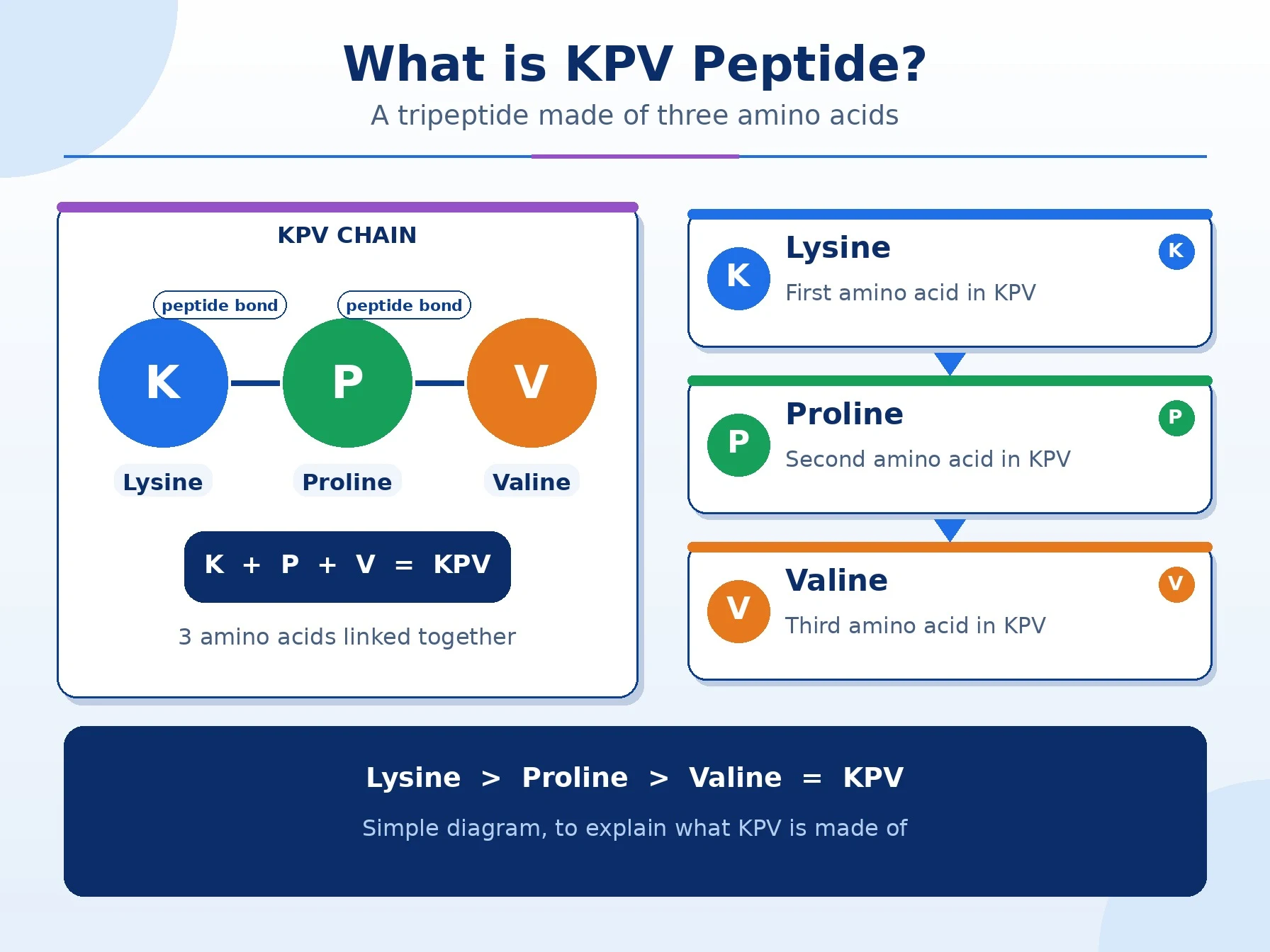
KPV is a tripeptide. That means it is made of just three amino acids. They are lysine and proline and valine. The name KPV comes from the first letter of each one.
KPV is the last three amino acids of a larger hormone called alpha MSH. Alpha MSH is a longer peptide with 13 amino acids. It helps the body control inflammation. It also affects skin colour.
Researchers became interested in KPV because it keeps some of the anti inflammatory activity of alpha MSH in certain models. It does this without the pigment effects of the full hormone. This is why KPV gets so much attention.
How Does KPV Work?
Most of what we know comes from cell studies and mouse studies. Here are the main ideas that researchers describe.
The Inflammation Switch
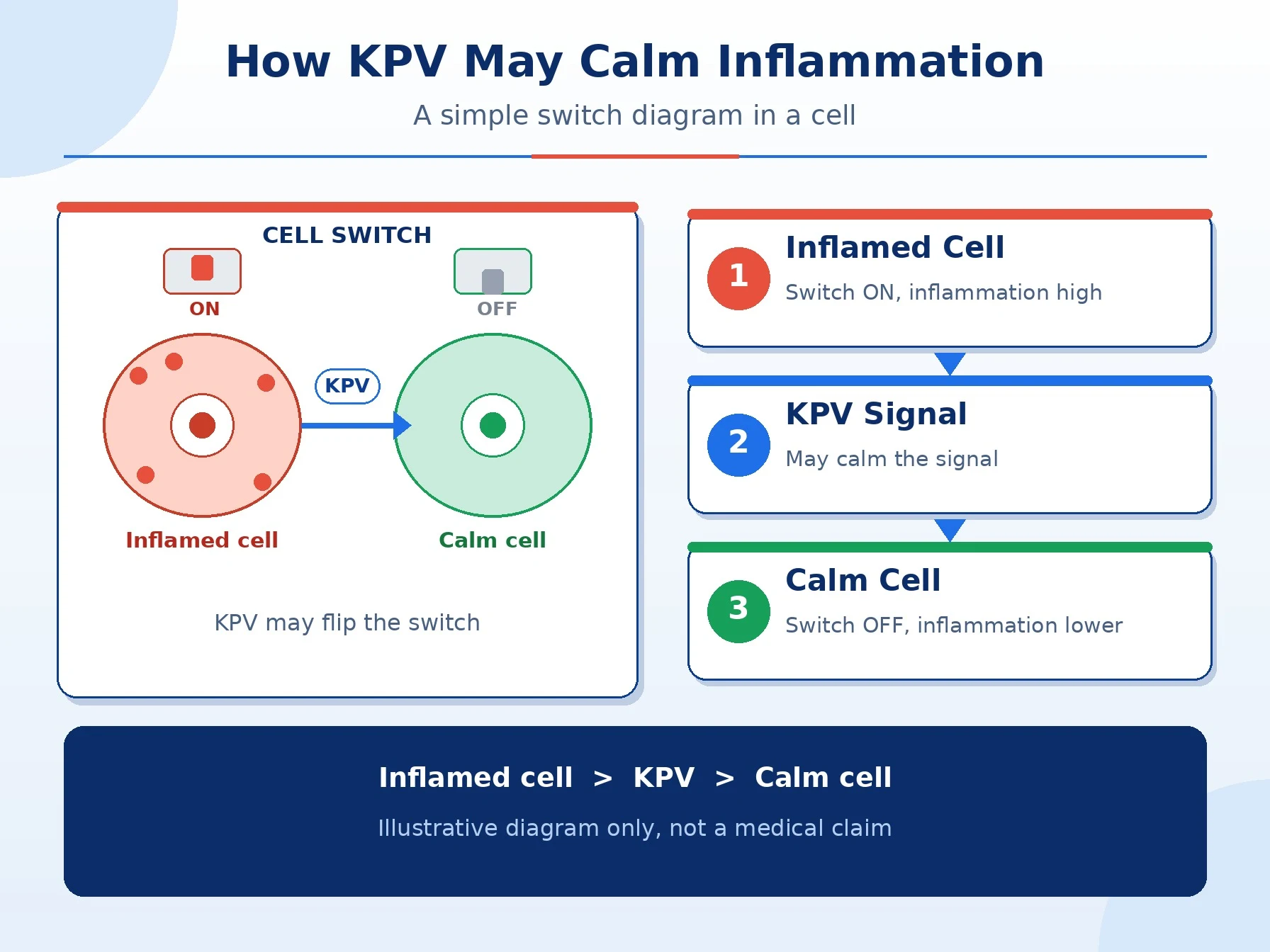
Inside cells there is a master switch for inflammation called NF kappa B. When it is on the cell makes inflammatory signals that cause swelling and redness and pain. In cell and mouse studies KPV lowered NF kappa B activity and lowered inflammatory signals. Think of it as turning down a dial that was set too high.
Stress Pathways
Cells also have stress pathways known as MAP kinase pathways. In cell studies KPV reduced signalling through these pathways. This may add to its calming effect.
The Gut Doorway
The gut lining has a transporter called PepT1 that carries small peptides into cells. This transporter becomes more active in an inflamed colon. Studies show that KPV can enter gut cells through this doorway. This is one reason researchers study KPV for gut inflammation.
What About the MC3R Receptor?
KPV presses a heal button by switching on a receptor called MC3R. Researchers have not settled this point. Some studies suggest that KPV works inside the cell and does not need the usual melanocortin receptors. So the exact way KPV works is still open.
KPV and Gut Health
Gut health is the best studied area for KPV. In mouse models of colitis KPV reduced signs of gut inflammation. Colitis is long lasting inflammation of the colon. These results are the main reason KPV is linked with conditions such as IBD.
There is a big catch. A peptide that is swallowed is easily broken down in the upper gut. KPV is small and does not pass through membranes easily. To work around this researchers tested KPV packed in tiny protective particles. In mice this approach reduced colitis at much lower amounts than plain KPV.
Mouse colitis models do not always predict what happens in people. No human trial of KPV has been published. So KPV is a research tool and not a proven gut treatment.
KPV and Skin
Skin is another area where KPV is discussed. In a study on skin cells called keratinocytes researchers looked at how KPV and related peptides affect cell signals. Other cell studies looked at inflammation in airway cells.
You will see KPV linked with acne and eczema and faster wound healing. Those uses are often repeated online. They are not backed by human trials. An early report of germ fighting effects could also not be repeated by other researchers.
KPV Evidence at a Glance
| Area | What research found | Strength of evidence |
|---|---|---|
| NF kappa B and inflammation signals | Lower activity in cell and mouse studies | Lab and animal only |
| Gut uptake through PepT1 | KPV enters gut cells through this transporter | Lab and animal only |
| Colitis | Less gut inflammation in mouse models | Animal only |
| Skin conditions and wound healing | Cell studies only and no human trials | Not established |
| Receptor such as MC3R | Not settled and may work inside the cell | Unclear |
| Human safety and benefit | No published human trials | Unknown |
Is KPV Safe? Side Effects to Know
Nobody can give a complete safety answer yet. Because no human trials exist there is no solid human safety data. You may read that KPV is generally well tolerated with only mild effects. That claim goes further than the evidence.
Here is what is reasonable to know.
- Any peptide can cause redness or itching or swelling where it is used.
- Skin products can cause sensitivity in some people.
- Rare allergic reactions are possible. Stop right away if hives or swelling appear.
- Products sold as KPV are not regulated so their identity and purity can vary.
- Long term effects in people are unknown.
This blog is for education only and is not medical advice. Always speak with a qualified doctor about your own health.
Why Quality and Sourcing Matter
Because the evidence is still growing the quality of the material matters even more. Buying a peptide with no clear label is like ordering soup in the dark and hoping it is tomato. Peptides from unclear sources can be mislabelled or contaminated and that makes any result hard to trust.
At Genesis Peptides we supply research peptides in the UK. Our products are for laboratory research use only and not for human consumption. We believe every researcher deserves clear information and honest labelling.
Looking for Research Peptides in the UK?
Genesis Peptides is here to help UK researchers find the right peptides with clear and honest information. Our products are for research use only. Have a question about KPV or any other peptide on our website? Call us or message us on WhatsApp at +44 7343 047659 and our team will be happy to help.
Conclusion
So what is KPV peptide and what are its potential benefits? It is a tiny three amino acid peptide from alpha MSH. Cell and mouse studies show it may calm inflammation and protect the gut lining. No human trials exist yet.
The honest summary is that KPV is a promising research topic and not a proven treatment for the gut or the skin. Keep your expectations realistic and always choose a source you can trust. Genesis Peptides is here to support your research with clear information and honest labelling.
Frequently asked questions
What is KPV peptide?
KPV is a tripeptide made of lysine and proline and valine. It is the last three amino acids of the hormone alpha MSH. It is studied for its effects on inflammation. KPV is sold as a research peptide and it is not an approved medicine.
What does KPV peptide do?
In cell and mouse studies KPV lowered NF kappa B activity and inflammatory signals. It also reduced signs of colitis in mice. No human trials have been published so these effects are not proven in people.
Does KPV help with gut health?
It is not proven in people. Mouse studies show less gut inflammation and KPV can enter gut cells through the PepT1 transporter. A swallowed peptide breaks down easily in the upper gut. No human trial has tested KPV for gut conditions.
Does KPV help with skin problems?
It is not proven. Cell studies looked at KPV in skin cells but there are no human trials for acne or eczema or wound healing. Online claims go further than the research. A qualified doctor is the right person to ask about skin problems.
Is KPV the same as alpha MSH?
No. KPV is only the last three amino acids of alpha MSH. In some models it keeps part of the anti inflammatory activity. Researchers report that it does not cause the pigment effects linked with the full hormone. It is a different and much smaller molecule.
What are the side effects of KPV?
Human safety data does not exist because no human trials have been published. Any peptide can cause redness or itching or swelling at the site of use. Rare allergic reactions are possible. Stop right away if hives or swelling appear and speak with a doctor.