
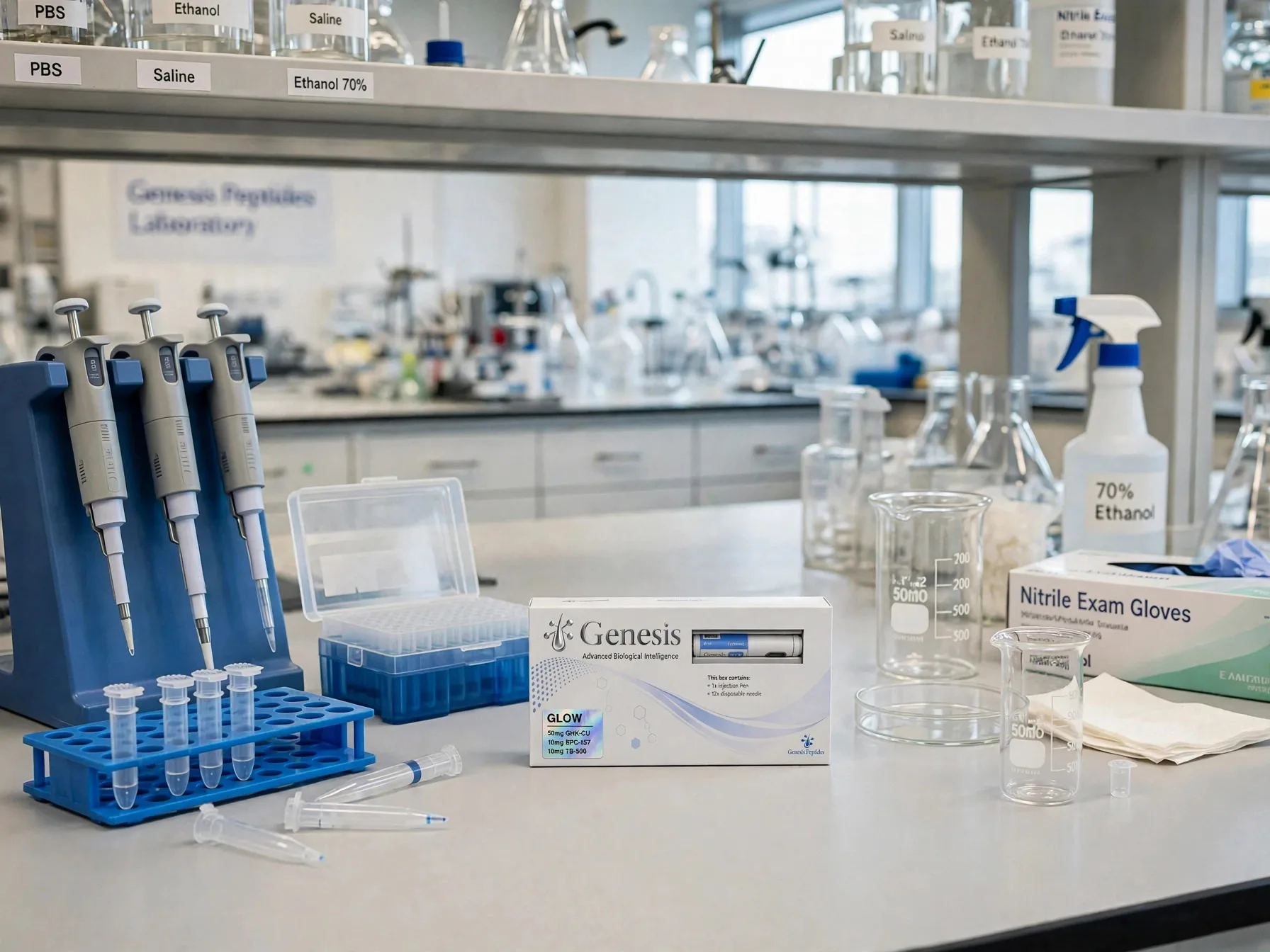
GLOW sounds like the name of a skincare ad but behind the shiny name sit three peptides with names like BPC-157 that look more like a Wi-Fi password. If you keep seeing the glow peptide on your feed and wonder what it really is then this guide will make it simple.
GLOW is a blend of three research peptides that people discuss for skin and hair and recovery. Each peptide has been studied on its own but mostly in cells and animals. Nobody has tested the three together in people. What Is Glow Peptide?
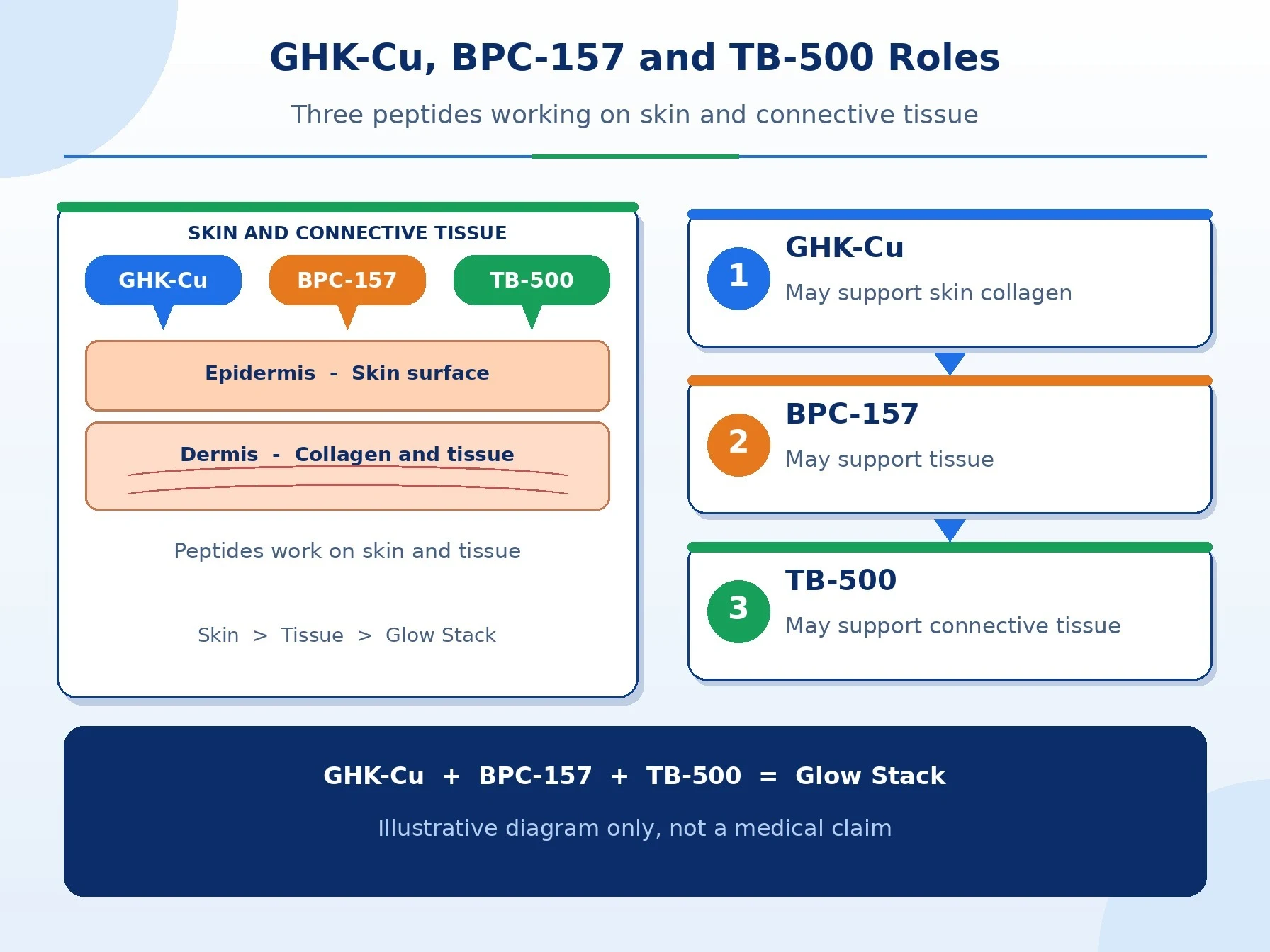
‘Glow Peptide’ is the nickname for a combination of three peptides. Such a combination simply means that several active ingredients are used together, as it is believed that they enhance each other’s effects. Peptides are short chains of amino acids and act as tiny messengers between cells.
There is no official definition of GLOW. No health authority has established a standard composition for it. This means that one supplier or clinic may formulate the mixture differently from another. The quantities and purity may vary, and this is one of the most important points to bear in mind.
What Are the Ingredients in Glow Peptide?
The classic GLOW stack has three ingredients. Think of them as a small repair crew where each member has a different job.
GHK-Cu (copper peptide)
GHK-Cu is a short peptide of three amino acids that binds to copper. It is the beauty member of the team. Lab studies show that it can encourage skin cells called fibroblasts to make collagen. Collagen is the protein that keeps skin and connective tissue firm and stretchy.
Most of the human data comes from creams and not from injections. Small 12 week studies in women tested GHK-Cu creams and reported better skin firmness and fine lines. For injected GHK-Cu the evidence is mostly from animals and lab work.
BPC-157
BPC-157 is a lab made peptide with 15 amino acids. It is often called the repair peptide. In animal studies it has been linked to new blood vessel growth and to better healing of tendons and other soft tissue. New blood vessel growth is called angiogenesis. Blood vessels carry oxygen and nutrients so an injured area needs them to heal.
The human side is thin. One review of 36 studies found that 35 were animal or lab studies and only one involved people. The few human reports were small and had no control group so they cannot prove that BPC-157 works.
TB-500
TB-500 is a short lab made piece of a natural protein called thymosin beta 4. It is designed around the part of the protein that binds to actin. Actin is a structural protein that cells use to move around. The idea is that this binding helps repair cells travel to an injured spot.
It is important to know that TB-500 is not the same as the full length protein. Most of the exciting animal data comes from the full protein. The small piece has much less research behind it and no completed human trials of its own.
Why Do People Combine Them?
The theory is teamwork. BPC-157 is thought to help build new blood vessels. TB-500 is thought to help repair cells move to the area. GHK-Cu is thought to support collagen and calm inflammation. Together they are said to cover blood supply and cell traffic and tissue rebuilding.
It is a neat story but it is still a story. No study has tested all three together. One recent rat tendon study of BPC-157 and TB-500 reported that combining them added no extra benefit compared with using either one alone. Most claims about the stack come from personal reports and not from controlled trials.
What Is GLOW-CI?
Some clinics talk about a longer version called GLOW-CI. It adds two growth hormone releasing peptides to the three repair peptides. These are CJC 1295 and ipamorelin. CJC 1295 copies a brain signal that asks the pituitary gland to release growth hormone. Ipamorelin acts on a different receptor and is described as having less effect on stress hormones such as cortisol than older peptides of its type.
The reasoning is that growth hormone falls with age and so healing may slow down. That is an interesting idea but the five peptide mix has not been tested as a whole. At Genesis Peptides we offer CJC 1295 only in the No DAC form. You can read our separate guides on both peptides for more detail.
Potential Benefits People Talk About
You will hear a long list of claims. Here is how they look when we check the evidence.
- Skin firmness and collagen. This is the best supported area but the human data is mostly for GHK-Cu creams and not for the full blend.
- Hair. Some people hope GHK-Cu can support hair growth. Lab work on related copper peptides is interesting but there are no solid human trials for GHK-Cu itself.
- Tendon and joint recovery. The idea comes mainly from rodent studies of BPC-157 and TB-500.
- Better blood flow. This links to the angiogenesis idea and is based on animal and cell work.
Side Effects and Safety Points
Because there are no human safety studies of the blend the full risk picture is unknown. These are the main points to understand.
- Redness or swelling or bruising or pain where an injection is given have been reported with BPC-157.
- Dizziness and changes in heart and blood vessel function are a concern with peptides that act on blood vessel pathways.
- The safety of injected GHK-Cu has not been proven in solid human trials.
- The mix may have unknown interactions and using three at once makes it hard to tell which one causes a reaction.
There is also a theoretical worry about angiogenesis. New blood vessels can also feed tumours so experts advise extra caution for anyone with cancer or a high risk of it. This is not proven in people and it is a reason to ask a qualified doctor before thinking about any of these peptides.
BPC-157 and TB-500 are prohibited at all times in competitive sport by WADA. None of the three is an approved medicine for skin or hair or injury repair. This blog is for education only and is not medical advice.
Why Quality and Sourcing Matter
Since GLOW has no standard recipe the quality of the vial matters even more. A blend may not match the label or may be contaminated or may be made with the wrong ingredient. Some products sold as TB-500 may even contain the full length protein or another fragment. A vial with a vague label is like a mystery meal and nobody should have to guess what is on the plate.
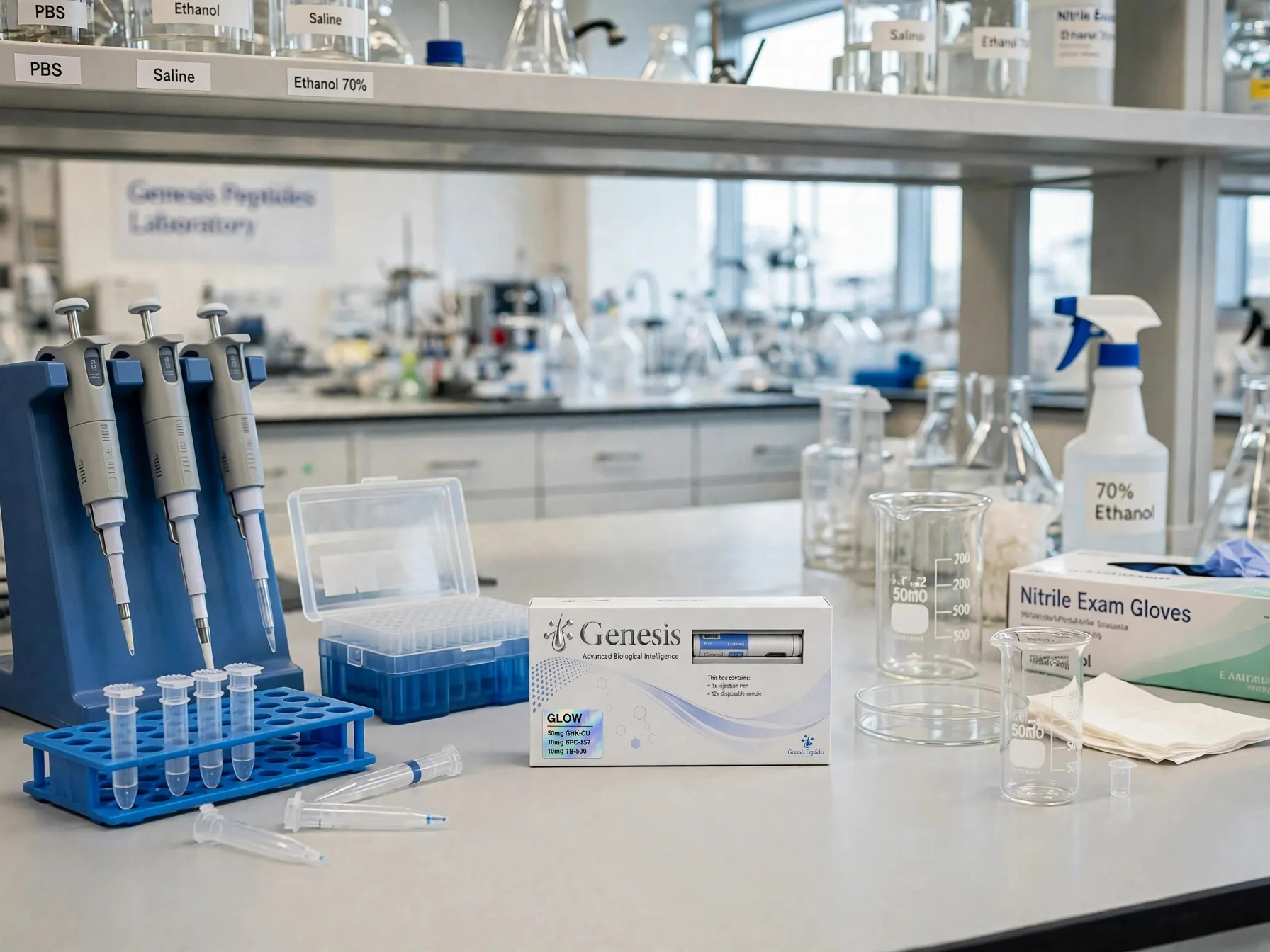
At Genesis Peptides we supply research peptides in the UK. Our products are for laboratory research use only and not for human consumption. We believe every researcher deserves clear information and honest labelling.
Looking for Research Peptides in the UK?
Genesis Peptides is here to help UK researchers find the right peptides with clear and honest information. Our products are for research use only. Have a question about the peptides in the glow stack or any other peptide on our website? Call us or message us on WhatsApp at +44 7343 047659 and our team will be happy to help.
Conclusion
So what is glow peptide? It is a nickname for a stack of GHK-Cu and BPC-157 and TB-500. Each has an interesting story in the lab and in animals but the blend has no human trials and no standard recipe.
Read the science with care and choose clear labels over big promises. Genesis Peptides is here to support your research with clear information and honest labelling.
Frequently asked questions
What is glow peptide in simple words?
Glow peptide is a nickname for a mix of three research peptides. They are GHK-Cu and BPC-157 and TB-500. People discuss the mix for skin and hair and recovery but it has no official recipe and has not been tested as a combination.
What are the ingredients in glow peptide?
The standard stack contains GHK-Cu and BPC-157 and TB-500. A longer version called GLOW-CI adds CJC 1295 and ipamorelin. Some sellers use other versions so you should always check the label.
What does each peptide in glow do?
GHK-Cu is linked to collagen and skin firmness. BPC-157 is linked to new blood vessel growth and soft tissue repair in animals. TB-500 is linked to cell movement through its actin binding part. These are research findings and not proven results in people.
Is glow peptide good for hair and skin?
For skin there is some human data on GHK-Cu creams. For hair the evidence is weak because the supporting work uses related copper peptides in lab models. There are no solid human trials showing that injected GLOW helps hair or skin.
What is the difference between GLOW and GLOW-CI?
GLOW has three repair peptides. GLOW-CI adds two growth hormone releasing peptides which are CJC 1295 and ipamorelin. The extra pair is meant to support the natural growth hormone signal but the five peptide mix is not backed by human trials.