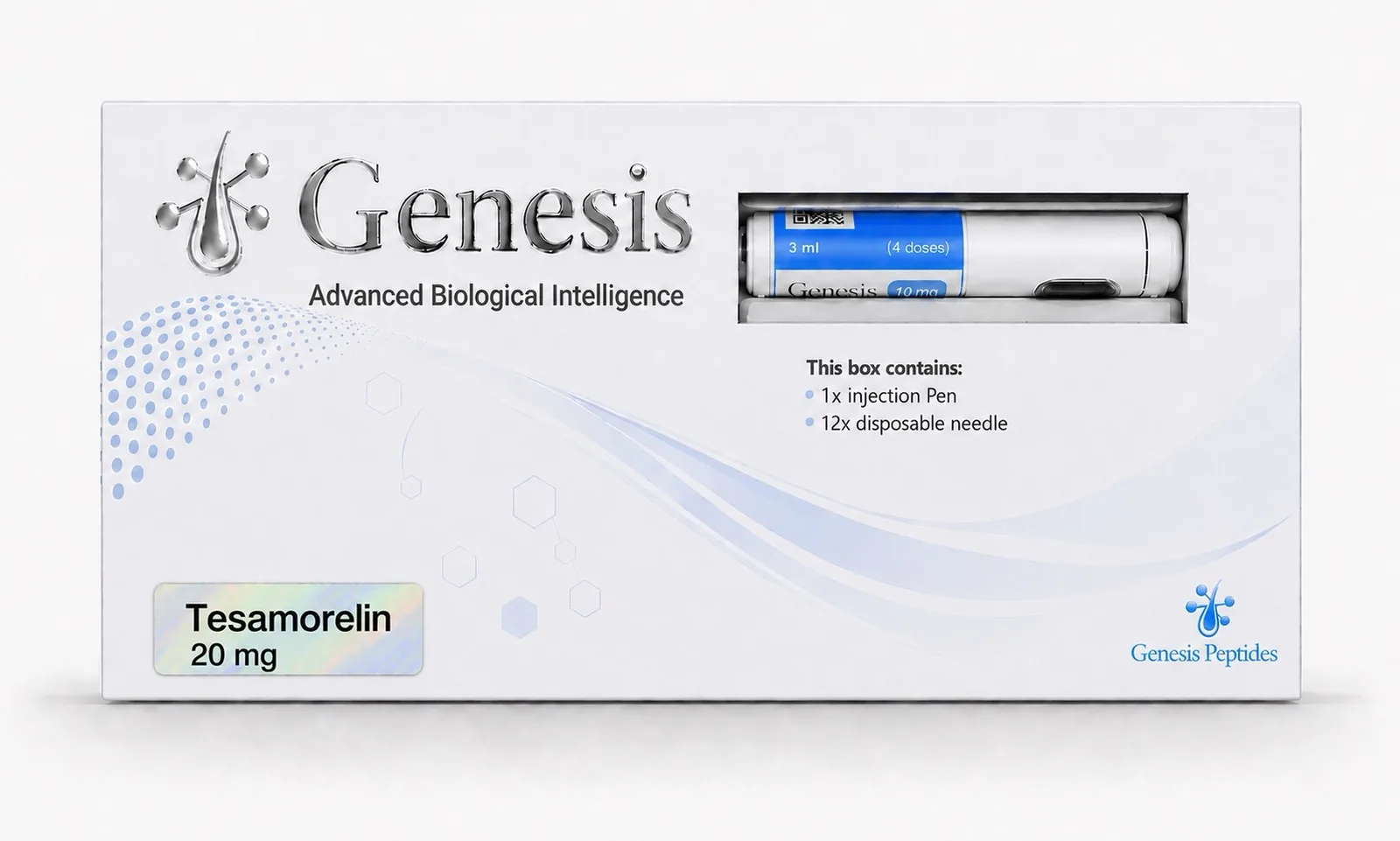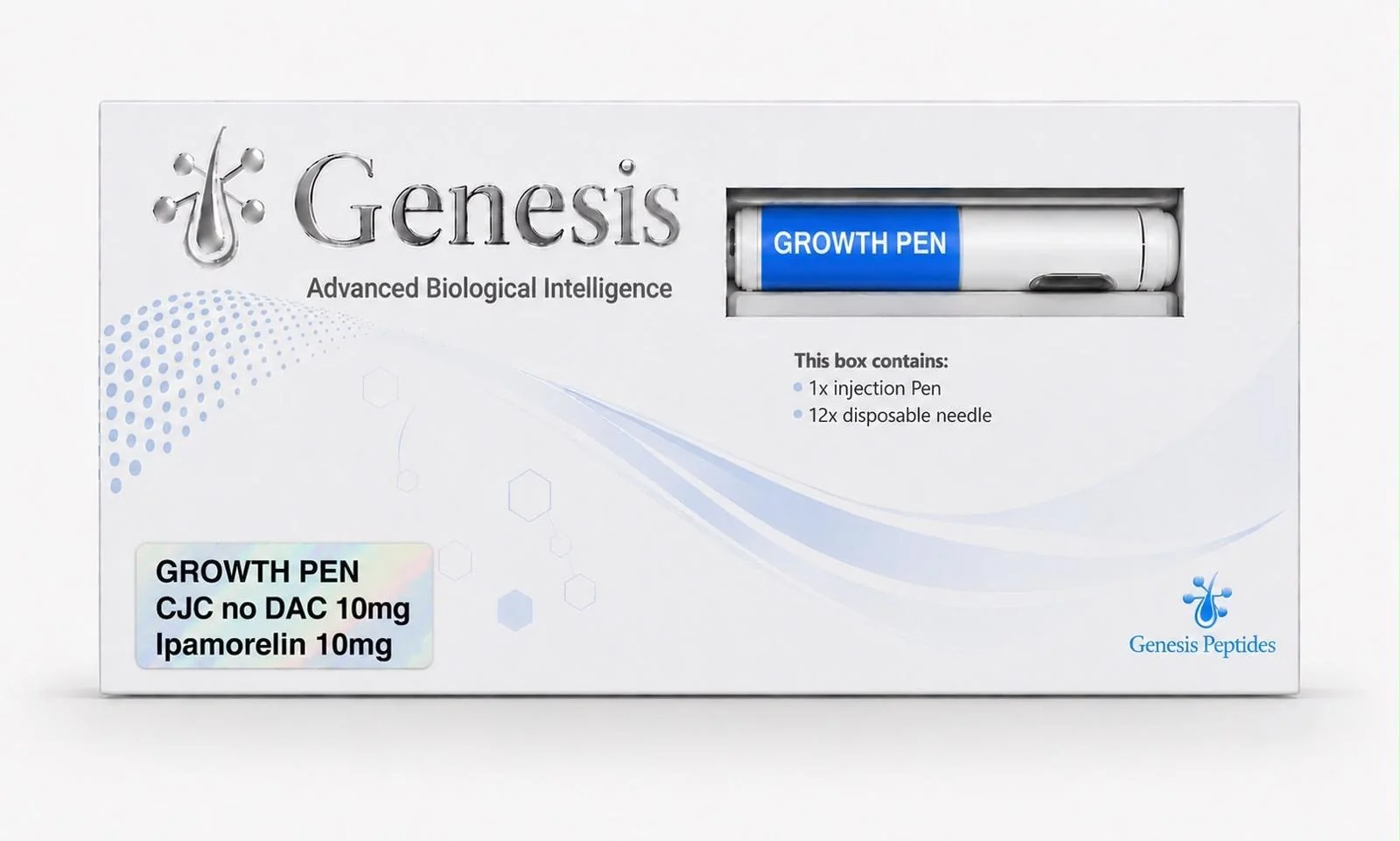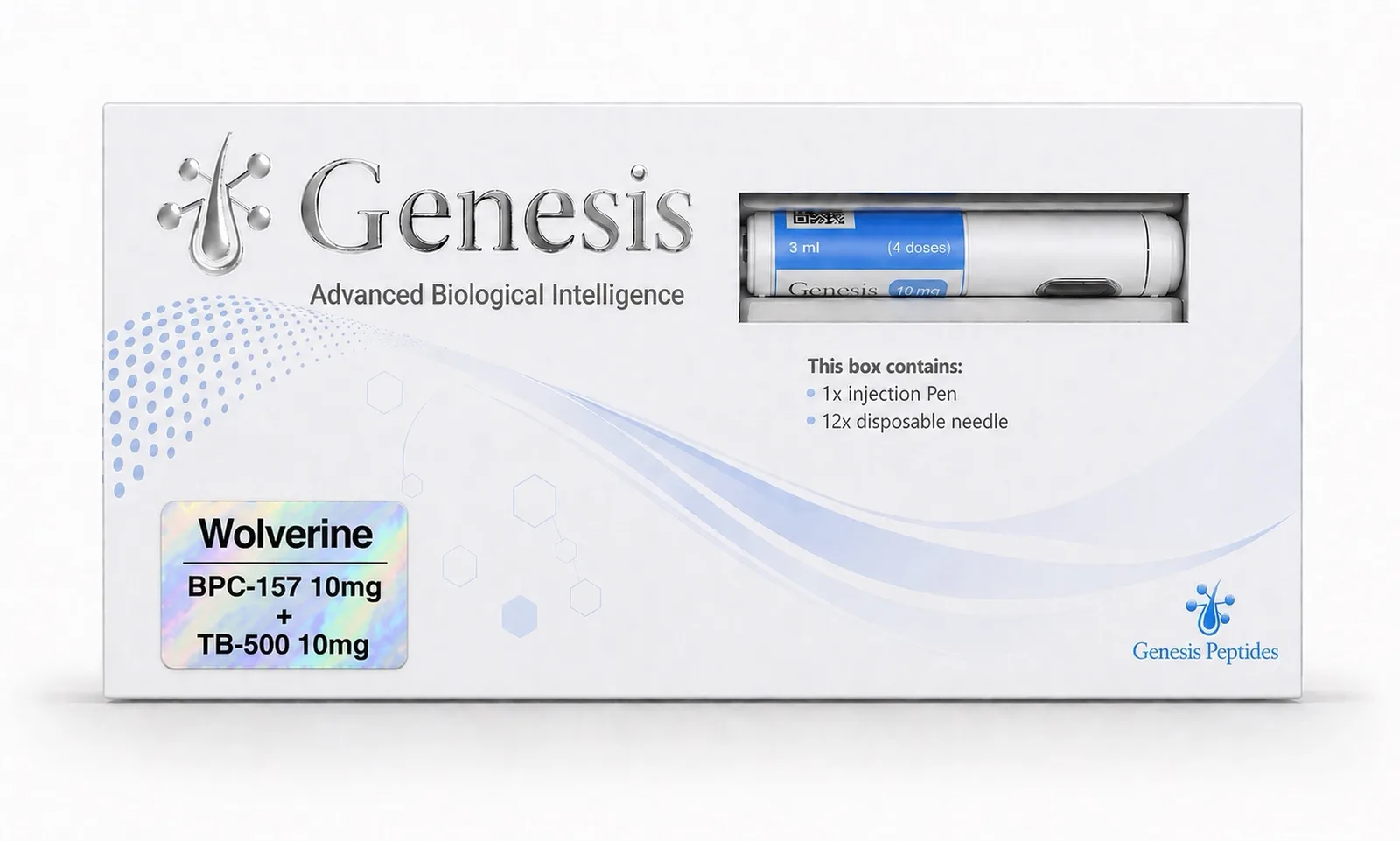
GLOW Peptide 70mg Research Blend of BPC 157, TB 500 and GHK Cu for Laboratory Use
For laboratory research use only. Not for human or veterinary use. Not a medicine and not licensed by the MHRA.
- Batch-tested Certificate of analysis for every lot
- Research use only For laboratory research
- UK stock Dispatched from the UK
- Delivery from £6.05 Free over £100.00. Delivery policy
Peptide PensResearch compound
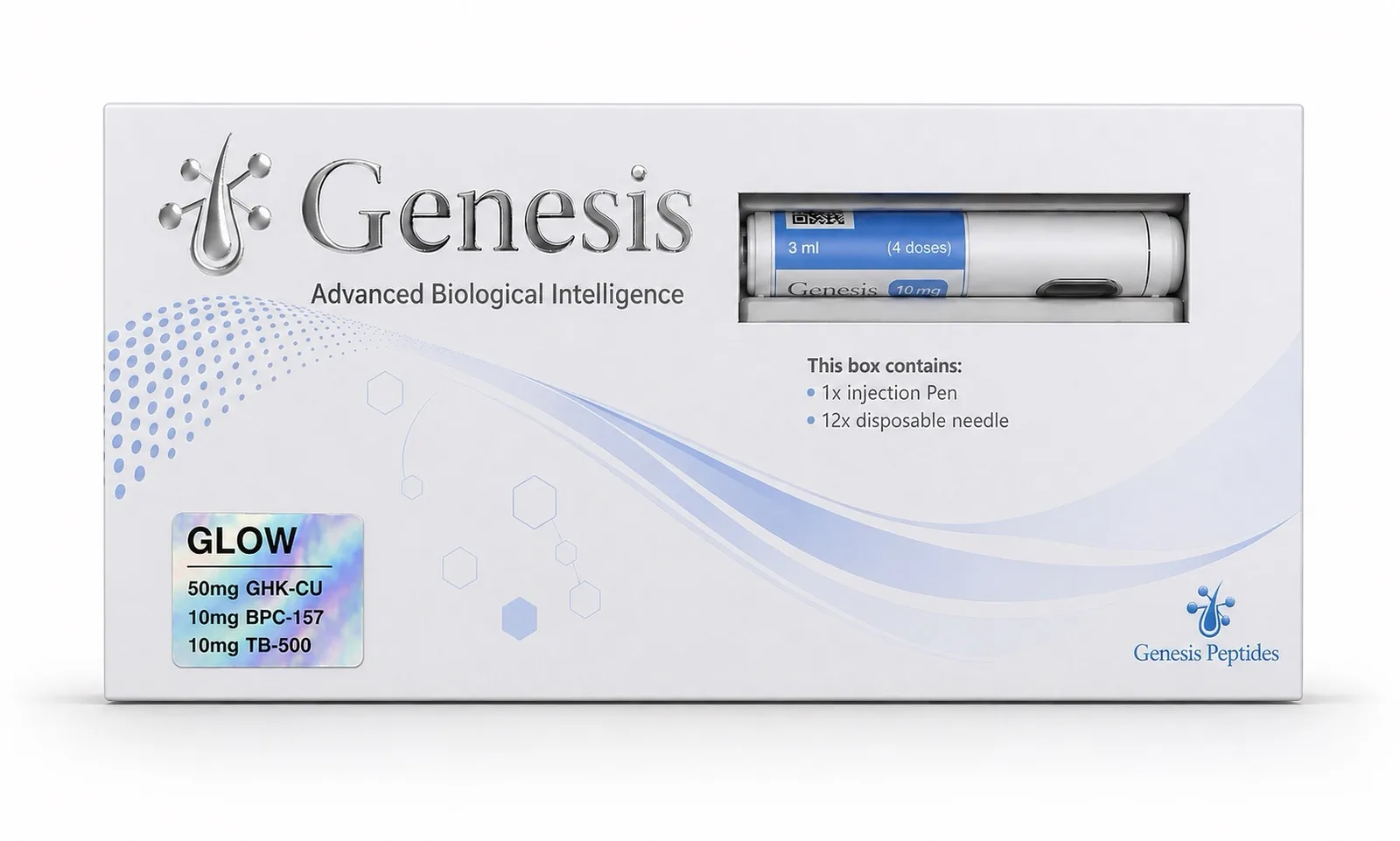
Genesis Peptide GLOW Research Pen 70mg
The Genesis Peptides GLOW peptide is a 70mg lyophilised research blend of three synthetic peptides in one sealed vial: BPC-157, TB-500 and GHK-Cu.
- HPLC and mass spectrometry
- Research use only
£99.99no VAT charged
In stockUK stock, dispatched from the UK
- Strength
- 70mg
- Product
- GLOW 70mg research blend (BPC-157, TB-500, GHK-Cu)
- Total peptide
- 70mg per vial
- Format
- One blended vial (not three separate vials)
- Storage
- −20 °C long term; 2–8 °C short term; protect from light
[INSERT MY APPROVED RESEARCH-USE WORDING]
Product Details and Specifications for This Research Blend
The table below summarises the GLOW 70 peptide as supplied. Values for your batch are on its COA.
| Product | GLOW 70mg research blend (BPC-157, TB-500, GHK-Cu) |
|---|---|
| Total peptide | 70mg per vial |
| Composition | [CONFIRM: 50mg GHK-Cu / 10mg BPC-157 / 10mg TB-500] |
| TB-500 form | [CONFIRM: full-length thymosin beta-4 or Ac-LKKTETQ fragment] |
| Format | One blended vial (not three separate vials) |
| Form | Lyophilised (freeze-dried) powder |
| Appearance | [CONFIRM from COA: blue to blue-violet powder or cake] |
| Purity (HPLC) | [ADD: % for each compound] |
| Identity | Mass spectrometry for each compound [CONFIRM] |
| Salt forms | [CONFIRM: e.g. acetate] |
| Vial | [CONFIRM: e.g. 3ml / 10ml glass vial, rubber stopper, aluminium flip-off seal] |
| Storage | −20 °C long term; 2–8 °C short term; protect from light |
| Diluent | Not included [CONFIRM]; bacteriostatic water sold separately |
| Use | Laboratory research only |
The 70mg on the label is the total weight of the three peptides, not a volume. A GLOW 70mg peptide vial only has a volume once diluent is added in the lab.
What Is GLOW and Which Three Compounds Are Inside It?
What is GLOW peptide? GLOW is an informal market name for a blend of three peptides: BPC-157, TB-500 and GHK-Cu. It is not a scientific name, a pharmacopoeial name or a single molecule, and no regulator defines it, so the contents and amounts can differ between suppliers. GLOW peptides are also searched for as “glowing peptides” or “glo peptide”, but the product is the same: three separate compounds mixed in one vial. The label and the COA are the only reliable record of what is in a given vial.
- BPC-157 is a synthetic 15-amino-acid peptide based on part of a protein first described in human gastric juice. It has been studied mainly in rodent models of gut, tendon and blood vessel repair.
- TB-500 is a synthetic peptide linked to thymosin beta-4 (Tβ4), a 43-amino-acid protein that binds actin, part of the cell’s internal scaffold. The name is used both for full-length synthetic Tβ4 and for a short seven-amino-acid fragment, so the COA should say which one you have.
- GHK-Cu is the copper(II) complex of the tripeptide glycyl-L-histidyl-L-lysine. GHK was first isolated from human plasma in 1973. It has been studied mainly in collagen, skin cell and wound models, and is used as a cosmetic ingredient under the name “copper tripeptide-1”.
Because it is a peptide GLOW blend rather than a single GLOW compound peptide, each of the three is tested and reported separately on the COA. The vial is blue because of the copper in GHK-Cu: copper(II) complexes absorb red-orange light and so look blue. BPC-157 and TB-500 are white powders on their own.
What Is the Ratio of Each Compound in the Vial?
The most common split for a 70mg GLOW stack peptide on the research market is 50mg GHK-Cu, 10mg BPC-157 and 10mg TB-500, which is a ratio of 5 : 1 : 1 by weight. Smaller versions are also sold, for example as a GLOW 50 peptide, so check the total and the split on any listing. Our vial contains:
| Compound | Amount per vial | Share by weight | Approx. amount in µmol |
|---|---|---|---|
| GHK-Cu | [CONFIRM: 50mg] | about 71% | about 124 µmol |
| BPC-157 | [CONFIRM: 10mg] | about 14% | about 7 µmol |
| TB-500 | [CONFIRM: 10mg] | about 14% | about 2 µmol (full-length Tβ4) or 11 µmol (fragment) |
| Total | 70mg | 100% |
The mg figures are by weight. GHK-Cu is a very small molecule (about 402 g/mol) compared with BPC-157 (about 1,419 g/mol) and full-length Tβ4 (about 4,963 g/mol), so the vial holds far more molecules of GHK-Cu than of the other two. Counted by molecules, GHK-Cu is more than 90% of the blend. This matters when you compare results with studies that report amounts in molar units. The µmol figures are calculated from the stated weights and ignore salt and water content, so treat them as approximate. [VERIFY µmol figures once the split, salt forms and TB-500 form are confirmed]
Amino Acid Sequence, Molecular Weight and Chemical Structure of Each Compound
BPC-157 (15 amino acids): Gly-Glu-Pro-Pro-Pro-Gly-Lys-Pro-Ala-Asp-Asp-Ala-Gly-Leu-Val (GEPPPGKPADDAGLV)
- Molecular formula: C62H98N16O22
- Molecular weight: about 1,419.5 g/mol
- Structure: a linear chain with no cysteine, so no disulfide bridges. It has four prolines, including a Pro-Pro-Pro run near the start, and a net negative charge at neutral pH.
TB-500, depending on the form supplied [CONFIRM which]:
- Full-length thymosin beta-4 (43 amino acids, N-terminal acetyl): Ac-SDKPDMAEIEKFDKSKLKKTETQEKNPLPSKETIEQEKQAGES. Formula C212H350N56O78S, about 4,963.5 g/mol. A linear chain that is mostly unstructured in water. It has one methionine (position 6), which can oxidise in storage.
- TB-500 fragment (7 amino acids, N-terminal acetyl): Ac-Leu-Lys-Lys-Thr-Glu-Thr-Gln (Ac-LKKTETQ), positions 17–23 of Tβ4 and the region linked to actin binding. Formula C38H68N10O14, about 889.0 g/mol. It has no methionine.
GHK-Cu: H-Gly-His-Lys-OH (GHK) bound to copper(II)
- Molecular formula: C14H22CuN6O4 for the 1:1 complex (GHK alone is C14H24N6O4).
- Molecular weight: about 401.9 g/mol for the complex, about 340.4 g/mol for GHK alone.
- Structure: the copper ion is held by three nitrogen atoms: the free amino group of glycine, the nitrogen of the glycine–histidine bond, and a nitrogen in the ring of histidine. The lysine side chain does not hold the copper.
Neither BPC-157 nor Tβ4 contains histidine or cysteine, the amino acids that bind copper most strongly. Whether any copper moves between the peptides once the blend is dissolved has not been studied. [CHECK]
How Is Each Compound Studied in Laboratory Research?
People often ask what does GLOW peptide do. The accurate answer is that the blend itself has not been studied as a product. What exists is laboratory and animal research on each of its three compounds on its own, summarised below. None of it shows an effect of GLOW blend peptides, or of any one compound, in people.
BPC 157 Research in Cell and Animal Models
Most BPC-157 research has been done in rats and mice, and most of it comes from one group at the University of Zagreb led by Predrag Sikirić. Areas studied include:
- Gut models: stomach and intestinal lesions caused by alcohol, anti-inflammatory drugs or surgery in rats, the area where the peptide was first studied (reviewed by Sikirić et al., 2011).
- Tendon and ligament models: in cultured rat tendon fibroblasts, Chang et al. (2011) reported more cell outgrowth, survival and migration with BPC-157.
- Blood vessel models: studies of angiogenesis and of VEGFR2 signalling in endothelial cells and rats (Hsieh et al., 2017).
A 2025 systematic review of BPC-157 in orthopaedics and sports medicine found 36 studies, and 35 of them were in animals or cells (Vasireddi et al., 2025).
TB 500 Research in Cell and Animal Models
Most published work uses full-length thymosin beta-4 rather than the TB-500 fragment.
- Actin binding: Tβ4 binds single actin molecules and stops them joining into filaments, so it controls how much actin is free in the cell (Safer et al., 1991).
- Cell migration and blood vessels: Tβ4 increased the movement of human endothelial cells in culture (Malinda et al., 1997), and its actin-binding region (LKKTETQ) was linked to blood vessel growth in lab assays (Philp et al., 2003).
- Wound and heart models: faster wound closure was reported in rats given Tβ4 (Malinda et al., 1999), and cardiac cell migration and survival were studied in mice (Bock-Marquette et al., 2004).
- Doping control: analytical labs have developed methods to detect the TB-500 fragment in urine and plasma (Esposito et al., 2012; Ho et al., 2012).
GHK Cu Research in Cell and Animal Models
- Discovery: GHK was isolated from human plasma by Pickart and Thaler (1973) and identified as glycyl-histidyl-lysine in 1977.
- Collagen in cell culture: GHK-Cu increased collagen production in fibroblast cultures (Maquart et al., 1988).
- Wound models: more connective tissue built up in rat wound chambers treated with GHK-Cu (Maquart et al., 1993), and topical GHK-Cu was studied in open wounds in dogs (Canapp et al., 2003).
- Gene expression: computer analysis of gene-expression data linked GHK to changes in many genes (Campbell et al., 2012; reviewed by Pickart and Margolina, 2018). These are data-analysis and cell findings, not results in people.
Has This Combination Been Studied Together?
No. We are not aware of any published, peer-reviewed study of BPC-157, TB-500 and GHK-Cu used together, or of the GLOW stack peptide as a product [CHECK: re-run a PubMed search before publishing]. That leaves several open questions:
- whether the three compounds interact, add to each other or interfere with each other;
- how stable they are when stored together in solution, especially with copper present;
- whether the common 5 : 1 : 1 weight ratio has any scientific basis.
A study using the blend should include single-compound controls if it needs to show which compound caused a result.
What Does Current Evidence Say About Human Studies?
There are no human studies of the blend. For the individual compounds:
- BPC-157: the 2025 review found one human report, a look-back at 12 patients with knee pain with no control group (Lee and Padgett, 2021), and no human safety data. A phase 1 study registered in 2015 (NCT02637284) has posted no results [VERIFY].
- Thymosin beta-4: human studies have used full-length Tβ4 made by drug developers, not TB-500. They include a phase 1 safety study (NCT00743769) and eye-drop trials (RGN-259). The European phase 3 SEER-3 trial missed its main goal in June 2025 [VERIFY current status]. There are no published human trials of the TB-500 fragment.
- GHK-Cu: a GHK-Cu wound gel (Iamin) was no better than placebo in a phase 3 trial of 511 patients reported in 1994. Other human data are small, short cosmetic studies of creams.
None of the three is an approved medicine in the UK, the EU or the US. Animal results often do not carry over to people, so nothing on this page should be read as evidence of safety or effect in humans. Peptides GLOW blends are for laboratory research only.
GLOW vs KLOW and Individual Vials: What Is the Difference in Research?
GLOW, KLOW and the Wolverine Stack are nested blends. The Wolverine Stack is BPC-157 and TB-500. GLOW adds GHK-Cu. KLOW adds KPV on top of GLOW.
| Wolverine Stack | GLOW | KLOW | Individual vials | |
|---|---|---|---|---|
| BPC-157 | Yes | Yes | Yes | One compound per vial |
| TB-500 | Yes | Yes | Yes | One compound per vial |
| GHK-Cu | No | Yes | Yes | One compound per vial |
| KPV | No | No | Yes | One compound per vial |
| Common total | 20mg (10 + 10) | 70mg (50 + 10 + 10) | 80mg (50 + 10 + 10 + 10) | Any ratio you choose |
| Colour | White | Blue | Blue | Only GHK-Cu is blue |
Common market compositions; check each supplier’s label and COA. [CONFIRM Genesis compositions]
GLOW vs KLOW. The only difference is KPV, the tripeptide lysine-proline-valine, which has been studied mainly in cell and rodent models of gut inflammation. For GLOW stack vs KLOW stack products sold as separate vials, the same applies: KLOW includes a KPV vial. Choose KLOW only if KPV is part of your study question. Otherwise the three-compound GLOW peptide stack has one fewer variable to control. [LINK: KLOW Blend 80mg]
GLOW vs individual vials. A GLOW peptide vial gives you one fixed ratio, one batch and one COA. Separate [LINK: BPC-157 vial], [LINK: TB-500 vial] and [LINK: GHK-Cu vial] let you change the ratio, leave a compound out, or run single-compound controls, which a blend cannot do. Many study designs use both: the blend for the main group and the single compounds as controls.
Single Blended Vial or Separate Vials: Which Format Is This Product?
This product is one blended vial: BPC-157, TB-500 and GHK-Cu are mixed and freeze-dried together, so all three are dissolved in one step and always stay at the same ratio. [CONFIRM]
The terms are used loosely online. Some sellers use “GLOW stack peptides” for three separate vials sold as a set, and “GLOW blend” for a single mixed vial. Others use the two words for the same thing. A peptide GLOW stack listing may therefore be either format, so check whether you are buying one vial or three.
In general, a peptide stack means two or more peptides used in the same study, and stacking peptides can mean either mixing them in one vial or using them side by side from separate vials. Stacked peptides in one vial are simpler to handle. Separate vials give more control.
| One blended vial (this product) | Separate vials | |
|---|---|---|
| Ratio | Fixed at manufacture | Set by the researcher |
| Reconstitution | One vial, one step | Three vials, three steps |
| Single-compound controls | Not possible from this vial | Possible |
| COA | One COA for the finished blend | One COA per vial |
| Storage in solution | All three stored together, copper present | Each stored on its own |
Pre-mixed peptides stacks are only as good as their testing. A blend COA should report each compound separately. A single purity figure for the whole vial tells you very little about how much of each stack peptides component is present. The peptides GLOW stack on this page is tested compound by compound [CONFIRM].
Certificate of Analysis and Purity Testing for Each Batch
Every batch of our GLOW peptide has its own Certificate of Analysis (COA), the test report for that batch. Testing is done by [ADD: name of testing laboratory and accreditation, e.g. ISO/IEC 17025]. With a three-compound blend, a batch-matched COA matters more than with a single peptide, because the label alone cannot show you the split.
How to Find and Download the Certificate for Your Batch
- Find the batch number on your vial label [and on the packing slip: CONFIRM].
- Go to [LINK: COA library page], or use the COA link in the product images on this page.
- Choose the certificate whose batch number matches your vial and download the PDF.
- Check that the certificate lists all three compounds and the amount of each, adding up to 70mg.
- If you cannot find your batch, contact us at [CONFIRM: email] and we will send it.
A certificate that does not match your batch number tells you nothing about what is in your GLOW 70 peptide vial.
How to Read HPLC Purity Results for Each Compound
- HPLC purity: HPLC (high-performance liquid chromatography) separates the sample into peaks. For a blend, look for a separate result for each compound. Each one is the main peak’s area as a percentage of that compound and its related impurities, such as shortened or oxidised chains. This batch: GHK-Cu [CONFIRM: __%], BPC-157 [CONFIRM: __%], TB-500 [CONFIRM: __%]. Exactly 100% is a warning sign, because real results almost never show it.
- Mass spectrometry (identity): each measured mass should match the expected one. BPC-157 is about 1,419.5, often shown as about 1,420.5 ([M+H]+) or 710.8 ([M+2H]2+). The TB-500 fragment is about 889, and full-length Tβ4 is about 4,963.5, usually shown as several charged ions. GHK-Cu usually appears at about 402.1 with a second peak about 2 units higher (copper’s two natural isotopes). Some labs report GHK at about 341.2 instead, because copper can come off during the test [CONFIRM which your lab reports].
- What HPLC does not show: quantity. A 99% purity says nothing about whether the vial holds 70mg. Net peptide content (the share of the powder that is peptide rather than salt and water) is a separate test, and it is usually below 100%.
- Appearance: should say blue or blue-violet. A white GLOW powder suggests little or no GHK-Cu.
- Check the details: product name, composition, batch number, test date and lab name should all be on the certificate.
How to Store and Handle a Lyophilised Peptide Vial
Like other research peptides, the GLOW peptide blend is most stable as a dry powder, kept cold, dry and away from light. Lyophilisation (freeze-drying) removes water under vacuum and leaves a dry powder or “cake”. That slows the reactions that break peptides down. The cake may look like a disc, a loose powder or a cracked or shrunken plug; this is normal. Handle the vial with gloves, a lab coat and eye protection. Let a cold vial reach room temperature before opening so moisture does not condense inside, and dispose of used vials and sharps through your lab’s waste route.
Storage Before and After Reconstitution
- Before reconstitution: sealed vial at −20 °C long term, or 2–8 °C short term, in its box to protect from light. Unopened shelf life: [__ months: CONFIRM].
- Reconstitution: if you are working out how to reconstitute 70 mg of GLOW peptide, the general laboratory method is to add sterile bacteriostatic water [LINK: bac water] slowly down the inside wall of the vial, then swirl gently until dissolved rather than shaking. The concentration is the amount of peptide divided by the volume. For example, 70mg in 5ml gives 14mg/ml in total; with a 50 / 10 / 10 split that is 10mg/ml GHK-Cu and 2mg/ml each of BPC-157 and TB-500. The volume you choose depends on your experiment.
- Points specific to a copper blend: avoid acidic solutions, which release copper from GHK, and avoid chelating agents such as EDTA and reducing agents such as ascorbic acid. Copper ions can also speed up oxidation of methionine, which full-length Tβ4 contains, so cold, dark storage matters more here than for a single peptide.
- After reconstitution: store the solution at 2–8 °C, protected from light, and use within [__ days: CONFIRM from your stability data]. There is little published stability data for all three compounds together in solution. If longer storage is needed, split it into single-use aliquots and freeze them, and avoid repeated freezing and thawing.
- Discard any solution that turns green, brown or colourless, goes cloudy or contains particles.
Is Research Use of This Blend Legal in the UK, and Is It Banned in Sport?
[LEGAL REVIEW: this section]
- Not a licensed medicine. None of BPC-157, TB-500 or GHK-Cu has a marketing authorisation from the MHRA, so the blend cannot legally be sold or supplied in the UK as a medicine for human use. Genesis Peptides sells GLOW peptides UK stock only as a research chemical for laboratory use, with no health claims.
- Not a controlled drug. None of the three is listed under the Misuse of Drugs Act 1971 [VERIFY].
- Not a cosmetic. GHK-Cu is a permitted cosmetic ingredient (copper tripeptide-1), but a research vial is not a cosmetic product and must not be applied to skin or hair.
- Not approved in the US either. There is no FDA approval for BPC-157 or TB-500, and in 2023 the FDA placed BPC-157 in a category of bulk substances that compounding pharmacies should not use because of possible safety risks [VERIFY].
- Banned in sport. Yes. BPC-157 is named on the World Anti-Doping Agency (WADA) Prohibited List under S0 (non-approved substances), and thymosin beta-4 and its derivatives, including TB-500, under S2.3 (growth factors and modulators). Both are prohibited at all times, in and out of competition, so the GLOW peptide blend as a whole is prohibited. GHK-Cu is not named, but S0 may apply to it. UK Anti-Doping (UKAD) applies the same list. [VERIFY against the current WADA list]
This is general information, not legal advice. We will not sell to anyone who says they intend to use the product on a person or an animal.
What to Check Before Buying Research Peptide Blends in the UK
If you plan to buy GLOW peptide, the right vial is the one whose contents you can check, not the cheapest. Many results for GLOW peptide UK where to buy lead to marketplaces and resellers that cannot show a batch certificate. Before you order GLOW peptides for sale from any supplier, check:
- The split, not just the total. The label should show the mg of each compound (for example 50 / 10 / 10), not only “70mg”.
- A batch-matched COA with a result for each compound: HPLC purity and mass spectrometry identity for BPC-157, TB-500 and GHK-Cu separately, from a named lab.
- Which TB-500 it is: full-length thymosin beta-4 or the Ac-LKKTETQ fragment. A supplier that cannot tell you is a red flag.
- A blue product. A white GLOW powder suggests little or no GHK-Cu.
- One vial or three: whether the listing is a single blend or a set of separate vials.
- Clear research-use labelling and no dosing, injection, skin or health claims. A seller that gives human dosing advice is selling outside the rules.
- A UK address, UK dispatch and contact details.
When comparing prices, compare price per verified milligram of each compound, not price per vial. Our price for the 70mg vial is [CONFIRM: £__]. To buy GLOW peptide online from Genesis, add the vial to your basket at the top of this page.
UK Delivery, Dispatch and Packaging
- Dispatch: orders placed before [CONFIRM: time] on a working day are dispatched the same day from [CONFIRM: town/county].
- Delivery: [CONFIRM: carrier and service, e.g. Royal Mail Tracked 24], [CONFIRM: price / free over £__].
- Packaging: vials are sealed and packed in [CONFIRM: protective packaging details], in plain outer packaging. Lyophilised peptides are stable at room temperature for the length of normal UK transit; store them as described above on arrival [CONFIRM].
- Payment: [CONFIRM: payment methods].
Every GLOW stack peptide UK order ships from UK stock and includes the batch number for COA lookup. For larger GLOW peptide orders for a lab, contact [CONFIRM: email].
Scientific References and Published Studies
Studies cited on this page. None of them tested the GLOW peptide blend; each is about one compound.
- Sikirić P, Seiwerth S, Rucman R, et al. Stable gastric pentadecapeptide BPC 157: novel therapy in gastrointestinal tract. Curr Pharm Des. 2011;17(16):1612–1632.
- Chang CH, Tsai WC, Lin MS, Hsu YH, Pang JH. The promoting effect of pentadecapeptide BPC 157 on tendon healing involves tendon outgrowth, cell survival, and cell migration. J Appl Physiol. 2011;110(3):774–780.
- Hsieh MJ, Liu HT, Wang CN, et al. Therapeutic potential of pro-angiogenic BPC157 is associated with VEGFR2 activation and up-regulation. J Mol Med. 2017;95(3):323–333.
- Vasireddi N, Hahamyan H, Salata MJ, et al. Emerging use of BPC-157 in orthopaedic sports medicine: a systematic review. HSS J. 2025;21(4):485–495.
- Lee E, Padgett B. Intra-articular injection of BPC 157 for multiple types of knee pain. Altern Ther Health Med. 2021;27(4):8–13.
- Safer D, Elzinga M, Nachmias VT. Thymosin β4 and Fx, an actin-sequestering peptide, are indistinguishable. J Biol Chem. 1991;266(7):4029–4032.
- Malinda KM, Goldstein AL, Kleinman HK. Thymosin β4 stimulates directional migration of human umbilical vein endothelial cells. FASEB J. 1997;11(6):474–481.
- Malinda KM, Sidhu GS, Mani H, et al. Thymosin β4 accelerates wound healing. J Invest Dermatol. 1999;113(3):364–368.
- Philp D, Huff T, Gho YS, Hannappel E, Kleinman HK. The actin binding site on thymosin β4 promotes angiogenesis. FASEB J. 2003;17(14):2103–2105.
- Bock-Marquette I, Saxena A, White MD, DiMaio JM, Srivastava D. Thymosin β4 activates integrin-linked kinase and promotes cardiac cell migration, survival and cardiac repair. Nature. 2004;432(7016):466–472.
- Esposito S, Deventer K, Goeman J, Van der Eycken J, Van Eenoo P. Synthesis and characterization of the N-terminal acetylated 17–23 fragment of thymosin beta 4 identified in TB-500, a product suspected to possess doping potential. Drug Test Anal. 2012;4(9):733–738.
- Ho EN, Kwok WH, Lau MY, et al. Doping control analysis of TB-500, a synthetic version of an active region of thymosin β4, in equine urine and plasma by liquid chromatography–mass spectrometry. J Chromatogr A. 2012;1265:57–69.
- Pickart L, Thaler MM. Tripeptide in human serum which prolongs survival of normal liver cells and stimulates growth in neoplastic liver. Nat New Biol. 1973;243(124):85–87.
- Maquart FX, Pickart L, Laurent M, et al. Stimulation of collagen synthesis in fibroblast cultures by the tripeptide-copper complex glycyl-L-histidyl-L-lysine-Cu2+. FEBS Lett. 1988;238(2):343–346.
- Maquart FX, Bellon G, Chaqour B, et al. In vivo stimulation of connective tissue accumulation by the tripeptide-copper complex glycyl-L-histidyl-L-lysine-Cu2+ in rat experimental wounds. J Clin Invest. 1993;92(5):2368–2376.
- Canapp SO Jr, Farese JP, Schultz GS, et al. The effect of topical tripeptide-copper complex on healing of ischemic open wounds. Vet Surg. 2003;32(6):515–523.
- Campbell JD, McDonough JE, Zeskind JE, et al. A gene expression signature of emphysema-related lung destruction and its reversal by the tripeptide GHK. Genome Med. 2012;4(8):67.
- Pickart L, Margolina A. Regenerative and protective actions of the GHK-Cu peptide in the light of the new gene data. Int J Mol Sci. 2018;19(7):1987.
- ClinicalTrials.gov: NCT02637284 (BPC-157 phase 1); NCT00743769 (intravenous Tβ4 phase 1).
- World Anti-Doping Agency. Prohibited List, S0 Non-Approved Substances and S2.3 Growth Factors and Growth Factor Modulators (current year).
[CHECK: add DOI or PubMed links before publishing]
Related Research Peptides and Buying Guides
Products and guides researchers often use alongside the GLOW peptide blend.
- Single compounds, for controls or custom ratios: [LINK: BPC-157 vial] · [LINK: TB-500 vial] · [LINK: GHK-Cu vial]
- Other blends: [LINK: KLOW Blend 80mg] (GLOW plus KPV) · [LINK: BPC-157 + TB-500 Wolverine nasal spray 20mg] · [LINK: Wolverine Research Pen 20mg]
- Other formats: [LINK: GLOW pen, if sold] · [LINK: GHK-Cu Research Pen]
- Supplies: [LINK: Bacteriostatic water 10ml]
- Guides: [LINK: Peptide Reconstitution Calculator] · [LINK: how to read a COA guide] · [LINK: peptide storage guide]
All Genesis Peptides products are sold for laboratory research use only. Not for human or veterinary use. Nothing on this page is medical advice or a claim of any effect in humans.
FAQ
Frequently Asked Questions
Quick answers on batch testing, delivery and ordering. Can’t find what you need? Our team is happy to help.
Contact UsWhat is inside a GLOW vial?
A GLOW peptide vial contains three peptides freeze-dried together: [CONFIRM: 50mg GHK-Cu, 10mg BPC-157 and 10mg TB-500], 70mg in total. It is a blue powder because of the copper in GHK-Cu. The batch COA lists each compound and its purity.
Is this product for human use?
No. It is for laboratory research use only. It is not a medicine, is not licensed by the MHRA, and is not for human or veterinary use. We give no information on use in people. For any health question, speak to your GP, a pharmacist or another registered healthcare professional.
Are there any human studies on this combination?
No. There are no published human or animal studies of BPC-157, TB-500 and GHK-Cu used together. Each compound has been studied separately, mostly in cells and animals, and human data for each on its own are very limited.
Is it legal to buy in the UK?
Genesis sells GLOW peptides UK stock as a research chemical for laboratory use only, with no medical claims. None of the three compounds is a licensed medicine, so the blend cannot be sold or supplied as one. It is also prohibited in sport under the WADA list, which UKAD applies. [LEGAL REVIEW]
Is this product third party tested?
Yes. Each batch is tested by [ADD: independent laboratory name] for HPLC purity and mass spectrometry identity of each compound. The COA for your batch is available at [LINK: COA library page].
How long can it be stored once reconstituted?
Once reconstituted, store GLOW peptides at 2–8 °C, protected from light, and use within [__ days: CONFIRM from your stability data]. Do not freeze and thaw it repeatedly. Discard the solution if it changes colour, goes cloudy or shows particles. Unopened, the dry vial keeps longest at −20 °C.
Calculator
Peptide Reconstitution Calculator
Enter the amount in the vial, the volume of diluent added and the amount you need. The calculator works out the concentration and the volume to measure.
- Volume to measure
- 0.007 ml
- 7.1 µl
- Concentration
- 35,000 mcg/ml
- 35 mg/ml
- Portions per vial
- 280
- at 250 mcg each