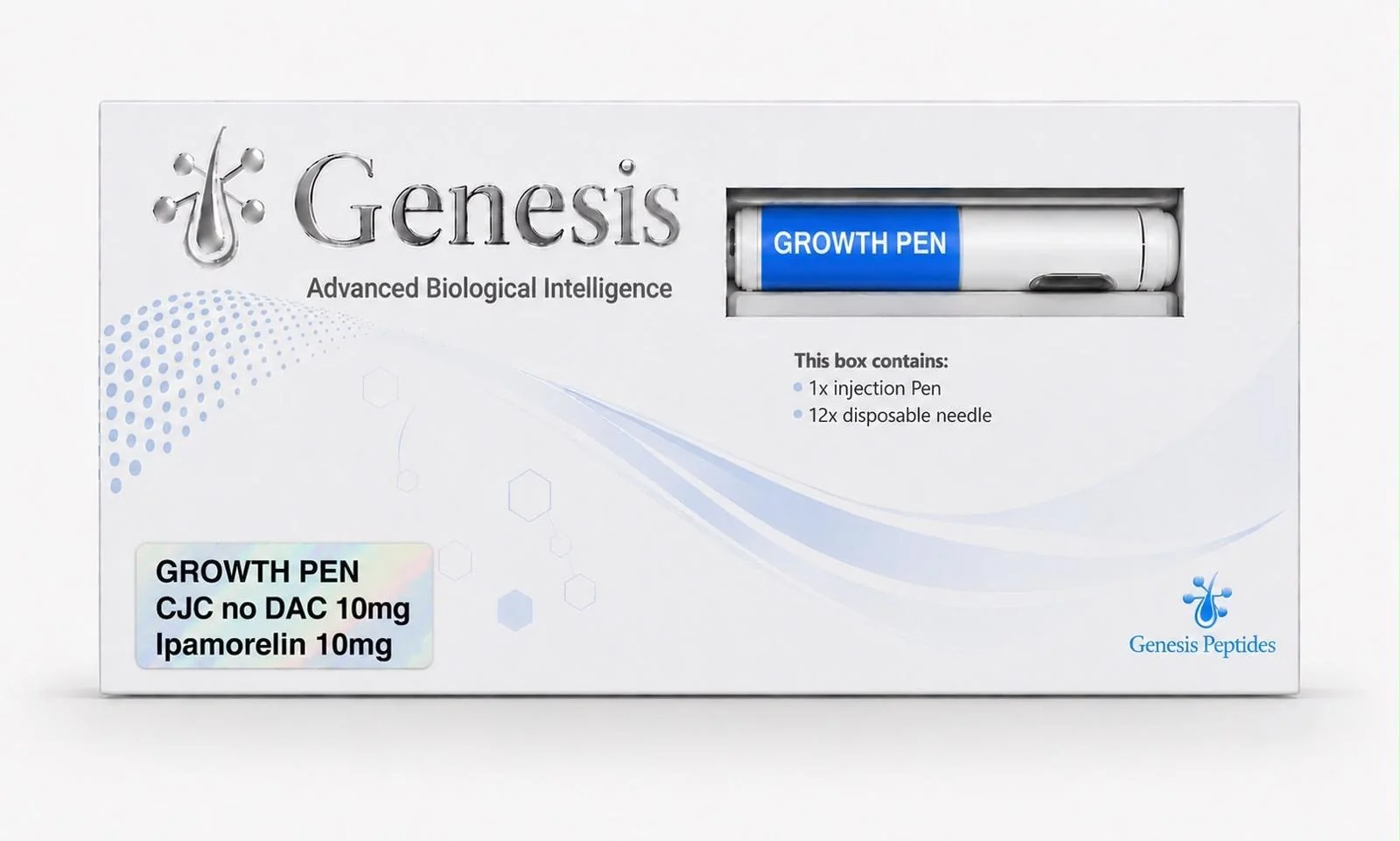
Tesamorelin 20mg Research Pen for Laboratory Use Only – Buy in the UK
For laboratory research use only. Not for human or veterinary use. Not a medicine and not licensed by the MHRA.
- Batch-tested Certificate of analysis for every lot
- Research use only For laboratory research
- UK stock Dispatched from the UK
- Delivery from £6.05 Free over £100.00. Delivery policy
Peptide PensResearch compound
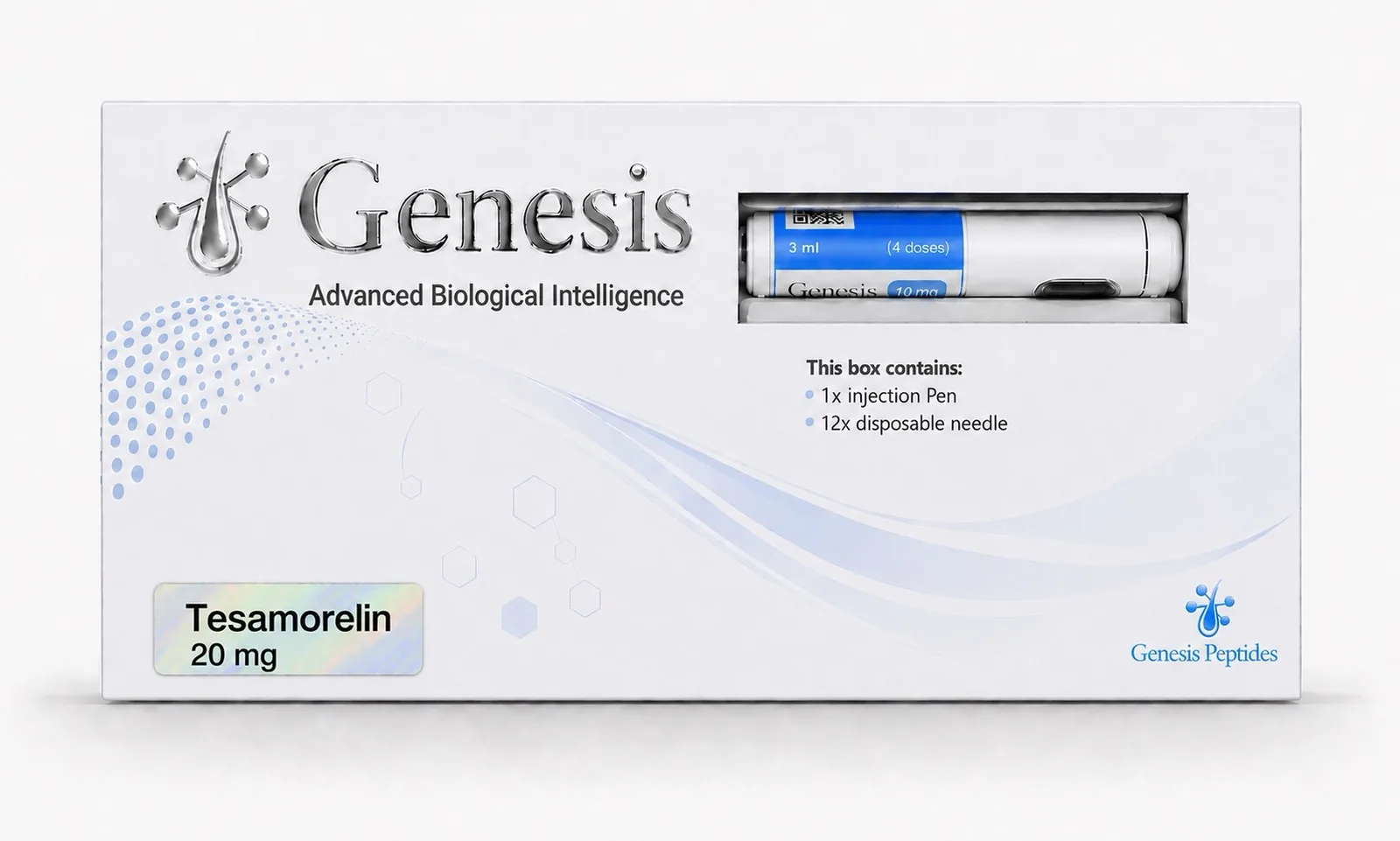
Genesis Peptide Tesamorelin 20mg Research Pen
The Genesis Peptides tesamorelin pen is a 20mg research pen containing synthetic tesamorelin, a 44-amino-acid analogue of growth hormone-releasing hormone (GHRH), supplied for laboratory research.
- HPLC and mass spectrometry
- Research use only
£129.99no VAT charged
In stockUK stock, dispatched from the UK
- Strength
- 20mg
- Peptide
- Tesamorelin (single peptide)
[INSERT MY APPROVED RESEARCH-USE WORDING]
What Is the Tesamorelin 20mg Research Pen and What Is Inside the Box?
The tesamorelin pen is a multi-use pen body built around a sealed glass cartridge holding 20mg of tesamorelin. It is designed for researchers who want a single GHRH analogue in a compact, clearly labelled format with a batch number that links to a published COA.
What is tesamorelin, and why is it studied as a GHRH analogue in the laboratory?
What is tesamorelin? It is a synthetic peptide with the same 44-amino-acid sequence as human GHRH, plus one change: a trans-3-hexenoyl group attached to the first amino acid (tyrosine). That small addition makes the molecule more resistant to breakdown by the enzyme dipeptidyl peptidase-4 (DPP-4), which rapidly cuts natural GHRH in the blood. As a tesamorelin GHRH analog, it binds the same receptor as the natural hormone, which makes it a useful tool for studying the GHRH receptor and the growth hormone axis.
Tesamorelin was developed by the Canadian company Theratechnologies (research code TH9507). It is the active ingredient of Egrifta, a prescription medicine approved by the US Food and Drug Administration in November 2010 for one specific condition in people living with HIV [VERIFY]. The research product on this page is not that medicine and is not made to medicine standards.
What does the research pen kit include?
- One tesamorelin peptide pen containing 20mg tesamorelin in a [CONFIRM: cartridge volume, e.g. 3ml] cartridge, with protective cap
- Batch (lot) number, manufacture date and expiry date printed on the label
- Pen needles: [CONFIRM: “not included” or “included: quantity, gauge and length”]
- A Certificate of Analysis for that batch, [ADD: “included in the box” or “downloadable from this page”]
- Safety Data Sheet (SDS) [ADD: link or “on request”]
- Insulated packaging [CONFIRM: e.g. insulated pouch and gel ice pack]
- “For laboratory research use only” labelling on the pen and outer box
Is the pen supplied pre-mixed or as lyophilised powder?
Our pen is supplied [CONFIRM: pre-mixed as a ready-made solution / as lyophilised (freeze-dried) powder in the cartridge]. The difference matters. A pre-mixed pen needs no reconstitution, but peptides in solution break down faster than dry powder, so it must be kept cold and used within its in-use period. Lyophilised powder is more stable before use, but must be dissolved in a suitable solvent first. Tesamorelin itself is supplied by most manufacturers as a lyophilised acetate salt; some people shorten the name to “tesa peptide”, but the COA should always use the full name.
How Is Tesamorelin Studied in Laboratory Research?
Most published work on tesamorelin is clinical, because it was developed as a medicine. Laboratory and analytical research focuses on how it binds the GHRH receptor, how stable it is, and how it can be detected.
How does tesamorelin interact with GHRH receptors in research models?
What does tesamorelin do at the molecular level? It binds and activates the GHRH receptor (GHRHR), a class B G protein-coupled receptor found mainly on somatotroph cells of the anterior pituitary gland. Activation raises cyclic AMP inside the cell, which drives the production and pulsatile release of growth hormone (GH); GH in turn stimulates the liver to produce insulin-like growth factor 1 (IGF-1). Because it acts upstream, through the pituitary, the GH response remains subject to the body’s normal feedback, including inhibition by somatostatin. Its elimination half-life in published pharmacokinetic studies is roughly 26 to 38 minutes, compared with only a few minutes for natural GHRH [VERIFY].
Which pre-clinical and in vitro research areas have involved tesamorelin?
- Receptor pharmacology: binding and activation of GHRHR in pituitary cell and receptor-expressing cell models, alongside other GHRH analogues.
- Peptide stability: how the N-terminal modification protects the tesamorelin peptide against DPP-4 cleavage compared with native GHRH.
- Pre-clinical pharmacology and toxicology: animal studies carried out during drug development, summarised in the FDA review documents for Egrifta [VERIFY].
- Analytical and anti-doping chemistry: liquid chromatography–mass spectrometry (LC-MS) methods for detecting peptides tesamorelin and its metabolites in urine and plasma, developed by WADA-accredited laboratories [VERIFY].
Clinical studies have looked at people with HIV-associated lipodystrophy (the basis of the US approval), liver fat in people with HIV, and cognitive function in older adults [VERIFY]. These are listed for context only; nothing on this page claims any effect in people.
What published literature is available on tesamorelin, and where can you read it?
- PubMed (pubmed.ncbi.nlm.nih.gov): search “tesamorelin” or “TH9507” for peer-reviewed papers.
- FDA Drugs@FDA: the Egrifta prescribing information and review documents, including pharmacology and toxicology summaries.
- ClinicalTrials.gov: registered tesamorelin trials and their status.
- PubChem: chemical identifiers, structure and molecular data.
- Key papers include Falutz et al., New England Journal of Medicine, 2007; Stanley et al., Lancet HIV, 2019; and Baker et al., Archives of Neurology, 2012 [VERIFY citations].
Tesamorelin vs CJC-1295, Sermorelin and Ipamorelin: How Do the Research Peptides Differ?
| Tesamorelin | Sermorelin | CJC-1295 | Ipamorelin | |
|---|---|---|---|---|
| Class | GHRH analogue | GHRH analogue | GHRH analogue | Ghrelin receptor agonist (GH secretagogue) |
| Receptor | GHRHR | GHRHR | GHRHR | GHS-R1a |
| Length | 44 amino acids | 29 amino acids | 29 amino acids (+ DAC linker if with DAC) | 5 amino acids |
| Key feature | Full GHRH sequence + trans-3-hexenoyl cap | First 29 amino acids of GHRH | 4 amino acid substitutions; DAC binds albumin | Synthetic pentapeptide |
| Approx. half-life | 26–38 min | about 10–20 min | about 30 min without DAC; about 6–8 days with DAC | about 2 hours |
| Approved medicine? | Yes, US only (Egrifta) | Formerly, US (Geref, withdrawn) | No | No |
[VERIFY: half-life figures are approximate values from published studies and vary by study and model]
How does tesamorelin differ from sermorelin as a GHRH analogue?
Comparing tesamorelin vs sermorelin: both bind the GHRH receptor, but sermorelin is a shortened version containing only the first 29 amino acids of GHRH, the smallest fragment with full activity. Tesamorelin keeps all 44 amino acids and adds the trans-3-hexenoyl group, which makes it more resistant to DPP-4 and gives it a longer half-life. Sermorelin was once approved in the US as Geref but was withdrawn by its manufacturer in 2008 for commercial reasons, not safety ones [VERIFY]. Researchers looking at sermorelin vs tesamorelin often choose sermorelin as a short-acting reference compound and tesamorelin as the more stable analogue.
What is the difference between tesamorelin and CJC-1295 with or without DAC?
CJC-1295 is also built on the 29-amino-acid GHRH fragment, with four amino acid substitutions that make it more stable. “Without DAC” (often sold as Mod GRF 1-29) is short-acting. “With DAC” adds a Drug Affinity Complex, a chemical linker that binds the peptide to albumin in the blood and stretches its half-life to around six to eight days in human studies (Teichman et al., 2006) [VERIFY]. Tesamorelin sits between the two: more stable than native GHRH but far shorter-acting than CJC-1295 with DAC. Neither form of CJC-1295 is an approved medicine.
How does tesamorelin compare with ipamorelin, which is not a GHRH analogue?
Tesamorelin vs ipamorelin is a comparison of two different pathways. Ipamorelin is a five-amino-acid peptide that activates the ghrelin receptor (GHS-R1a), not the GHRH receptor. Both pathways lead to growth hormone release from the pituitary, but through different signals. In early animal studies ipamorelin was described as selective, with little effect on cortisol or ACTH (Raun et al., 1998) [VERIFY]. Because the two act on different receptors, tesamorelin and ipamorelin are sometimes studied together; that combination is a separate product. For anyone weighing ipamorelin vs tesamorelin, the receptor is the key difference.
Which peptide suits your research design, and how do you choose?
- Studying the GHRH receptor with a long-sequence, well-documented analogue: tesamorelin, which has the largest published literature of the group.
- A short-acting GHRH reference: sermorelin or CJC-1295 without DAC.
- Sustained GHRH receptor exposure: CJC-1295 with DAC.
- The ghrelin receptor pathway, or comparing two pathways: ipamorelin, alone or alongside a GHRH analogue.
Whatever you choose, check each compound’s COA and keep the format (pen, vial, solution) consistent across study groups.
Research Pen or Vial: Which Format Suits Your Laboratory Work?
| Research pen | Lyophilised vial | |
|---|---|---|
| Form | [CONFIRM: solution / powder in cartridge] | Dry powder |
| How volume is set | Pen dial | Drawn from vial |
| Concentration | Fixed at manufacture | Chosen by the researcher |
| Storage | 2–8°C [CONFIRM] | Cool and dry; freezer long-term |
| Sharps | Pen needles | Syringes and needles |
What are the advantages and limitations of a pen format for research?
Advantages: a tesamorelin pen gives a dial-set volume, which helps keep measured volumes consistent; a sealed cartridge that is less exposed to air than a repeatedly punctured vial; and a compact, clearly labelled unit that is easy to log.
Limitations: the concentration is fixed; a solution has a shorter in-use period than dry powder and needs refrigeration from the start; dial accuracy depends on the pen model [CONFIRM: pen accuracy spec]; and pen needles add sharps handling and disposal.
When is a lyophilised vial the better choice?
Choose a vial when you need long storage before use, a concentration of your own choosing, or several different concentrations from the same batch. Dry powder tolerates short periods at room temperature better than solution, and keeps longest in a freezer. Vials also suit studies with small sample volumes, where a full tesamorelin peptide pen would go past its in-use period before it is used up.
Can you reconstitute a lyophilised cartridge yourself?
Only if the cartridge is designed for it. Some cartridges are dual-chamber, with powder and solvent separated by a stopper that mixes them when the pen is assembled. A standard sealed cartridge is not designed to have solvent added, and puncturing it to do so risks contamination and inaccurate concentration. Our pen is [CONFIRM: pre-mixed, so no reconstitution is needed / a dual-chamber cartridge that mixes on assembly / a lyophilised cartridge that should not be reconstituted by the user]. If you need to reconstitute tesamorelin yourself, a lyophilised vial with bacteriostatic or sterile water is the standard laboratory approach.
Use our free Peptide Reconstitution Calculator to work out your volumes
For vial work, concentration is simply mass divided by volume. For example, 10mg of peptide dissolved in 2ml of solvent gives 5mg/ml, and 20mg in 3ml gives about 6.67mg/ml. To find the volume containing a set amount of peptide for an assay or analytical sample, divide that amount by the concentration. Our [LINK: Peptide Reconstitution Calculator] does this for you and helps avoid errors when preparing laboratory solutions. It is a laboratory tool and does not give dosing advice.
Tesamorelin Research Pen Specifications for Laboratory Researchers
| Peptide | Tesamorelin (single peptide) |
|---|---|
| Amount per pen | 20mg |
| Sequence | (trans-3-hexenoyl)-YADAIFTNSYRKVLGQLSARKLLQDIMSRQQGESNQERGARARL-NH2 [VERIFY against COA] |
| Length | 44 amino acids |
| Molecular formula | C221H366N72O67S [VERIFY] |
| Molecular weight | about 5,136 g/mol (free base) [VERIFY] |
| CAS number | 218949-48-5 [VERIFY] |
| Salt form | [CONFIRM: e.g. acetate] |
| Format | [CONFIRM: pre-filled solution / lyophilised cartridge] |
| Cartridge volume | [CONFIRM: ml] |
| Concentration | [CONFIRM: mg/ml, i.e. 20mg ÷ cartridge volume; 3ml gives about 6.67mg/ml] |
| Purity (HPLC) | [ADD: from current COA, e.g. ≥98%] |
| Storage | 2–8°C, protect from light, do not freeze [CONFIRM against label] |
What does 20mg mean, and how does it differ from a 32mg pen or a standard vial?
“20mg” is the total mass of tesamorelin in the pen, as stated on the label and COA. It is not a concentration. To know how much tesamorelin is in each millilitre, divide 20mg by the cartridge volume. A tesamorelin 20mg pen and a [CONFIRM: 32mg pen, if you sell one, and its cartridge volume] pen differ in total peptide and, unless the volume also changes, in concentration. Research vials of tesamorelin are commonly sold in smaller amounts such as 2mg, 5mg or 10mg of lyophilised powder, which the researcher reconstitutes to a concentration of their own choosing.
Note that the label figure is usually the gross peptide mass. Peptides are supplied as salts with some bound water, so the net peptide content (shown on a good COA) is lower than the gross figure.
What are the formulation, cartridge volume and pen format?
Our tesamorelin pen uses a [CONFIRM: ml] glass cartridge in a [CONFIRM: disposable / reusable] pen body. The solution is [CONFIRM: solvent, e.g. bacteriostatic water with 0.9% benzyl alcohol / sterile water]. The pen dial sets volume in [CONFIRM: increment, e.g. 0.01ml or units] steps, and the needle fitting is [CONFIRM: e.g. compatible with ISO 11608 screw-thread pen needles].
What purity and batch documentation comes with each pen?
Each batch of tesamorelin peptides is tested by [ADD: independent testing laboratory and accreditation, e.g. ISO/IEC 17025]. The COA reports HPLC purity, mass spectrometry identity, appearance and, where tested, peptide content and endotoxin [CONFIRM which tests]. The batch number on the COA matches the number printed on the pen. Current batch purity: [ADD: %].
Certificate of Analysis and Batch Traceability for Tesamorelin
Every tesamorelin pen is linked to a COA through its batch number. The COA is issued by [ADD: testing laboratory] and can be [ADD: downloaded from this page / found in the box].
How do you read a certificate of analysis for a single-peptide pen?
- Product name and amount: tesamorelin, 20mg per pen.
- Batch number and dates: should match the pen label.
- Appearance: e.g. clear, colourless solution, or white powder.
- HPLC purity: a percentage, with the chromatogram attached.
- Mass spectrometry identity: expected vs observed mass, which should be close to about 5,136 Da for tesamorelin [VERIFY].
- Peptide content, endotoxin or sterility: if tested.
- Lab details: testing lab name, accreditation, test date and signature.
What does HPLC purity testing show, and what does it not show?
HPLC (high-performance liquid chromatography) separates the tesamorelin peptide from related impurities such as shortened, oxidised or damaged chains. Purity is the main peak’s area as a percentage of all detected peaks. HPLC does not confirm identity (that is the job of mass spectrometry), does not measure net peptide content, salt or water, and does not show sterility or endotoxin levels. A purity figure of exactly 100% is a warning sign, as real results almost never show it.
How do you check that the pen label and batch number match your COA?
Find the batch number on the pen label and compare it character by character with the batch number on the COA. The product name, amount and dates should also agree. If anything does not match, do not use the pen and contact us at [ADD: support email].
Why does batch traceability matter for research integrity?
Results are only reproducible if you can show exactly what material was used. Recording the batch number lets you link every result to a specific COA, trace any unexpected result back to the material, compare batches over time, and report materials accurately when you publish. It also means that if a problem is found with a batch, it can be identified and withdrawn quickly.
Storage, Shelf Life and Handling of the Tesamorelin Research Pen
How should an unopened tesamorelin pen be stored on arrival?
Put the tesamorelin pen in a refrigerator at 2–8°C as soon as it arrives, in its outer box, with the cap on and no needle attached. Keep it away from the freezer compartment and the back wall of the fridge, where items can freeze. [CONFIRM against label; if the pen holds lyophilised powder, give the label storage condition instead]
How long does a pen last once opened, and how should it be kept?
Once a needle has first pierced the cartridge, use within [CONFIRM: in-use period from your stability data, e.g. 28 days] if kept at 2–8°C, or by the expiry date, whichever comes first. Write the first-use date on the label, keep the cap on, and remove the needle after each use so air cannot enter and solution cannot leak.
What conditions degrade peptides, such as heat, light and repeated temperature changes?
- Heat speeds up chemical breakdown such as hydrolysis and deamidation.
- Light, especially UV, can oxidise sensitive amino acids. Tesamorelin contains methionine, which is prone to oxidation.
- Freezing and thawing can make peptides clump together (aggregate) and can crack cartridges.
- Repeated temperature changes cause condensation, which can carry contamination.
- Microbial contamination from a dirty needle seat or reused needles.
Why is the pen shipped chilled and insulated, and what should you do if it arrives warm?
A peptide in solution is most at risk from heat during transit, so we ship in [CONFIRM: insulated pouch with gel ice pack; all year or warm months only]. If the parcel arrives warm, the ice pack has fully melted in hot weather, or the parcel was delayed, put the pen in the fridge, do not use it, and contact us at [ADD: support email] with your order number and a photo.
Safe Handling and Disposal of Research Pens, Cartridges and Needles
What laboratory handling practice and protective equipment is recommended?
- Wear nitrile gloves, a lab coat and eye protection.
- Work on a clean surface, ideally in a biosafety cabinet or laminar flow hood for any open handling.
- Wipe the cartridge septum with a 70% alcohol swab before fitting a new needle, following your lab’s aseptic procedures.
- Use each pen needle once and never recap used needles by hand.
- Read the Safety Data Sheet before use and follow your institution’s risk assessment (COSHH in the UK).
How should used pens, cartridges and sharps be disposed of?
- Used needles: put them straight into a rigid, puncture-proof sharps container that meets BS EN ISO 23907 [VERIFY]. Never put needles in general waste or recycling.
- Full sharps containers: close and dispose of them through your laboratory’s clinical or hazardous waste contractor.
- Empty or expired pens and cartridges: remove the needle, then dispose of the tesamorelin pen and any remaining solution as chemical waste under your lab’s procedures. Do not pour solution down the drain.
What should you do if a pen is damaged, leaking or looks different from expected?
Do not use it. Look for a cracked cartridge, a broken seal, leaking around the needle seat, cloudiness, particles or a colour change. Keep the pen in the fridge, photograph it with the batch number visible, and contact us at [ADD: support email]. We will [ADD: replacement / refund policy for damaged goods].
Is Tesamorelin Legal to Buy in the UK, and What Does Research Use Only Mean?
What is the regulatory position of tesamorelin in the UK?
- Not a UK-licensed medicine: as far as we can verify, tesamorelin has no UK marketing authorisation from the MHRA and is not authorised in the EU [LEGAL REVIEW].
- Approved in the US: asking “is tesamorelin FDA approved?” Yes, as the prescription medicine Egrifta, for one specific indication in people with HIV. That approval does not apply in the UK.
- Not a controlled drug: as far as we can verify, it is not listed under the Misuse of Drugs Act 1971 [LEGAL REVIEW].
- Medicines law: under the Human Medicines Regulations 2012, a product presented for treating people or for changing how the body works is a medicinal product. Selling or supplying tesamorelin for human use without a licence is not lawful. That is why tesamorelin UK research products must be sold for research only, with no medical claims.
- Sport: tesamorelin is on the World Anti-Doping Agency (WADA) Prohibited List under S2 (growth hormone-releasing factors). Athletes covered by UK Anti-Doping rules can face sanctions.
So, is tesamorelin legal to buy in the UK? Buying a tesamorelin peptide UK research product for genuine laboratory research, with no medical claims, is how we sell it. This is general information, not legal advice. [LEGAL REVIEW: confirm this section with a UK regulatory adviser before publishing]
What does "for laboratory research use only, not for human consumption" mean in practice?
It means the product is supplied only for in-vitro and laboratory research. It has not been tested or approved as safe for people or animals, it is not made to medicine standards (GMP for medicines), and it must not be injected, swallowed, inhaled or used on the body of a person or animal. The pen format does not change this. We do not provide dosage, side-effect or usage advice. For any health question, speak to your GP or pharmacist, or call NHS 111.
Who can buy research peptides from a UK supplier, and what do you agree to at checkout?
We sell to adults aged 18 or over, buying for laboratory research. At checkout you confirm that [ADD: exact checkout declaration, e.g. you are 18 or over, the product is for laboratory research only, it will not be used on humans or animals, and you accept our terms]. We may cancel orders where there is reason to believe a product is intended for personal use. [ADD: link to terms and responsible sale policy]
UK Legal Position for Tesamorelin Research Vial 20mg
| What it is | Tesamorelin is a synthetic analogue of human growth hormone releasing factor. It is built on the 44 amino acid human sequence with an added hexenoyl group. The US FDA gave initial approval to the prescription medicine Egrifta in 2010. In Europe the application for Egrifta was withdrawn by the company on 21 June 2012 after the EMA committee raised benefit and risk concerns, so it was never authorised in the EU. |
|---|---|
| Supply | We supply this product for laboratory research only. We do not sell it for people to take and we make no health claims for it. |
| MHRA position | In the UK the MHRA decides case by case whether a product is a medicine, and it has said it disregards “research purposes” wording when that wording is used to avoid medicines law (reported by The Pharmacist). A product is treated as a medicine when it is presented as one under the Human Medicines Regulations 2012. |
| UK legal position | Tesamorelin is a licensed prescription medicine in the United States, which makes any presentation for human use especially likely to be treated as an unlicensed medicine in the UK. We have not found a UK marketing authorisation. WADA names tesamorelin in section S2.2.4 of its 2026 Prohibited List. We supply this vial for laboratory research only. |
| Before you buy | Please check the current GOV.UK controlled drugs list and speak to the MHRA or a legal adviser if you are unsure. This is general information and not legal advice. |
| Sources |
UK Delivery, Dispatch, Tracking and Returns for Tesamorelin Orders
How quickly is a tesamorelin order dispatched within the UK?
Orders for the tesamorelin pen UK placed before [ADD: cut-off time] on a working day are dispatched [ADD: same day / next working day]. Delivery usually takes [ADD: e.g. 1–2 working days with Royal Mail Tracked 24 / DPD]. To protect chilled items, we [CONFIRM: e.g. do not dispatch on Fridays].
How is the pen packaged, tracked and delivered discreetly?
Each pen is packed in [CONFIRM: insulated pouch with gel ice pack] inside a plain outer box with no product names on the outside. You get a tracking number by email when your order ships. [CONFIRM: signature required or not]. All our tesamorelin UK peptides ship from [ADD: UK dispatch location].
What is your returns and damaged-parcel policy under UK consumer law?
Under the Consumer Rights Act 2015, goods must be as described, of satisfactory quality and fit for purpose; if they are not, you are entitled to a repair, replacement or refund. The 14-day cancellation right for online orders (Consumer Contracts Regulations 2013) does not apply to goods that are sealed for health or hygiene reasons once unsealed, or to goods that can deteriorate rapidly, which may cover a temperature-sensitive peptide pen [LEGAL REVIEW]. If your parcel arrives damaged or warm, contact us within [ADD: e.g. 48 hours] with photos and your order number. [ADD: link to full returns policy]
Do you deliver research peptides outside the UK?
[ADD: “We currently ship to UK addresses only” or list of countries, and note that import rules for research peptides vary by country and are the buyer’s responsibility]
Where Can You Buy Tesamorelin 20mg in the UK, and What Does It Cost?
You can buy tesamorelin from Genesis Peptides as a 20mg research pen, dispatched from the UK with a batch COA. If you are comparing tesamorelin for sale from different suppliers, look at the full specification and documentation, not just the price.
What is the price of the tesamorelin 20mg research pen?
The tesamorelin 20mg UK price is [ADD: £ price] per pen [ADD: multi-buy discounts, if any]. When comparing tesamorelin cost between suppliers, work out the price per milligram and check that the cheaper option has a batch-specific COA, the same amount of peptide, and chilled shipping.
What should you check before choosing a UK research peptide supplier?
Whether you buy UK peptides from us or elsewhere, and whether you search for tesamorelin buy UK or tesamorelin peptides UK, the same checks apply:
- A batch-specific COA from a named, independent lab, with HPLC and mass spectrometry results
- A batch number on the product that matches the COA
- Clear research-use-only labelling and no medical claims or dosing advice
- A UK business address, company number and contact details [ADD: yours]
- Chilled, tracked shipping for solution products
- A clear returns and damaged-parcel policy
If a seller cannot show these, treat the listing with caution.
Related Research Peptides and Laboratory Supplies
Researchers who buy tesamorelin peptide products often also need related compounds and supplies. [LINK: each product below]
Other GHRH-related research peptides: CJC-1295, sermorelin and ipamorelin
Compare peptide tesamorelin with [LINK: CJC-1295 with DAC], [LINK: CJC-1295 without DAC], [LINK: sermorelin] and [LINK: ipamorelin], each supplied with a batch COA.
Other research pens: BPC-157, TB-500 and GHK-Cu
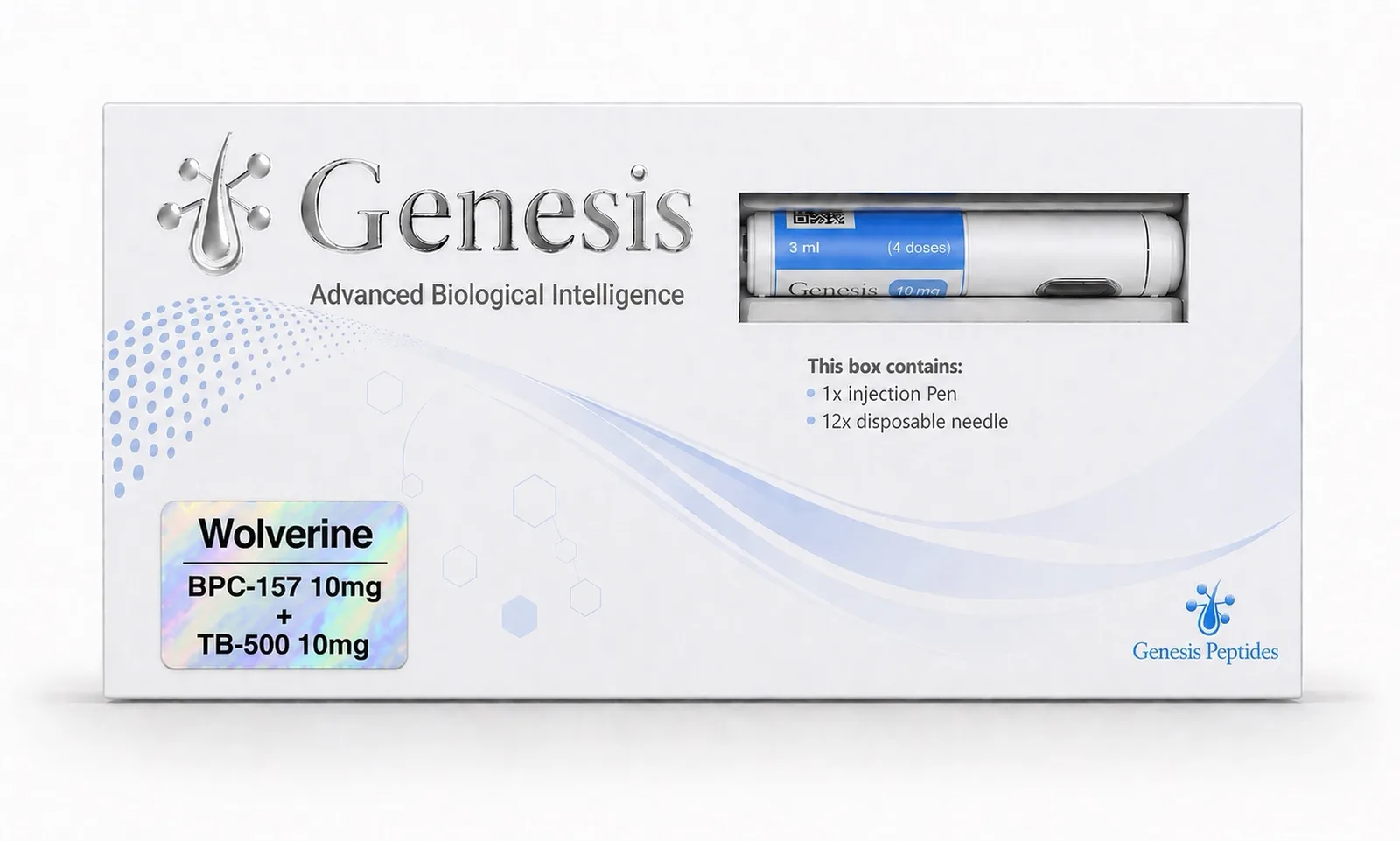
If you prefer the pen format, see our [LINK: BPC-157 pen], [LINK: TB-500 pen], [LINK: GHK-Cu pen] and the [LINK: Wolverine stack pen] (BPC-157 + TB-500).
Reconstitution supplies: bacteriostatic water and sterile storage vials
For vial-based work, see [LINK: bacteriostatic water 10ml] and [LINK: sterile empty vials].
Research guides and the Peptide Reconstitution Calculator
Read our guides to [LINK: reading a COA] and [LINK: peptide storage], or use the [LINK: Peptide Reconstitution Calculator]. If you are ready to buy tesamorelin UK stock, the 20mg pen is at the top of this page. Some researchers search for “tesa peptides”; this is the same compound.
All products are for laboratory research use only. Not for human or veterinary use.
FAQ
Frequently Asked Questions
Quick answers on batch testing, delivery and ordering. Can’t find what you need? Our team is happy to help.
Contact UsWhat is the difference between tesamorelin and other GHRH analogues?
Tesamorelin keeps the full 44-amino-acid GHRH sequence and adds a trans-3-hexenoyl group for stability. Sermorelin and CJC-1295 are based on the shorter 29-amino-acid fragment, and CJC-1295 with DAC binds albumin to last for days. Tesamorelin is the only one currently approved as a medicine, in the US only.
Is the tesamorelin pen pre-mixed, or does it need reconstitution?
Our tesamorelin pen is [CONFIRM: pre-mixed and needs no reconstitution / supplied as lyophilised powder]. See the pen or vial section above for what that means for storage.
How long does a tesamorelin pen last after opening?
Use within [CONFIRM: in-use period] of first piercing the cartridge, kept at 2–8°C, or by the expiry date, whichever comes first.
Does the pen come with a COA and a batch number?
Yes. Every pen has a batch number on the label that matches a batch-specific COA with HPLC purity and mass spectrometry identity results [ADD: where to find it].
What is the difference between the 20mg and 32mg pens?
The total amount of tesamorelin. The tesamorelin 20mg pen holds 20mg; the 32mg pen holds [CONFIRM: 32mg, cartridge volume and concentration, or remove this FAQ if you do not sell a 32mg pen]. Check concentration (mg/ml), not just total mg, when comparing.
Is tesamorelin legal to buy in the UK for research?
Yes, for genuine laboratory research. As far as we can verify, tesamorelin is an unlicensed medicine in the UK and not a controlled drug. It can be sold for genuine laboratory research with no medical claims, but not for human use. [LEGAL REVIEW]
What is the difference between research-grade and pharmaceutical-grade peptides?
Pharmaceutical-grade peptides are made under medicines GMP, hold a marketing authorisation, and are tested for sterility, endotoxins and stability to approved specifications. Research-grade peptides are characterised for identity and purity for laboratory use but are not made or tested to medicine standards and are not approved for use in people.
Is the tesamorelin research pen suitable for human or animal use?
No. The tesamorelin peptide pen UK product is for laboratory research use only. It is not for human or veterinary use, and we do not give dosage or usage advice.
Calculator
Peptide Reconstitution Calculator
Enter the amount in the vial, the volume of diluent added and the amount you need. The calculator works out the concentration and the volume to measure.
- Volume to measure
- 0.025 ml
- 25 µl
- Concentration
- 10,000 mcg/ml
- 10 mg/ml
- Portions per vial
- 80
- at 250 mcg each