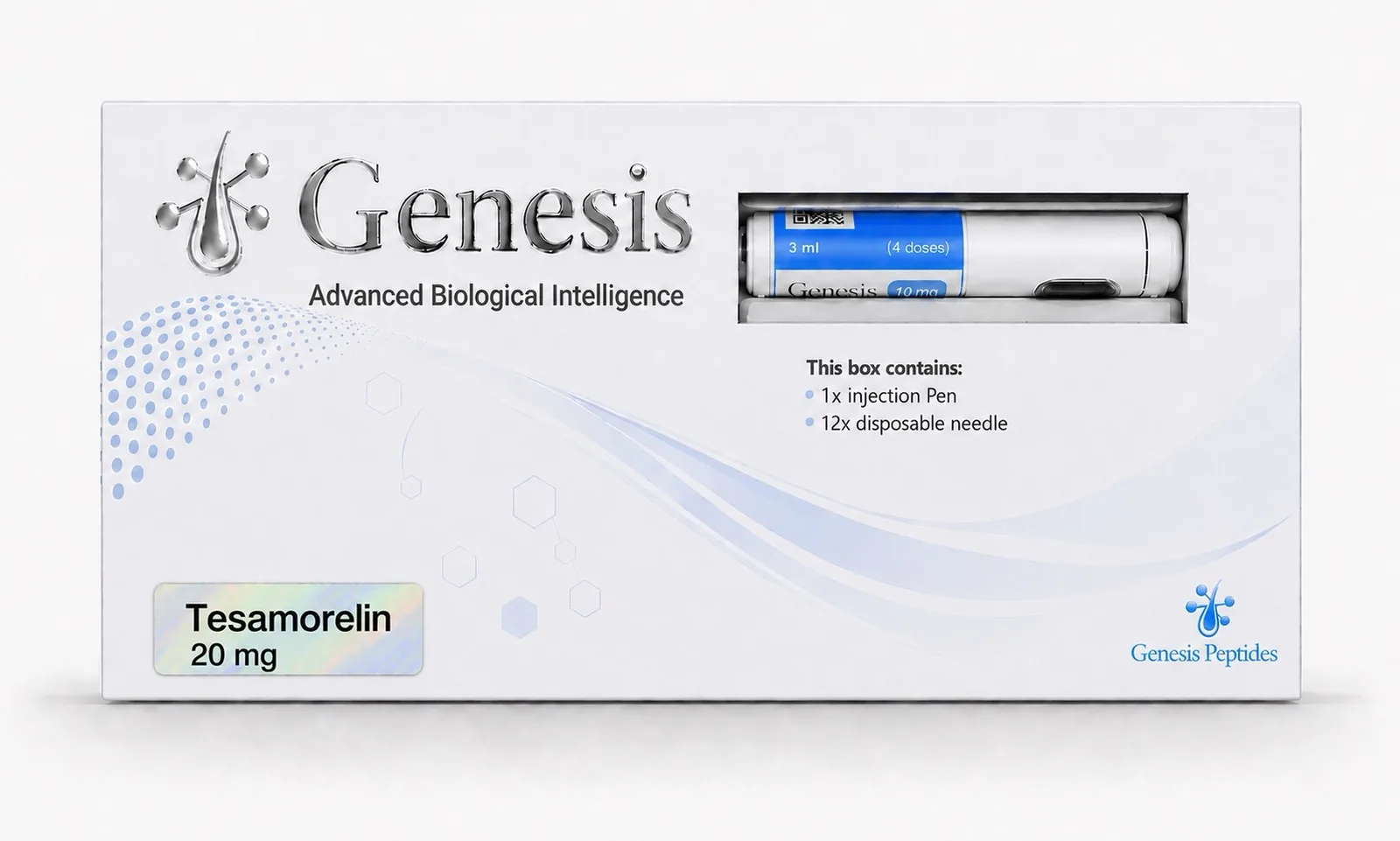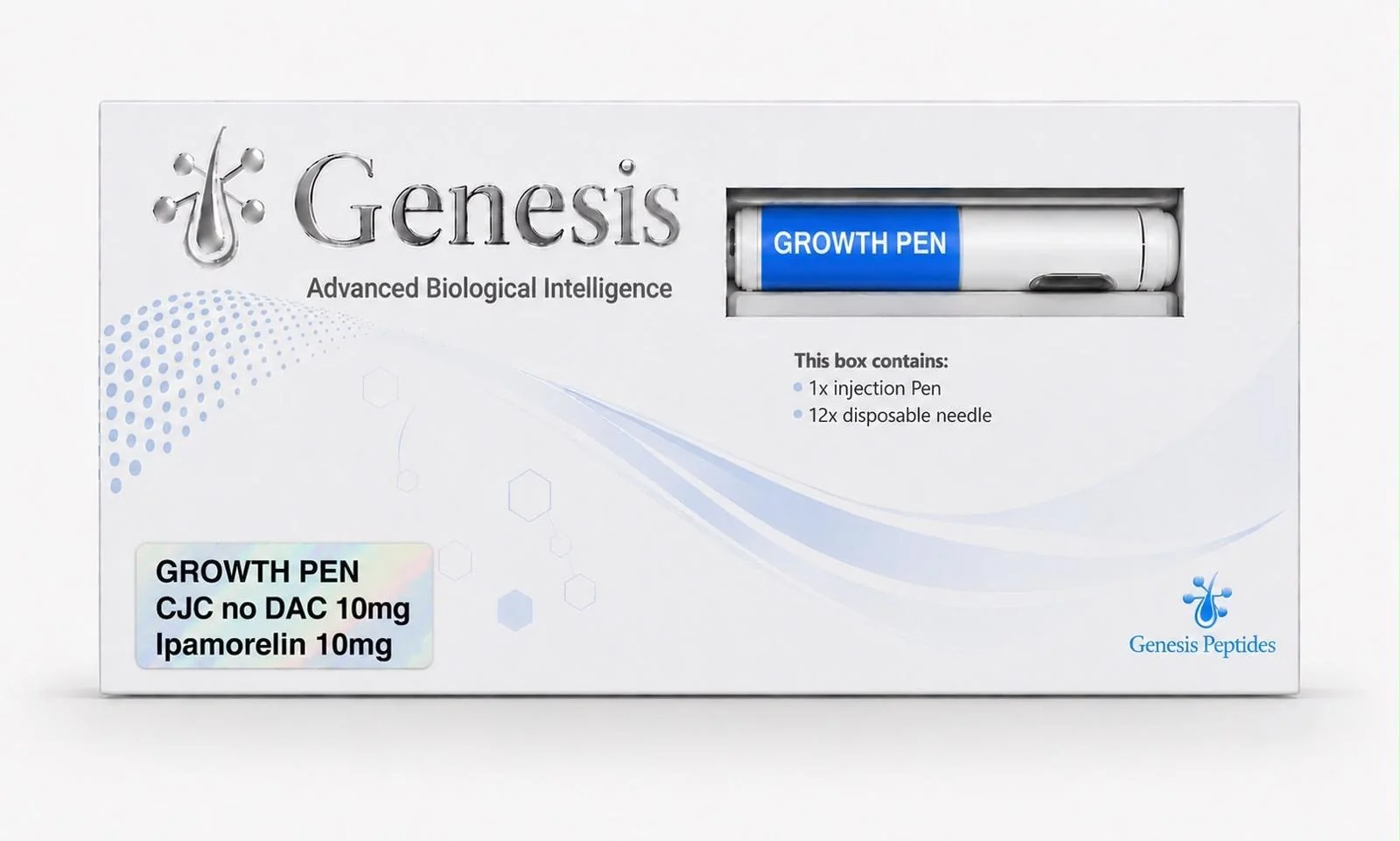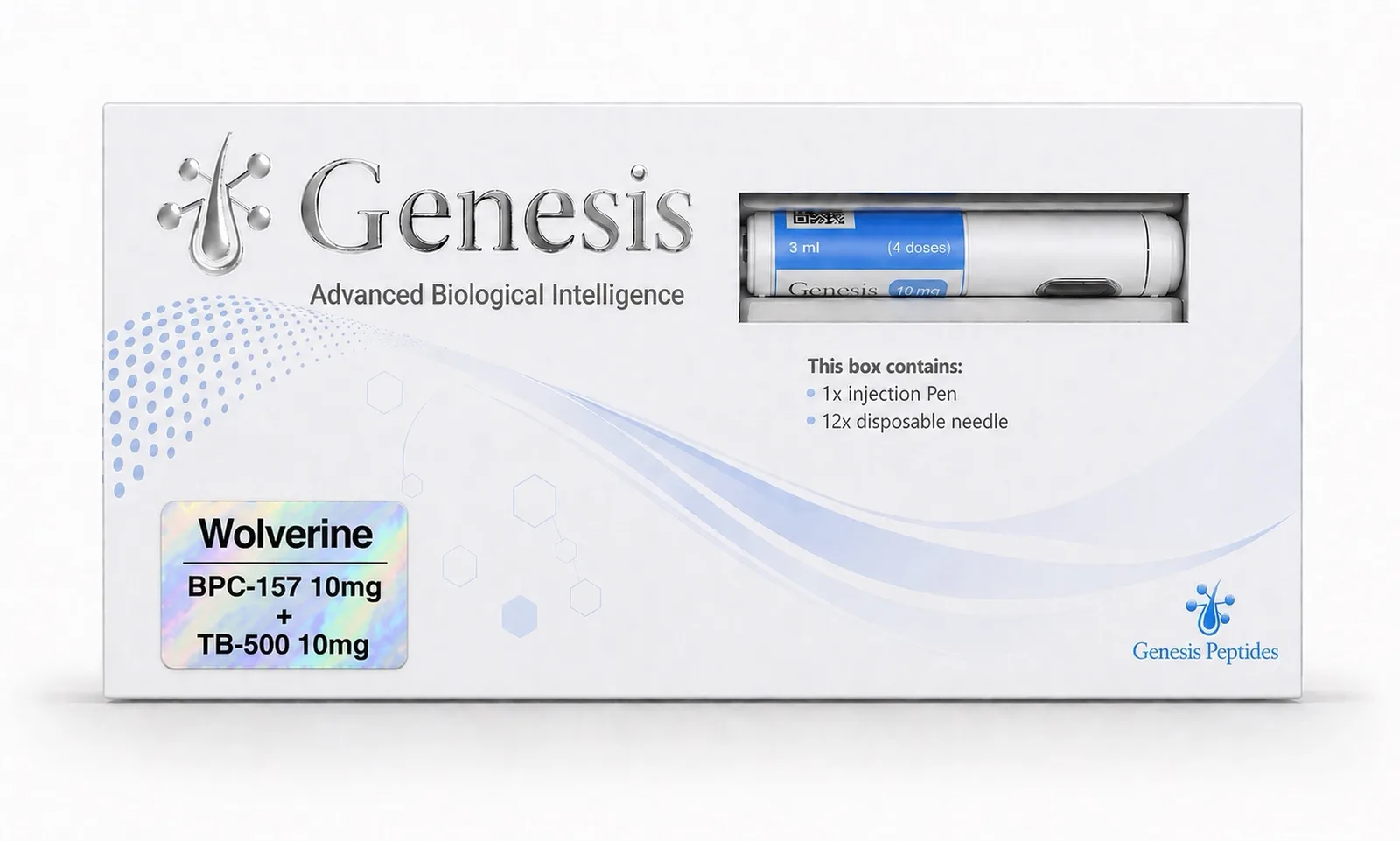
KLOW Blend 80mg (GHK-Cu, BPC-157, TB-500 and KPV) for Laboratory Research Use Only – Buy in the UK
For laboratory research use only. Not for human or veterinary use. Not a medicine and not licensed by the MHRA.
- Batch-tested Certificate of analysis for every lot
- Research use only For laboratory research
- UK stock Dispatched from the UK
- Delivery from £6.05 Free over £100.00. Delivery policy
Peptide PensResearch compound
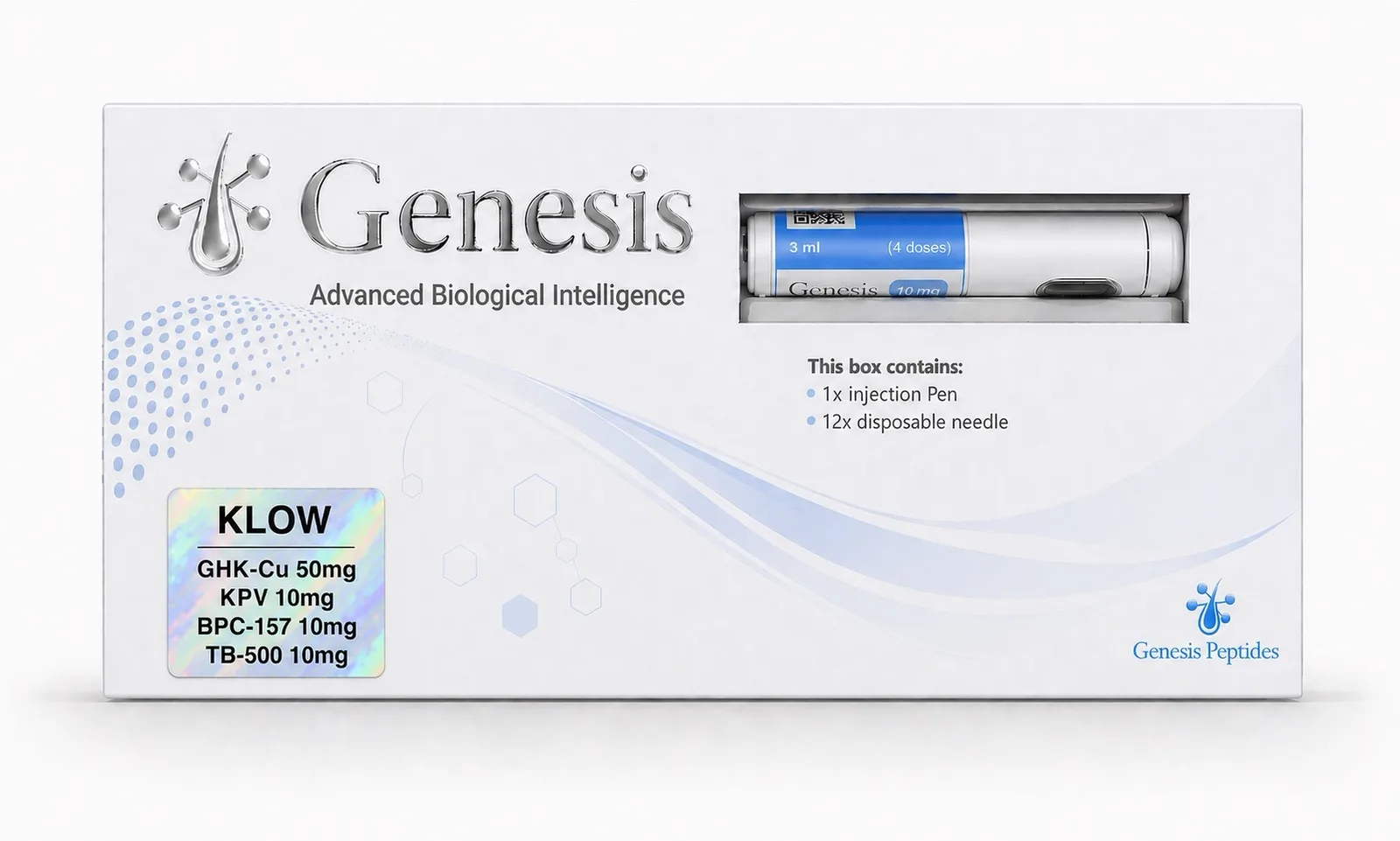
Genesis Peptides KLOW research Pen 80mg
The Genesis Peptides KLOW peptide is an 80mg lyophilised research blend of four synthetic peptides in one vial: GHK-Cu, BPC-157, TB-500 and KPV.
- HPLC and mass spectrometry
- Research use only
£124.99no VAT charged
In stockUK stock, dispatched from the UK
- Strength
- 80mg
[INSERT MY APPROVED RESEARCH-USE WORDING]
What Is KLOW Blend and Which Peptides Does It Contain?
What is KLOW peptide? KLOW is an informal market name for a blend of four peptides: GHK-Cu, BPC-157, TB-500 and KPV. The name is usually read as the GLOW blend (GHK-Cu, BPC-157 and TB-500) with a “K” for KPV added, which is why some sellers also write it as KGLOW peptide. It is not a scientific or regulated term, so contents and amounts vary between suppliers. Always check the label and COA.
What is in a KLOW 80mg vial, and how much of each peptide is there?
The most common KLOW 80 mg composition on the research market is 50mg GHK-Cu plus 10mg each of BPC-157, TB-500 and KPV. Our vial contains:
| Peptide | Amount per vial | Approx. molecular weight | Approx. amount in µmol |
|---|---|---|---|
| GHK-Cu | [CONFIRM: 50mg] | about 340 g/mol for GHK; about 400 g/mol as the copper complex [VERIFY] | about 125 µmol |
| BPC-157 | [CONFIRM: 10mg] | about 1,419.5 g/mol | about 7 µmol |
| TB-500 | [CONFIRM: 10mg] | about 4,963 g/mol (full Tβ4) or 889 g/mol (fragment) [CONFIRM which] | about 2 µmol (full) or 11 µmol (fragment) |
| KPV | [CONFIRM: 10mg] | about 342.4 g/mol | about 29 µmol |
| Total | 80mg |
The mg figures are by weight. Because GHK-Cu and KPV are very small molecules, the blend contains far more molecules of them than of BPC-157 or TB-500: on a molar basis GHK-Cu makes up most of the blend. This matters when you compare results with studies that report amounts in molar units. [VERIFY µmol figures once salt forms are confirmed]
What are GHK-Cu, BPC-157, TB-500 and KPV, and why are they blended for research?
- GHK-Cu is a copper(II) complex of the tripeptide glycyl-L-histidyl-L-lysine (GHK). GHK was first isolated from human plasma by Loren Pickart in 1973 and binds copper strongly. It has been studied mainly in skin, collagen and wound-model research, and is used in cosmetics under the name “copper tripeptide-1”.
- BPC-157 is a synthetic 15-amino-acid peptide (GEPPPGKPADDAGLV) based on a sequence from a protein found in gastric juice. It has been studied mainly in rodent models of gut, tendon and blood vessel repair.
- TB-500 is a synthetic peptide linked to thymosin beta-4 (Tβ4), a 43-amino-acid protein that binds actin, part of the cell’s internal scaffold. The name is used both for full-length synthetic Tβ4 and for a short fragment (Ac-LKKTETQ). The COA should tell you which one you have.
- KPV is the tripeptide lysine-proline-valine, the last three amino acids of alpha-melanocyte-stimulating hormone (α-MSH). It has been studied mainly in cell and rodent models of intestinal inflammation.
The four KLOW peptides are blended because researchers are interested in whether compounds studied in different pathways (collagen and copper signalling, blood vessel growth, actin and cell migration, and inflammation) behave differently together than alone. That is a research question, not an established finding. What is in KLOW peptides from one supplier may not match another, so the COA is the only reliable record of what is in your vial.
Is KLOW supplied as one pre-blended vial or as separate vials?
Our KLOW blend peptide is supplied as [CONFIRM: one pre-blended vial containing all four peptides]. A pre-blended vial fixes the ratio between the four peptides and means one reconstitution step. The alternative, buying each peptide in its own vial, lets you change the ratio or leave a compound out. Some sellers use “KLOW stack” for separate vials sold together and “KLOW blend” for a single vial, but the terms are used loosely, so check the listing.
Why does a KLOW vial look blue or tinted?
The blue colour comes from the copper in GHK-Cu. Copper(II) complexes absorb red-orange light and so look blue, and GHK-Cu powder is blue to blue-violet. Because GHK-Cu is the largest component by weight, the whole blend takes on its colour; the other three peptides are white powders. The KLOW peptide color after reconstitution is usually a clear light-to-mid blue, depending on how much diluent is used. Our current batch is [CONFIRM: appearance as stated on the COA, e.g. blue lyophilised powder / cake]. A white or colourless KLOW vial is a reason to check the COA, because it suggests little or no GHK-Cu; a cloudy solution or visible particles after reconstitution is also a reason not to use the vial.
How Is KLOW Used in Laboratory Research Models?
People often ask what does KLOW peptide do. The honest answer is that the blend itself has not been studied as a product; what exists is laboratory and animal research on each of its four components. The sections below summarise that research. None of it shows an effect of KLOW in people.
Which in vitro and pre-clinical research areas have involved these four peptides?
- GHK-Cu: fibroblast cell culture (collagen and glycosaminoglycan production), rodent and rabbit wound models, and gene expression studies.
- BPC-157: rodent models of stomach and gut injury, tendon and ligament repair, and blood vessel growth (angiogenesis); tendon cell migration assays.
- TB-500 / Tβ4: actin-binding studies, cell migration (scratch) assays, angiogenesis assays and rodent wound models; also doping-control analytical chemistry, because TB-500 is screened for in sport.
- KPV: intestinal epithelial cell culture and rodent colitis models (for example DSS-induced colitis), including studies of how KPV is taken up by the peptide transporter PepT1.
Typical lab methods for KLOW blend peptides work include cell migration and tube-formation assays, gene and protein expression measurements, rodent wound and inflammation models, and stability and identity testing by HPLC and mass spectrometry.
What published research is available on GHK-Cu, BPC-157, TB-500 and KPV?
- GHK-Cu: Pickart and Thaler (1973) first described GHK in human plasma. Maquart et al. (1988) reported that GHK-Cu stimulated collagen synthesis in fibroblast cultures. Pickart and Margolina (2018) review the later research, including gene-expression data.
- BPC-157: Sikiric et al. (2011) and Seiwerth et al. (2018) review the rodent research; Chang et al. (2011) reported increased tendon cell outgrowth and migration in vitro.
- TB-500 / Tβ4: Malinda et al. (1999) reported faster wound closure with Tβ4 in rats; Goldstein et al. (2005) review Tβ4’s actin-binding and repair research.
- KPV: Dalmasso et al. (2008) showed KPV is taken up through PepT1 and reduced inflammation in mouse colitis models; Kannengiesser et al. (2008) reported similar findings in mouse models of inflammatory bowel disease.
Most of this is cell and animal work, and much of the BPC-157 literature comes from one research group. There are no large controlled human trials of BPC-157, TB-500 as sold, or KPV. [CHECK: verify each citation and add DOI or PubMed links before publishing]
Has the KLOW combination been studied as a blend, or only as individual peptides?
Only as individual peptides. We are not aware of any published, peer-reviewed study of GHK-Cu, BPC-157, TB-500 and KPV given together, or of any study of KLOW stack peptides as a product [CHECK: re-run a PubMed search before publishing]. That means three things are unknown: whether the four interact, add to each other or interfere with each other; how stable they are when stored together in solution; and whether the market ratio of 50 / 10 / 10 / 10 mg has any scientific basis. Researchers using the blend should plan controls with each single peptide if they want to know which component caused a result.
KLOW vs GLOW vs Wolverine Stack: Which Research Blend Suits Your Study?
The three names describe nested blends. Wolverine is the smallest, GLOW adds GHK-Cu, and KLOW adds KPV on top of GLOW.
| Wolverine Stack | GLOW | KLOW | |
|---|---|---|---|
| BPC-157 | Yes | Yes | Yes |
| TB-500 | Yes | Yes | Yes |
| GHK-Cu | No | Yes | Yes |
| KPV | No | No | Yes |
| Common total | 20mg (10 + 10) | 70mg (50 + 10 + 10) | 80mg (50 + 10 + 10 + 10) |
| Colour | White | Blue | Blue |
Common market compositions; check each supplier’s label and COA. [CONFIRM Genesis compositions]
What is the difference between KLOW and GLOW?
The only difference between GLOW and KLOW peptides is KPV. GLOW contains GHK-Cu, BPC-157 and TB-500; KLOW contains the same three plus KPV, usually 10mg, which is why KLOW is commonly 80mg and GLOW 70mg. In a KLOW vs GLOW peptide comparison, KPV brings in a compound studied mainly in intestinal inflammation research, and a fourth variable to control for. Because KLOW is “K + GLOW”, the same blend is sometimes listed as KGLOW. For glow stack vs klow stack products sold as separate vials, the same difference applies: KLOW includes a KPV vial.
How does KLOW compare with the Wolverine Stack (BPC-157 and TB-500)?
The Wolverine Stack contains only BPC-157 and TB-500. A KLOW stack peptide blend contains both of those plus GHK-Cu and KPV, so it is larger, blue rather than white, and harder to interpret: any result could come from any of four compounds. If your study is about BPC-157 and TB-500 specifically, the two-component Wolverine Stack, available from us as a [LINK: Wolverine nasal spray] and a [LINK: Wolverine Research Pen], gives cleaner results.
Should you buy a blend or the individual peptides for your research design?
Buy a blend if your study is specifically about that combination at that ratio, and you want one consistent batch with one COA and one reconstitution step. Buy individual peptides if you need to vary the ratio, run single-peptide controls, store components differently, or report each compound’s effect separately. Many study designs use both: the blend for the main arm and single peptides as controls.
KLOW 80mg Product Specifications for Laboratory Researchers
The table below summarises the KLOW 80mg peptide as supplied. Batch-specific values are on the COA.
| Product | KLOW Blend 80mg (GHK-Cu, BPC-157, TB-500, KPV) |
|---|---|
| Composition | [CONFIRM: 50 / 10 / 10 / 10 mg] |
| Form | Lyophilised (freeze-dried) powder |
| Appearance | [CONFIRM: blue to blue-violet powder or cake] |
| Purity (HPLC) | [ADD: % per peptide] |
| Identity | Mass spectrometry [CONFIRM] |
| Salt forms | [CONFIRM: e.g. acetate] |
| Vial | [CONFIRM: e.g. 3ml / 10ml glass vial, rubber stopper, aluminium flip-off seal] |
| Storage | −20°C long term; 2–8°C short term; protect from light |
| Diluent | Not included [CONFIRM]; bacteriostatic water sold separately |
What form is KLOW supplied in, and what is lyophilised powder?
The KLOW-80 peptide is supplied as a lyophilised powder. Lyophilisation (freeze-drying) freezes a peptide solution and then removes the water under vacuum, leaving a dry powder or “cake” at the bottom of the vial. Removing water slows the chemical reactions that break peptides down, such as hydrolysis, which is why most research peptides are shipped dry and only dissolved when needed. The powder can look like a solid disc, a loose powder or a cake that has shrunk or cracked in transit; this is normal and does not affect the contents.
What vial size, fill and packaging do you receive?
Each order contains [CONFIRM: one 80mg vial in a *x*ml glass vial with rubber stopper and flip-off cap], labelled with the product name, total amount, batch number, expiry date and the statement “For research use only”. The fill is a mass of powder (80mg in total), not a volume; the volume only exists once you add diluent. Outer packaging: [ADD: e.g. padded box, sealed bag, protective insert].
What purity and testing information comes with each batch?
Each batch of our KLOW peptide is tested by [ADD: name of independent testing laboratory and its accreditation, e.g. ISO/IEC 17025]. The COA reports HPLC purity for each peptide in the blend, mass spectrometry identity for each peptide, appearance, and the batch number and test date. Current batch purity: GHK-Cu [ADD %], BPC-157 [ADD %], TB-500 [ADD %], KPV [ADD %]. [ADD: link to current COA]
Certificate of Analysis and Batch Testing for KLOW
Every batch of KLOW peptide has its own Certificate of Analysis (COA): the test report that shows what was found in that batch. For a four-part blend, reading it properly is more important than for a single peptide.
How do you read a certificate of analysis for a multi-peptide blend?
- Product name and composition: should list all four peptides and the amount of each, adding up to 80mg.
- Batch number and dates: should match the vial label, with a test date and expiry or retest date.
- Appearance: for KLOW, a blue to blue-violet powder.
- Purity by HPLC: ideally one result per peptide, not a single blend figure.
- Identity by mass spectrometry: a measured mass for each peptide close to its expected mass.
- Testing laboratory: name, accreditation and a signature or verification code.
What does HPLC purity testing show, and what does it not show?
HPLC (high-performance liquid chromatography) separates the compounds in a sample into peaks. For each peptide, purity is the area of its main peak as a percentage of that peptide and its related impurities, such as shortened or damaged chains. What HPLC does not show:
- Identity: a peak at the right time is not proof it is the right peptide. Mass spectrometry confirms that.
- Quantity: 99% purity says nothing about whether the vial holds 80mg. Peptide powders also contain water and counter-ions (such as acetate), so the net peptide content is lower than the gross weight. That is measured separately, for example by amino acid analysis.
- Copper content: under the acidic conditions usually used in peptide HPLC, copper can separate from GHK, so the method may measure the GHK peptide rather than the intact copper complex. Copper content needs a separate test [VERIFY with your testing lab].
- Sterility or endotoxins: not covered unless separately tested.
How do you check that the batch number and vial label match your COA?
Find the batch (lot) number printed on the vial label and compare it, character by character, with the batch number on the COA. The product name, composition and expiry should also match. If the COA has a verification code or QR code, use it to confirm the report on the testing laboratory’s own website. If anything does not match, do not use the vial and contact us with a photo of the label. [ADD: contact details]
Is there a separate COA for each peptide in the blend?
We provide [CONFIRM: one COA for the finished blend, covering all four peptides / plus raw-material COAs for each peptide on request]. A blend COA tests the finished vial, which is what you actually receive. Raw-material COAs show that each peptide was pure before blending, but not what happened during blending and filling, so the finished-blend COA is the more useful document of the two.
Storage, Shelf Life and Reconstitution of KLOW for Research
Like most research peptides, KLOW 80 is most stable as a dry powder, kept cold and away from light.
How should lyophilised KLOW be stored before opening?
Store unopened vials at −20°C for long-term storage, or at 2–8°C (a laboratory fridge) if they will be used within [CONFIRM: e.g. a few months]. Keep them in the original box to protect from light, and keep them dry. Short periods at room temperature, for example during shipping, are normal for lyophilised peptides. Shelf life of the unopened vial: [ADD: expiry period, as on label]. Let a cold vial reach room temperature before opening so that moisture does not condense inside it.
How long does KLOW last after reconstitution, and how should it be stored?
Does KLOW need to be refrigerated? Yes, once reconstituted. Keep the solution at 2–8°C, protected from light, and do not freeze and thaw it repeatedly. When bacteriostatic water is used, multi-use vials are commonly kept for up to 28 days, which is the usual in-use limit for benzyl alcohol-preserved solutions. There is little published stability data for all four peptides together in solution, so this is a general guide rather than a tested shelf life for this blend [CONFIRM: your recommended in-use period]. Discard any solution that becomes cloudy, changes colour or shows particles.
How do you reconstitute an 80mg research blend with bacteriostatic water?
Reconstituting KLOW means dissolving the powder in a known volume of sterile diluent so that you know the concentration. A general laboratory method for KLOW 80mg reconstitution:
- Let the vial and diluent reach room temperature. Work on a clean surface or in a laminar flow hood.
- Remove the flip-off cap and wipe the rubber stopper with a 70% isopropyl alcohol swab. Let it dry.
- Draw up the chosen volume of bacteriostatic water with a sterile syringe.
- Insert the needle through the stopper and let the water run slowly down the inside wall of the vial, not directly onto the powder.
- Swirl or roll the vial gently until the powder has dissolved. Do not shake, as this can damage peptides and cause foaming.
- Check the solution: it should be clear and blue, with no particles. Label the vial with the date, diluent, volume and concentration, then refrigerate.
The concentration is simply the amount of peptide divided by the volume of diluent. For example, 80mg in 4ml gives 20mg/ml of total peptide. Using the common 50 / 10 / 10 / 10 split, that is 12.5mg/ml GHK-Cu and 2.5mg/ml each of BPC-157, TB-500 and KPV. The choice of volume depends on your experimental protocol.
Use our free Peptide Reconstitution Calculator to work out your volumes
Our [LINK: Peptide Reconstitution Calculator] works out the concentration you get from a given amount of peptide and volume of diluent, and the volume that contains a given mass of peptide for your assay. For a blend, enter the amount of each peptide separately to see the concentration of each component.
Which diluent and syringe size are commonly used in laboratory work?
The most common diluent is bacteriostatic water: sterile water with 0.9% benzyl alcohol, which slows the growth of bacteria in multi-use vials. Sterile water without preservative is used when the solution will be used in one session, or when benzyl alcohol would interfere with the assay (for example some cell culture work). For drawing up and adding diluent, a sterile 3ml or 5ml Luer syringe with a fresh needle is typical. For measuring small volumes accurately, labs use calibrated micropipettes with sterile tips or 1ml graduated syringes. [LINK: Genesis bacteriostatic water 10ml]
What are the common mistakes that degrade a peptide blend in storage?
- Shaking the vial instead of swirling.
- Spraying diluent straight onto the powder.
- Storing the solution at room temperature or in light.
- Freezing and thawing the same solution several times.
- Opening a cold vial before it warms up, which lets moisture in.
- Re-using needles or not swabbing the stopper, which can contaminate the vial.
- Keeping the solution longer than the in-use period, or using it after it turns cloudy.
Safe Handling and Disposal of Research Peptides in the Laboratory
KLOW peptides should be handled like any other research chemical whose full toxicology is not known: with standard laboratory precautions. [ADD: link to safety data sheet (SDS), if available]
What personal protective equipment and handling practice is recommended?
Wear a lab coat, nitrile gloves and eye protection. Weigh or open powders in a way that avoids creating dust, ideally in a fume cupboard or biosafety cabinet, and do not inhale the powder. Use aseptic technique when making solutions: a clean work area, swabbed stoppers and sterile needles and syringes. Do not eat, drink or store food where peptides are handled. Wash your hands after handling. Label every vial clearly and keep peptides out of reach of anyone not trained to handle them.
How should opened vials, needles and waste be disposed of?
- Needles and syringes: straight into a rigid, puncture-proof sharps container. Do not recap needles.
- Vials and leftover solution: as chemical or pharmaceutical waste through your institution’s or a licensed waste contractor’s route. Do not pour down the sink or put in household waste.
- Broken glass: in a sharps or glass waste container.
- Gloves, swabs and packaging that touched the product: as laboratory waste.
Follow your local waste rules and your organisation’s procedures. [LEGAL REVIEW: confirm UK waste wording]
What should you do if a vial arrives damaged or looks different from expected?
Do not open or use it. Take photos of the vial, label and packaging, and contact us within [ADD: e.g. 48 hours] of delivery. A cracked vial or broken seal should be disposed of safely as broken glass. If the powder looks a very different colour from the COA (for example white instead of blue), or the batch number does not match the COA, tell us before using it and we will [ADD: replace / refund policy].
Is It Legal to Buy KLOW Blend in the UK, and What Does Research Use Only Mean?
Buying KLOW peptide in the UK for genuine laboratory research, without medical claims, is how we sell this product. The key points:
- None of the four peptides in KLOW has a UK marketing authorisation from the MHRA, and none is a licensed medicine. A product sold with medical claims or for human use may be treated as an unlicensed medicine. [LEGAL REVIEW]
- BPC-157 is on the World Anti-Doping Agency (WADA) Prohibited List under S0 (non-approved substances) and TB-500 under S2 (as a thymosin beta-4 derivative). S0 covers any substance not approved for human therapeutic use, which may also include KPV. Athletes covered by UKAD rules can face sanctions. [VERIFY against the current WADA list]
- In the US, the FDA has placed BPC-157 in a category of substances it says raise significant safety risks for compounding. [VERIFY]
This is general information, not legal advice. If you are unsure whether your intended research use of KLOW peptides in the UK is lawful, take independent advice before ordering. [LEGAL REVIEW: confirm this section with a UK regulatory adviser before publishing]
What does "for laboratory research use only, not for human consumption" mean in practice?
It means the product is sold for experiments in a laboratory, such as cell culture, analytical work or approved animal studies under the relevant licences. It is not to be injected, swallowed, inhaled, applied to the skin or given to animals outside a lawful research setting. It also means we give no information on use in people: no amounts, routes, timings or expected effects. The product is not made under the controls that apply to medicines, and no regulator has assessed it for safety in humans.
Who can buy research peptides from a UK supplier, and what do you agree to at checkout?
We sell to adults aged 18 or over who are buying for laboratory research. At checkout you confirm that [ADD: your exact checkout declaration, e.g. you are 18+, the product is for research use only, it will not be used in humans or animals, and you accept our terms]. We may cancel orders where there is reason to believe a product is intended for personal use. [LEGAL REVIEW]
Why are research peptides not sold as medicines or supplements?
To be sold as a medicine in the UK, a product needs a marketing authorisation from the MHRA, which requires clinical trial evidence of safety and effect and manufacture under Good Manufacturing Practice (GMP). None of the peptides in KLOW has one. They cannot be sold as food supplements either: a substance without a history of food use needs authorisation as a novel food before it can be sold for people to eat [LEGAL REVIEW]. GHK-Cu is permitted as a cosmetic ingredient (“copper tripeptide-1”) in skin products, but that does not cover a research peptide blend. Selling KLOW as a research chemical, with no health claims, is the only accurate way to describe it.
UK Delivery, Dispatch, Tracking and Returns for KLOW Orders
Every KLOW blend peptide UK order is packed and shipped from [ADD: dispatch location, e.g. our UK warehouse].
How quickly is a KLOW order dispatched within the UK?
Orders placed before [ADD: cut-off time] on a working day are dispatched [ADD: same day / next working day]. Delivery options: [ADD: e.g. Royal Mail Tracked 24, Special Delivery, prices and times].
How is the package protected and tracked in transit?
Your KLOW peptide vial is shipped as a dry powder, which is stable at room temperature for the time it spends in transit, so no cold pack is needed [CONFIRM]. It is packed in [ADD: packaging, e.g. padded box with protective insert, discreet outer packaging]. You receive a tracking number by email when your order is dispatched. [ADD: courier]
What is your returns and damaged-parcel policy under UK consumer law?
If your order arrives damaged, faulty or not as described, you are entitled to a remedy under the Consumer Rights Act 2015, such as a replacement or refund. For online orders, the Consumer Contracts Regulations 2013 normally give a 14-day right to cancel, but this does not apply to sealed goods that are not suitable for return for health protection or hygiene reasons once the seal is broken. Unopened vials: [ADD: your returns window and conditions]. Damaged parcels: [ADD: how to report, time limit, what you will do]. [LEGAL REVIEW]
Do you deliver research peptides outside the UK?
[ADD: yes / no; countries served; delivery times]. Rules on importing research peptides differ by country, and some customs authorities may hold or seize them. Buyers outside the UK are responsible for checking their own local rules before ordering.
Where Can You Buy KLOW Blend 80mg in the UK, and What Does It Cost?
You can buy KLOW peptide UK stock directly from Genesis Peptides on this page, with a batch COA available before you order. Most KLOW peptides for sale online are sold by research chemical suppliers rather than pharmacies, because none of the four peptides is a licensed medicine.
What is the price of KLOW 80mg, and is there a discount for larger orders?
The KLOW 80 peptide costs [ADD: price per vial, £]. Multi-vial pricing: [ADD: e.g. 3 vials £x, 5 vials £y, or “no bulk discount”]. When comparing KLOW peptide prices between suppliers, compare like with like: the same total and split per peptide, a batch-specific COA with purity for each peptide, and whether the TB-500 is full-length Tβ4 or the fragment. A cheaper vial with no per-peptide testing is not the same product.
What should you check before choosing a UK research peptide supplier?
- A batch-specific COA from a named, independent laboratory, with HPLC purity and mass spectrometry identity for each peptide in the blend.
- The exact composition on the label (mg of each peptide), not just a total.
- A batch number on the vial that matches the COA.
- A UK address, UK dispatch and clear contact details.
- Clear research-use-only labelling and no health claims or dosing advice. A seller that offers these is not selling a research product.
- A written returns and damaged-parcel policy.
When you buy KLOW from us you get [ADD: Genesis-specific points, e.g. independent testing lab, UK dispatch time, customer service hours].
Related Research Peptides and Laboratory Supplies
Products and guides that researchers often order or read alongside the KLOW peptide blend.
Individual components: GHK-Cu, BPC-157, TB-500 and KPV
For single-peptide controls or custom ratios, the four peptides KLOW is made from are available separately: [LINK: GHK-Cu] · [LINK: BPC-157] · [LINK: TB-500] · [LINK: KPV] [CONFIRM which are sold]
Other research blends: GLOW and the Wolverine Stack
The [LINK: GLOW blend] [CONFIRM if sold] is the KLOW blend without KPV. The Wolverine Stack contains BPC-157 and TB-500 only, and is available as a [LINK: BPC-157 + TB-500 Wolverine nasal spray 20mg] and a [LINK: Wolverine Research Pen 20mg].
Reconstitution supplies: bacteriostatic water and sterile storage vials
[LINK: Bacteriostatic water 10ml] · [LINK: sterile empty vials, if sold] · [LINK: alcohol swabs / syringes, if sold]
Research guides and the Peptide Reconstitution Calculator
[LINK: Peptide Reconstitution Calculator] · [LINK: how to read a COA guide] · [LINK: peptide storage guide]
All Genesis Peptides products are sold for laboratory research use only. Not for human or veterinary use. Nothing on this page is medical advice or a claim of any effect in humans.
FAQ
Frequently Asked Questions
Quick answers on batch testing, delivery and ordering. Can’t find what you need? Our team is happy to help.
Contact UsWhat is KPV, and what is it studied for in laboratory research?
KPV is the tripeptide lysine-proline-valine (Lys-Pro-Val), the last three amino acids of alpha-melanocyte-stimulating hormone (α-MSH). It is studied mainly in cell and rodent models of intestinal inflammation, including research on its uptake through the PepT1 transporter in gut cells. It is the component that makes a GLOW blend into a KLOW peptide blend.
Why are copper peptides such as GHK-Cu studied alongside BPC-157 and TB-500?
All three have been studied in tissue repair models, but through different proposed routes: GHK-Cu in collagen production and copper-dependent processes, BPC-157 in blood vessel growth and nitric oxide signalling, and TB-500 in actin binding and cell migration. A GHK-Cu KLOW blend lets researchers test whether combining them changes the result. That has not been studied in published research yet.
Can KLOW be reconstituted and then stored, or should it be used at once?
It can be stored after reconstitution. Keep the solution at 2–8°C and protected from light, and use it within the in-use period (commonly up to 28 days with bacteriostatic water) [CONFIRM]. If you will not use the whole vial in that time, only reconstitute what you need, or plan smaller sterile aliquots.
Can the four peptides in KLOW be mixed in one vial without affecting stability?
As a dry powder, yes: the peptides are mixed before freeze-drying and are stable when kept cold and dry. In solution, there is little published stability data for all four together [CHECK]. One known chemical point is that copper ions can speed up the oxidation of some amino acids, such as methionine, which is present in full-length Tβ4. This is why storing the solution cold, away from light, and for no longer than necessary matters more for a copper-containing blend than for a single peptide.
Does KLOW come with a COA and a batch number?
Yes. Every vial is labelled with a batch number that matches a batch COA showing HPLC purity and mass spectrometry identity for each peptide. [ADD: link to current COA]
What is the difference between research-grade and pharmaceutical-grade peptides?
Pharmaceutical-grade peptides are made under Good Manufacturing Practice (GMP) and tested against a licensed specification, usually including sterility and endotoxin tests, so they can be given to patients. Research-grade peptides are made for laboratory use. They are tested for purity and identity, as shown on the COA, but are not made under medicines GMP and are not tested or approved for use in people. A high HPLC purity does not make a research peptide pharmaceutical grade.
How do I choose between KLOW and GLOW for my research model?
Choose GLOW if your study does not need KPV; choose KLOW only if KPV’s inflammation-related research area is part of your study question. In glow vs klow peptides terms, fewer components give cleaner, easier-to-interpret results, so the smallest blend that answers your question is usually the better choice. [LINK: GLOW product page, if sold]
Is KLOW suitable for human or animal use?
No. KLOW.peptide products, including ours, are for laboratory research use only. KLOW is not a medicine, is not licensed by the MHRA and is not for human or veterinary use. For any health question, speak to your GP, a pharmacist or another registered healthcare professional.
Calculator
Peptide Reconstitution Calculator
Enter the amount in the vial, the volume of diluent added and the amount you need. The calculator works out the concentration and the volume to measure.
- Volume to measure
- 0.006 ml
- 6.3 µl
- Concentration
- 40,000 mcg/ml
- 40 mg/ml
- Portions per vial
- 320
- at 250 mcg each